
To choose sweet oranges, pick fruit that feels heavy for its size — weight is the best sign of juiciness. The skin should be firm, smooth, and thin, with a vibrant orange color. Do not judge by color alone: some sweet varieties stay slightly green, and some bright-orange fruit can be dry inside.
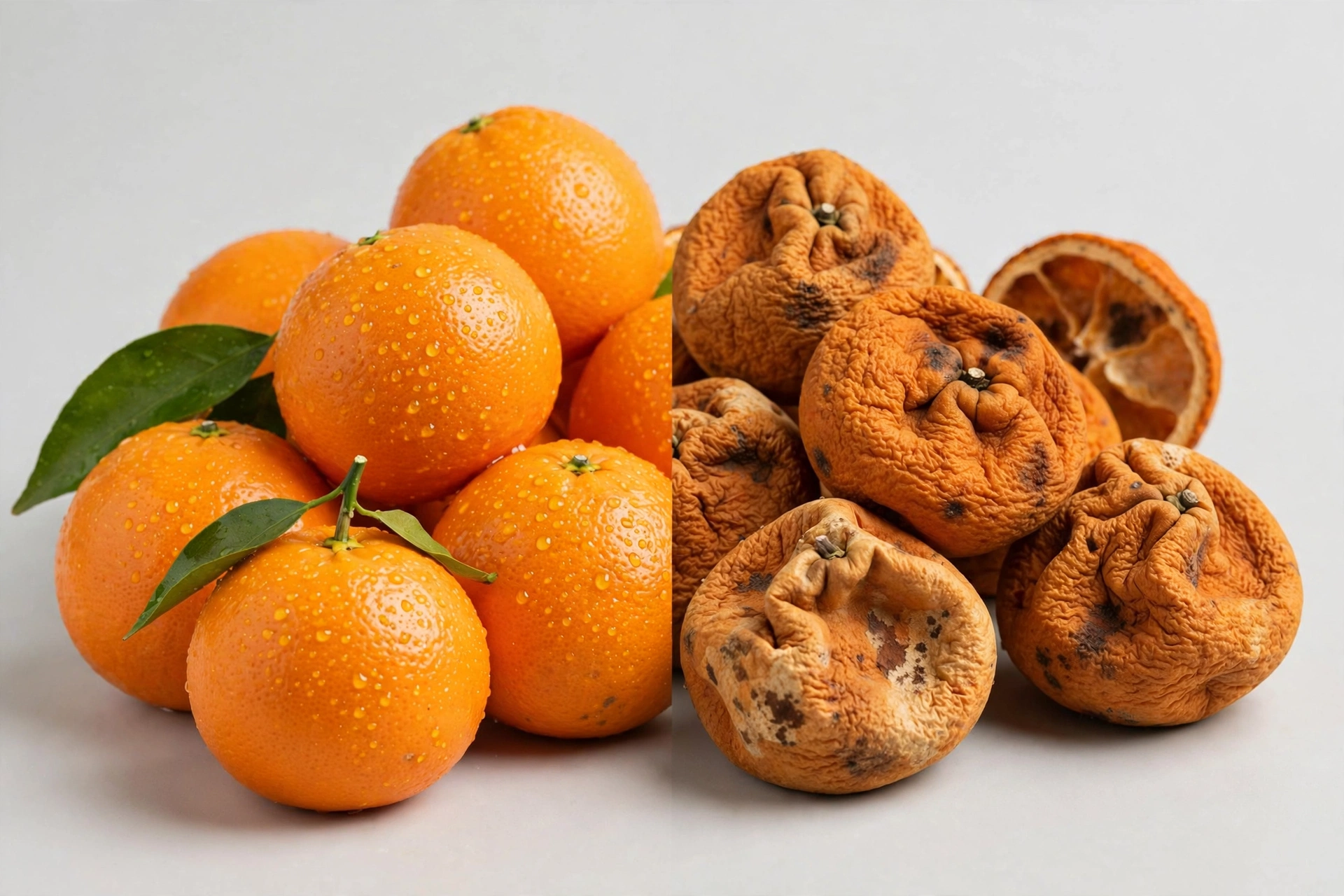
Prefer
- Heavy feel for the size — density means juice
- Firm, smooth skin that is thin rather than thick and pebbly
- Vibrant, even orange color
- A fresh, citrusy smell at the stem end
- Smaller to medium fruit, which is often juicier than oversized ones
Avoid / check more closely
- Light-feeling oranges, which are likely dry inside
- Soft spots, bruises, or mold
- Very thick, rough, pebbly skin
- Shriveled or wrinkled skin
- Dull, musty smells
Weight beats color
The single most reliable test is the heft test: hold two oranges of similar size and pick the heavier one. Juice is heavy, and a dense orange is a juicy orange almost every time. Color is a weaker signal than most shoppers think — growers sometimes degreen fruit with ethylene gas for cosmetic reasons, and some naturally sweet varieties (like certain blood oranges) keep a greenish blush. A vibrant, even color is encouraging, but never let it overrule what the scale in your hand tells you.
Skin texture and the sniff test
Run your thumb over the skin: fresh oranges have firm, relatively smooth skin that springs back when pressed. Thick, coarse, pebbly skin usually means less flesh and less juice inside, while thin-skinned fruit tends to be juicier. Press gently all over for soft spots, which signal decay. Then sniff the stem end — a fresh orange smells bright and citrusy. A dull or fermented smell means the fruit is past its prime, even if the outside looks fine.
Storing oranges at home
Oranges keep well at cool room temperature for about a week, but refrigeration extends that to three or four weeks — store them loose in the crisper drawer rather than sealed in plastic, which traps moisture. Keep them away from ethylene-producing fruits like bananas and apples, which speed up aging. Once cut, wrap the pieces tightly and refrigerate; eat within a few days. Discard oranges with mold, mushy spots, or off smells.
A simple orange-shopping checklist
Before you buy, check three things: weight (heavy for its size?), skin (firm, smooth, thin?), and smell (fresh citrus?). Compare a few side by side — the contrast makes the heavy, juicy ones obvious. These quick checks work for navels, Valencias, blood oranges, and mandarins alike.
Common questions
Does orange color mean sweetness?
Not reliably. Some sweet varieties stay slightly green, and degreening treatments can make unripe fruit look orange. Weight and skin texture are better guides.
Should I refrigerate oranges?
For more than a few days, yes — refrigeration keeps them fresh for three to four weeks. At room temperature, plan to eat them within about a week.
Why are some oranges dry inside?
Usually age or poor storage. Light-feeling fruit with thick, pebbly skin is the classic warning sign — always heft before you buy.
References
U.S. Food and Drug Administration — Selecting and Serving Produce Safely. Reference for produce selection, handling, and visible damage. Ripeness guidance is established produce practice.
Prepared October 10, 2026 with AI assistance. Cited sources do not endorse the entire article.