
To choose juicy lemons, pick fruit that feels heavy for its size — weight is the best predictor of juice. The skin should be thin, smooth, and vibrant yellow, giving slightly under pressure. Avoid thick, rough, pebbly skin and light-feeling lemons, which are usually dry inside.
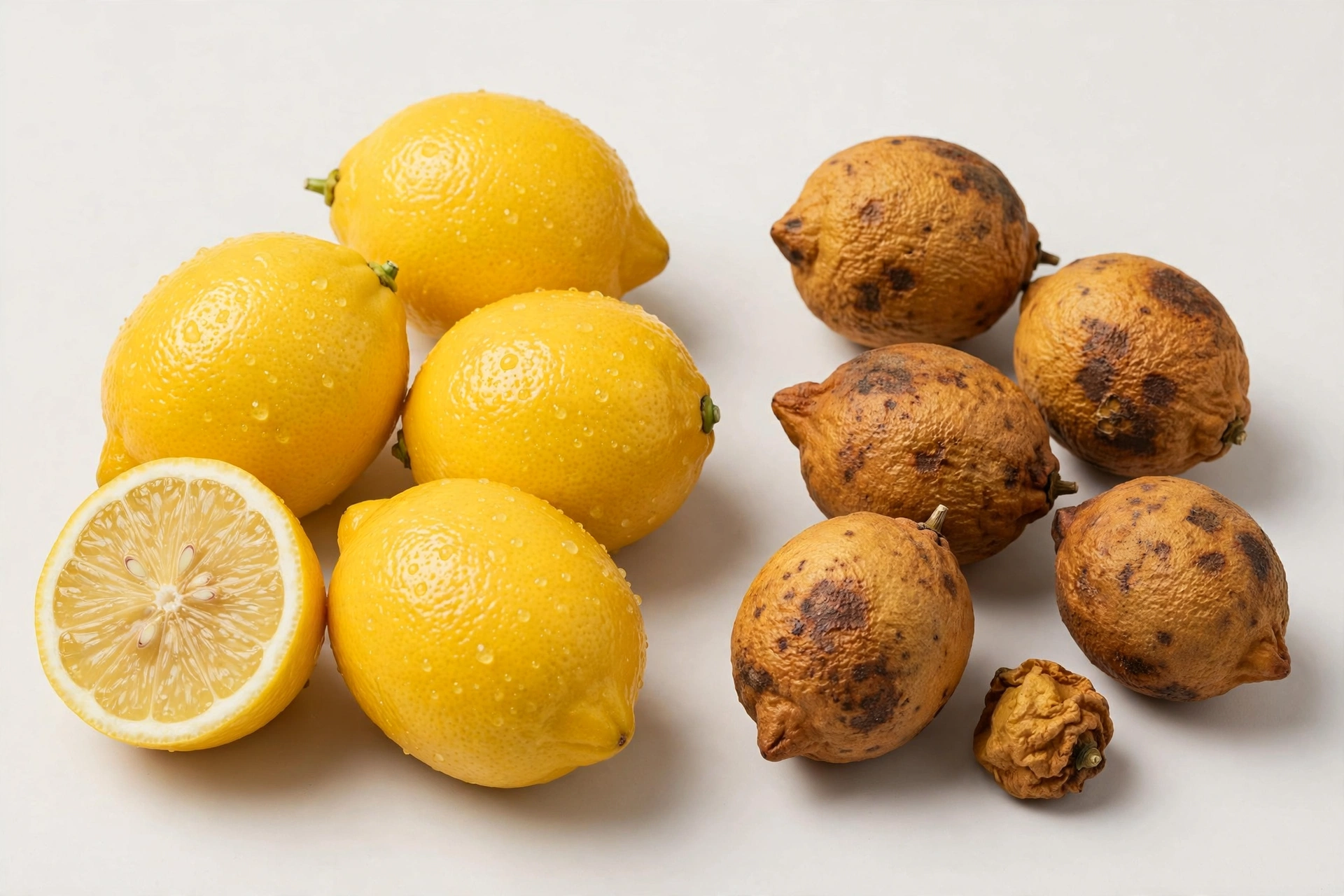
Prefer
- Heavy feel for the size
- Thin, smooth, vibrant-yellow skin
- Slight give under gentle pressure
- Firm, plump shape with no soft spots
Avoid / check more closely
- Light-feeling lemons
- Thick, rough, pebbly skin
- Green patches or dull color
- Soft spots, bruises, or mold
- Wrinkled, shriveled skin
Weight and skin: the juice test
Juice is heavy, so the heft test works beautifully on lemons: compare two of similar size and take the heavier one. Thin, smooth skin is the second-best clue — thick, coarse skin means more pith and less juice. A lemon that gives slightly when pressed is full of juice; a rock-hard one with bumpy skin will disappoint at the squeezer.
Color and surface check
Look for fully yellow, vibrant skin — green patches mean underripeness, though the juice is still usable. The surface should be smooth and glossy, not dull or wrinkled. Check for soft spots and mold, especially at the stem end, and skip shriveled fruit. Smaller lemons are often juicier than oversized ones, which tend toward thick skin.
Storing lemons at home
Lemons keep about a week at room temperature, but refrigeration in a sealed bag extends that to a month — cold, humid storage is their sweet spot. Cut lemons should be wrapped tightly and refrigerated, cut-side protected. For long storage, freeze the juice in ice-cube trays and zest in small bags. Roll a lemon firmly on the counter before juicing to break the membranes and get more juice.
Common questions
How do I get more juice from a lemon?
Choose heavy, thin-skinned lemons, bring to room temperature, and roll firmly on the counter before cutting. Microwaving for 10 seconds also helps.
Should I refrigerate lemons?
For more than a week, yes — sealed in the fridge they last up to a month. Room temperature is fine for short-term use.
Can I use lemons with green patches?
Yes — slightly underripe lemons are still juicy and fine for cooking, though fully yellow ones are usually juicier.
References
U.S. Food and Drug Administration — Selecting and Serving Produce Safely. Reference for produce selection and handling. Storage guidance reflects standard kitchen practice.
Prepared October 10, 2026 with AI assistance. Cited sources do not endorse the entire article.