
To choose fresh cranberries, pick berries that feel firm and look plump with a bright to deep red color — they should seem almost polished. Try the classic bounce test: a fresh cranberry dropped from a few inches onto a hard surface will bounce, while a soft or spoiled one will not. Look through the bag for shriveled, soft, or brown-spotted berries and choose the bag with the fewest. Fresh cranberries smell clean and faintly tart, never musty or fermented.
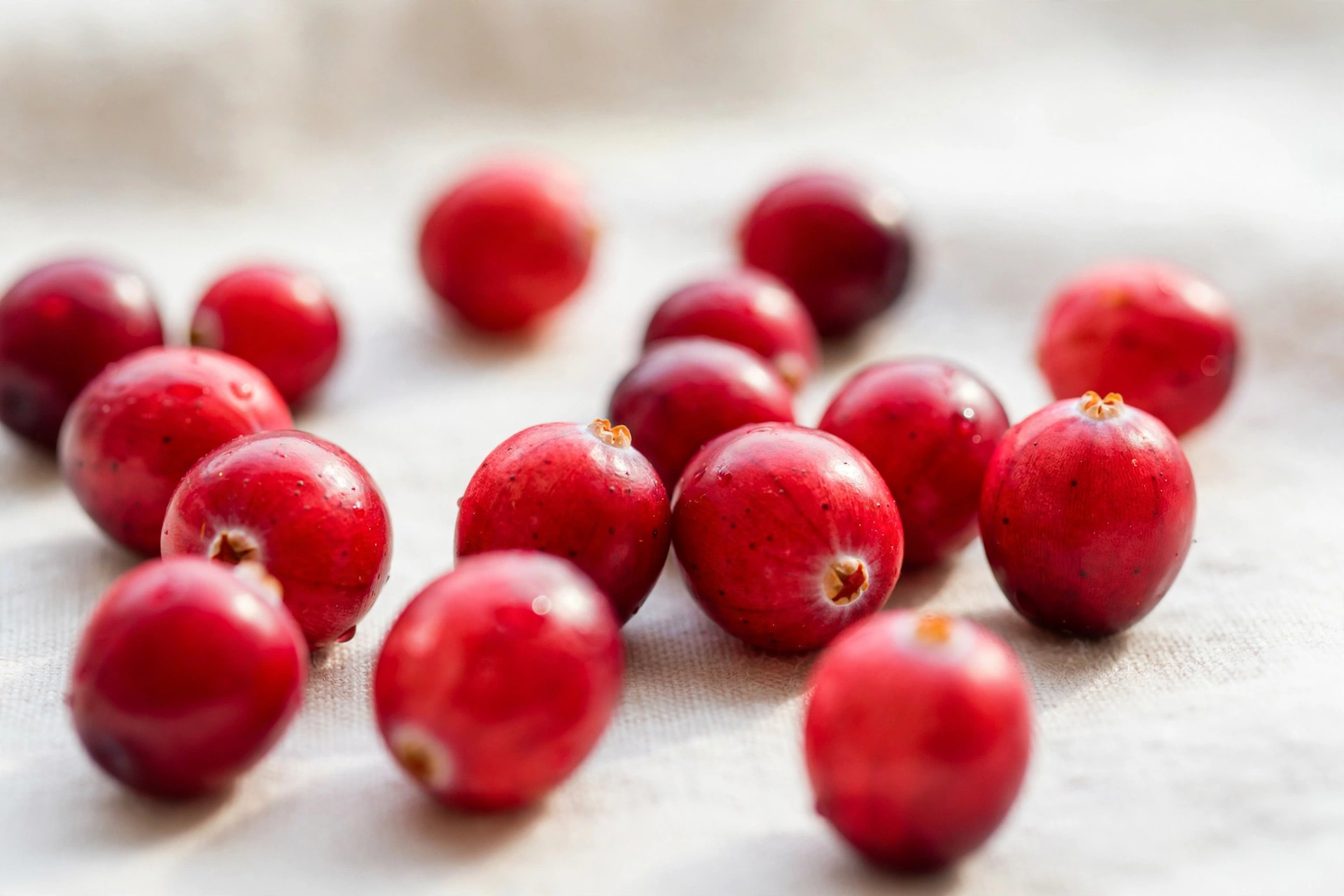
Prefer
- Firm berries that bounce when dropped
- Plump, round shape with smooth skin
- Bright to deep red, even color
- Clean, faintly tart smell
- Bags with minimal shriveled or damaged berries
Avoid / check more closely
- Soft, mushy, or wrinkled berries
- Brown or dark spots on the skin
- Shriveled, dried-out berries
- Musty or fermented smell
- Bags with lots of broken or leaking berries
The bounce test really works
Cranberries are unusual among fruits because firmness is so easy to test. A fresh cranberry has firm flesh and small air pockets inside, so it bounces when dropped onto a counter from a short height. Farmers have historically used this trait to sort berries — the bounciest ones are the freshest. You cannot bounce every berry in the store, but you can squeeze a few gently through the bag: they should feel hard like tiny marbles, not soft or yielding. Soft berries have started to break down and will not keep well. If a bag feels uniformly firm, it is a good sign.
Color, skin, and what is normal
Fresh cranberries range from bright cherry red to deep crimson, and both are fine — color depth varies by variety and harvest timing rather than quality alone. The skin should look smooth and taut, almost glossy. A few pale or slightly orange berries in a bag are normal and still usable, but pass on bags where many berries look shriveled, pitted, or brown. Small stems or bits of leaf in the bag are harmless harvest debris, not a quality problem. Because cranberries are sold in opaque or printed bags in many stores, hold the bag up to the light or open the top to inspect before buying.
Season, varieties, and buying frozen
Fresh cranberries are a fall fruit, harvested from September through November, with the biggest selection around the year-end holidays. Outside that window, fresh berries are hard to find — and that is fine, because frozen cranberries are an excellent alternative. Commercially frozen cranberries are frozen at peak ripeness and work just as well for sauces, baking, and cooking. If you only find frozen, choose bags where the berries look whole and loose rather than clumped into a solid icy block, which can indicate thawing and refreezing.
Storing cranberries at home
Cranberries keep far longer than most fresh fruit. Refrigerated in their original bag or a sealed container, fresh cranberries stay good for three to four weeks — one of the longest fridge lives of any berry. For longer storage, freeze them directly in the bag or spread on a tray first for loose berries; they keep up to a year frozen and can go straight from freezer to pot without thawing. Do not wash cranberries until just before using them. Discard any berries that turn soft or brown during storage rather than mixing them back in.
Common questions
Can I eat raw cranberries?
Yes, they are safe to eat raw, but they are very tart — most people find them too sour to enjoy plain. They are usually sweetened in sauces, juices, and baked goods. Tasting one raw is a fine way to check freshness, though.
Why do some cranberries look pale or white inside?
Paler berries are simply less ripe. They are still usable, especially in cooked preparations where sugar and heat even out the differences, but fully red berries generally have better flavor.
How can I tell if cranberries have gone bad?
Soft, mushy texture, wrinkled skin, brown discoloration, or an off smell mean they are past their best. Fresh cranberries feel hard and look plump; anything soft or leaking should be discarded.
References
U.S. Food and Drug Administration — Selecting and Serving Produce Safely. Reference for produce selection, handling, and visible damage.
Prepared October 12, 2026 with AI assistance. Cited sources do not endorse the entire article.