
To choose a ripe cantaloupe, look for thick, even netting over the rind with golden-tan skin showing between the lines — green skin means unripe. The melon should feel heavy for its size, and the stem end should smell sweet and musky when sniffed. Avoid melons with soft spots, cracks, or no smell at all.
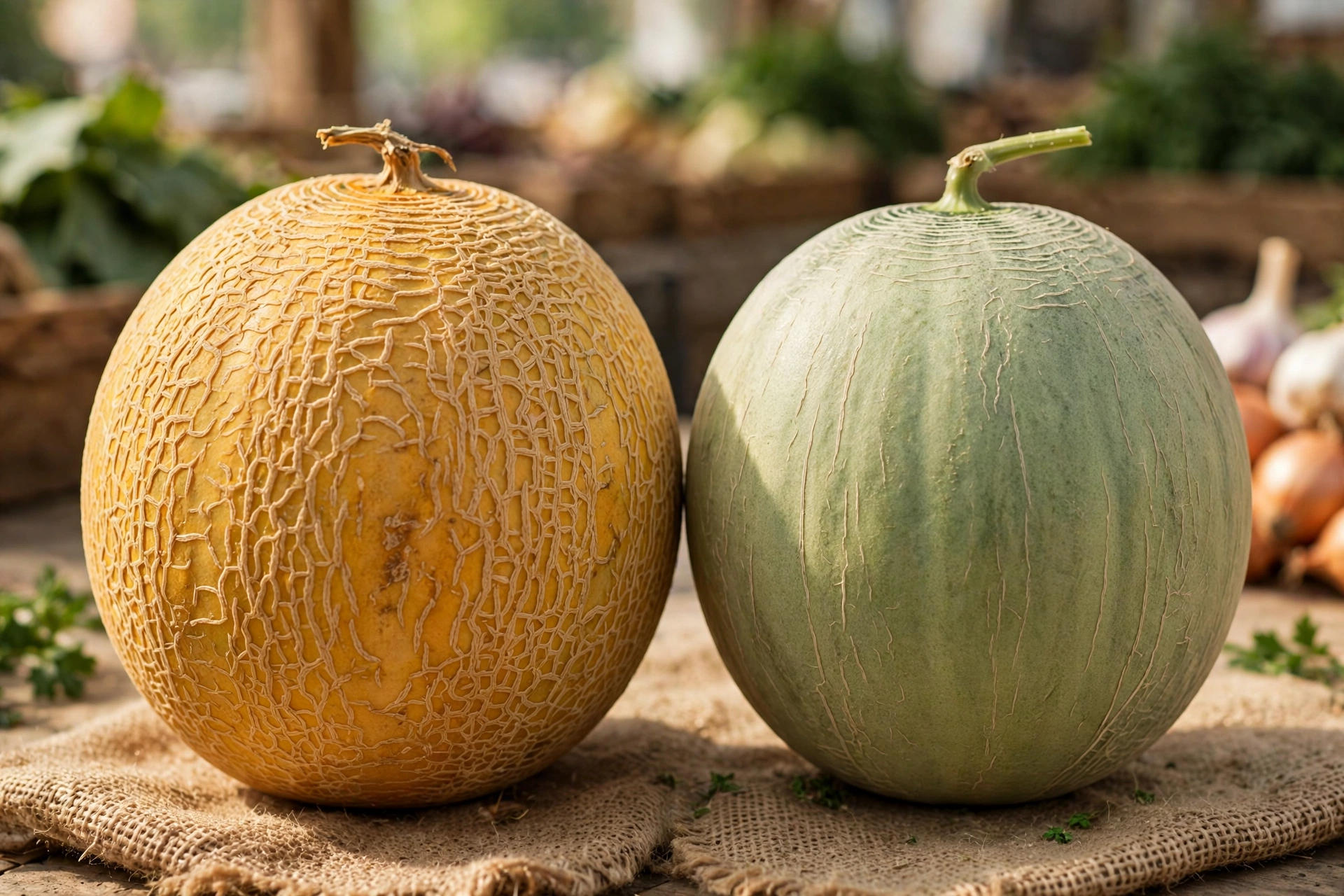
Prefer
- Thick, raised, even netting across the rind
- Golden-tan skin between the netting (not green)
- Heavy feel for the size
- Sweet, musky smell at the stem end
- Firm rind with slight give at the blossom end
Avoid / check more closely
- Green or pale skin between netting lines
- Soft spots, dents, or cracks
- No smell at all (likely unripe)
- Overly strong or fermented smell
- Light-feeling melons
Netting and color: reading the rind
Cantaloupe netting — the raised web pattern — should look thick and corky, covering the melon evenly. Between the lines, the skin should be golden or tan; green means the melon was picked too early and will not ripen well, since cantaloupe does not sweeten much after harvest. Smooth, flat netting or shiny skin are both signs of an underripe melon.
Weight, smell, and the ends
Heft the melon — a ripe cantaloupe feels surprisingly heavy, which means juicy flesh. Sniff the stem end (opposite the blossom scar): a sweet, slightly musky fragrance signals ripeness, while no smell means it is not ready. Press the blossom end gently — it should give just slightly. Avoid strong, fermented odors and any soft or sunken patches.
Storing cantaloupe at home
Keep a whole ripe cantaloupe refrigerated and eat within a few days. An unripe melon can sit at room temperature a day or two, but do not expect big improvements. Once cut, wrap tightly, refrigerate, and use within three days. Wash the rind before cutting — the knife can drag surface bacteria into the flesh.
Common questions
Will cantaloupe ripen on the counter?
Only slightly — it softens a bit but does not get sweeter. Buy one that already smells ripe.
Why wash the rind if I do not eat it?
Cutting drags whatever is on the rind into the flesh. A quick scrub under running water reduces that risk.
How do I know if cut cantaloupe is bad?
Slimy texture, sour smell, or off flavors mean it is done. When in doubt, throw it out.
References
U.S. Food and Drug Administration — Selecting and Serving Produce Safely. Reference for produce selection, handling, and visible damage.
Prepared October 11, 2026 with AI assistance. Cited sources do not endorse the entire article.