When buying beef, check that the packaging is intact, the product is kept cold, and the label provides information you can use. Then choose a cut and thickness suited to your meal. Color can change with packaging and oxygen exposure, so red or brown tones alone are not enough to decide whether meat is spoiled.
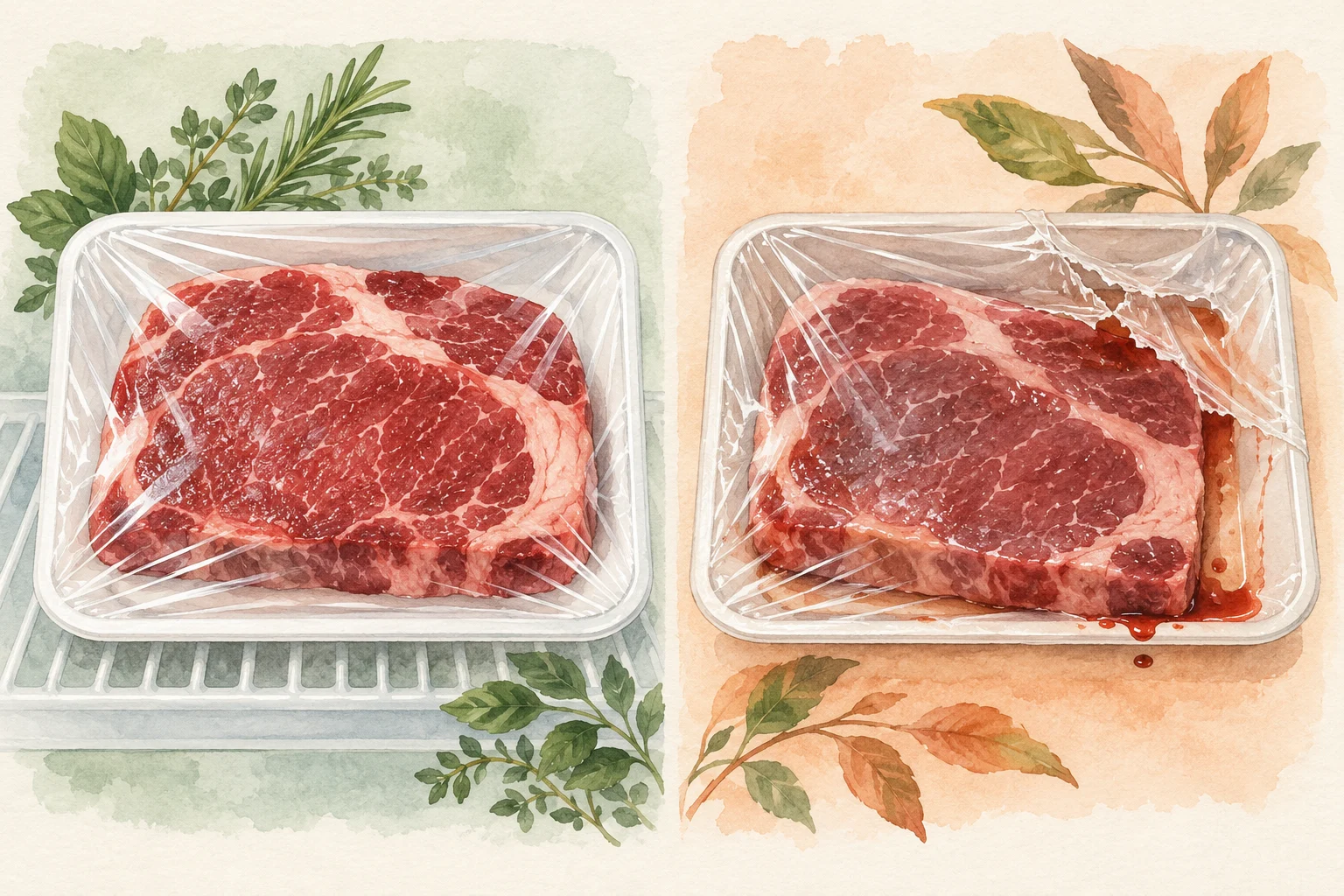
Prefer
- Sealed packaging without tears or leaks
- Kept refrigerated at the store
- Clear source and storage information
Avoid / check more closely
- Torn packaging or leaking juices
- Unclear storage time or conditions
- An unusual smell or slimy surface
Check the refrigerated display and packaging
Look at where the meat is displayed and how it is kept cold before judging the steak itself. Choose products with traceable information and readable labels. For packaged meat, check the wrapping, tray bottom, and dates. A torn or leaking pack is a reason to choose another, even if the meat looks attractive.
Does brown beef mean it has spoiled?
Meat color can change with exposure to oxygen and packaging conditions. USDA explains that a color change alone does not establish spoilage. The rule 'red is good, brown is bad' does not work for every situation. Equally, bright red meat still needs proper storage.
Warning signs that need more attention
An unusual smell or a sticky or slimy texture can be warning signs when quality is in doubt. Do not taste raw meat to check it. If you do not know how long it has been left unrefrigerated, its appearance and smell cannot confirm safety. Ask the seller or choose another product with clearer information.
Choose a beef cut for your recipe
A cut for slow cooking and a cut for pan-searing may need different thicknesses and textures. Tell the seller what you plan to cook so you can choose an appropriate cut. This is a question about the finished meal, separate from hygiene. Do not choose a piece simply because its color looks better than another.
Keep raw beef separate on the way home
Buy meat near the end of your shopping trip, keep it separate from produce eaten raw, and refrigerate it promptly. Use separate utensils for raw meat. When cooking, use a food thermometer and the temperature guidance for that type of meat rather than relying on its inside color. Do not try to rescue spoiled meat with seasoning or extra cooking.
Common questions
Is bright red beef always fresh?
No. Bright red color does not establish the storage history or safety of the meat. Check the packaging, label, and refrigeration conditions as well.
Should I avoid a leaking meat package?
Choose another intact package. A leak makes it harder to contain raw meat juices and can contaminate other groceries. Do not use an attractive meat color to overlook damaged packaging.
References
USDA FSIS — The Color of Meat and Poultry
Reference for the limits of judging meat by color. The illustration compares intact packaging with damaged, leaking packaging.
Prepared October 8, 2026 with AI assistance. Cited sources do not endorse the entire article.