
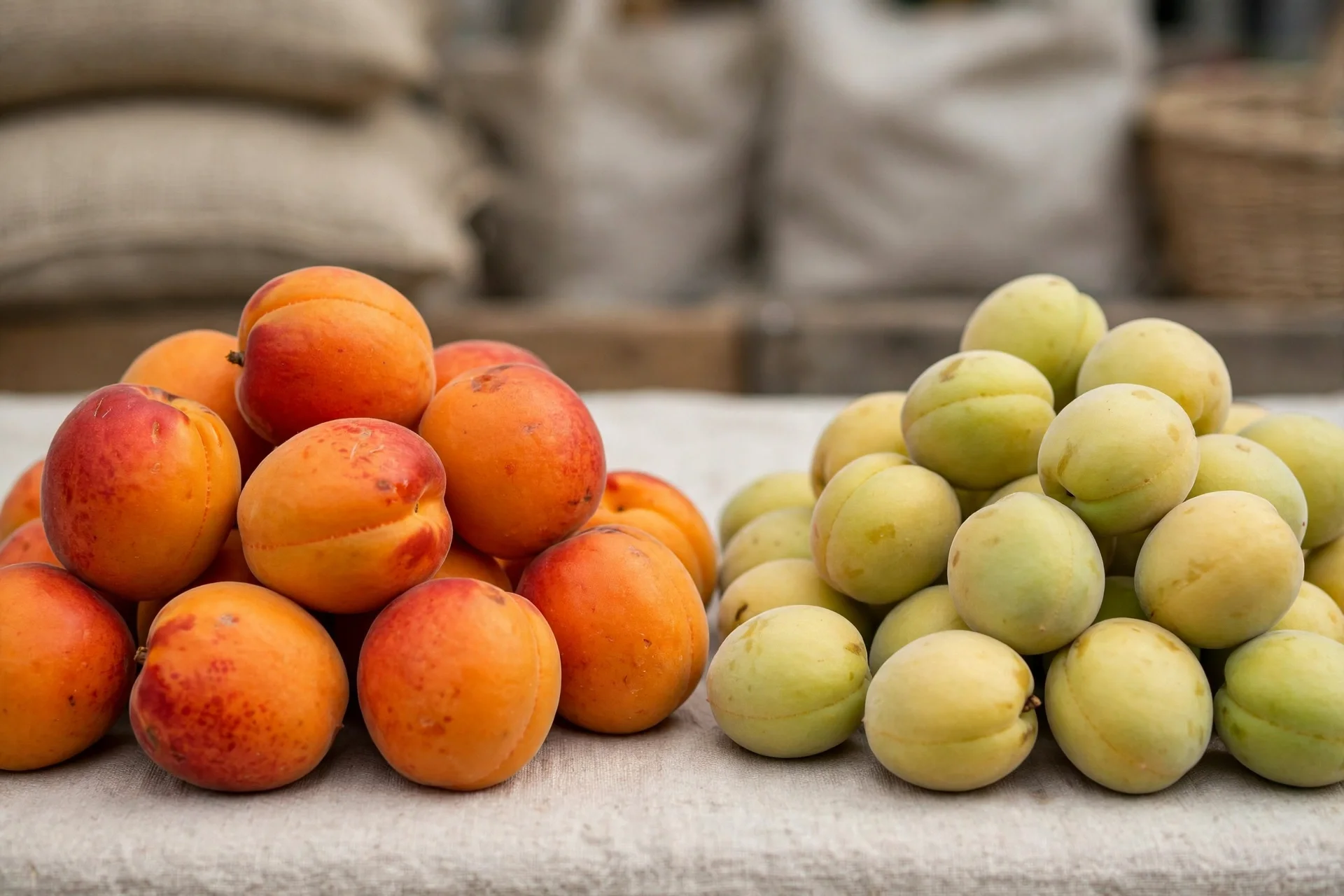
To choose ripe apricots, look for fruit with a deep orange-gold color, a light floral fragrance, and flesh that gives just slightly when you press it gently. A ripe apricot feels plump and smooth, not hard like a small peach and not soft to the point of collapsing. Skip fruit that is mostly yellow-green, heavily bruised, or wrinkled, since apricots picked too early rarely develop their full flavor at home.
Prefer
- Deep orange to orange-gold color with no large green patches
- Flesh that gives slightly under gentle pressure
- Plump, smooth skin without deep wrinkles
- Sweet, floral fragrance at the stem end
- Fruit that feels fairly heavy for its size
Avoid / check more closely
- Hard, pale yellow or green fruit that feels like stone
- Deep bruises, cuts, or leaking juice
- Wrinkled, shriveled skin that suggests drying out
- Mushy spots or a sour, fermented smell
- Fruit with dark mold around the stem
Color tells you more than the blush
Apricots are easy to misjudge because a rosy blush looks attractive but says little about ripeness. Focus instead on the background color: ripe fruit is a rich orange or orange-gold all over, while underripe fruit stays pale yellow or shows green near the stem. The same color-first habit helps with similar stone fruit — if you already know how to choose plums, apply the same patience and look past surface shine to the overall tone. Apricots are usually picked close to ripe because they soften quickly, so a fully orange fruit in the store is often ready within a day or two.
Texture matters just as much. Hold the apricot without squeezing hard and press very lightly with your thumb. Ripe fruit yields a little and springs back slowly; unripe fruit feels firm and dense, and overripe fruit feels soft all over with skin that may slip. Because apricots bruise easily, stores sometimes display them in protective trays — check the underside of each fruit, where bruises hide, before you commit to a pack.
Ripeness, fragrance, and timing
Smell is a useful second check. A ripe apricot has a gentle, sweet, almost honeyed fragrance, especially around the stem. Little or no scent usually means the fruit was picked early and will taste tart and flat rather than aromatic. This sniff test works in a similar way for choosing peaches, another stone fruit where fragrance often predicts flavor better than color alone. If your apricots are orange but still firm, leave them at room temperature in a single layer for a day or two, checking morning and evening, because they can move from firm to overripe surprisingly quickly.
Season helps set expectations. Apricots have a relatively short fresh season in late spring and early summer in many regions, and in-season fruit is more likely to have been picked near maturity. Out of season, fruit may have traveled farther and been picked firmer to survive transport. That does not make it a poor choice, but it does mean you should be more selective, choose the most deeply colored fruit available, and plan to use it soon after it softens.
How apricots compare with other stone fruit
If you shop for stone fruit regularly, apricots sit between plums and peaches in handling: they are smaller and more delicate than peaches, and they bruise more easily than plums. Shoppers who like how to choose nectarines will recognize the same gentle-pressure test, but apricots need an even lighter touch. Avoid stacking them under heavier fruit in your bag, and carry them on top of your shopping where they will not be crushed on the way home.
At home, keep ripe apricots in the refrigerator and use them within a few days. Cold storage slows softening but can dull flavor if fruit stays there too long, so let refrigerated apricots sit at room temperature for a short while before eating if you prefer a fuller aroma. Unripe fruit should stay out of the fridge until it softens, since cold temperatures can interfere with ripening and leave the texture mealy. Wash apricots just before eating, dry them gently, and remove any fruit that develops mold so it does not affect the rest.
Common questions
Are apricots ripe when they are soft?
Softness alone is not enough. A ripe apricot should be deep orange and fragrant as well as slightly yielding. Fruit that is soft but pale or scentless was often picked too early or has simply broken down, and the flavor is usually disappointing.
Can apricots ripen on the counter?
Apricots can soften and become juicier on the counter, but they develop only limited additional sweetness after picking. Starting with deeply orange, fragrant fruit gives you a much better result than buying hard, green fruit and hoping it will transform.
Should I refrigerate apricots?
Refrigerate apricots once they are ripe to slow further softening, and use them within a few days. Keep unripe apricots at room temperature until they give slightly, then move them to the fridge if you are not eating them the same day.
References
U.S. Food and Drug Administration — Selecting and Serving Produce Safely. Reference for produce selection, handling, and visible damage.
Prepared October 21, 2026 with AI assistance. Cited sources do not endorse the entire article.