
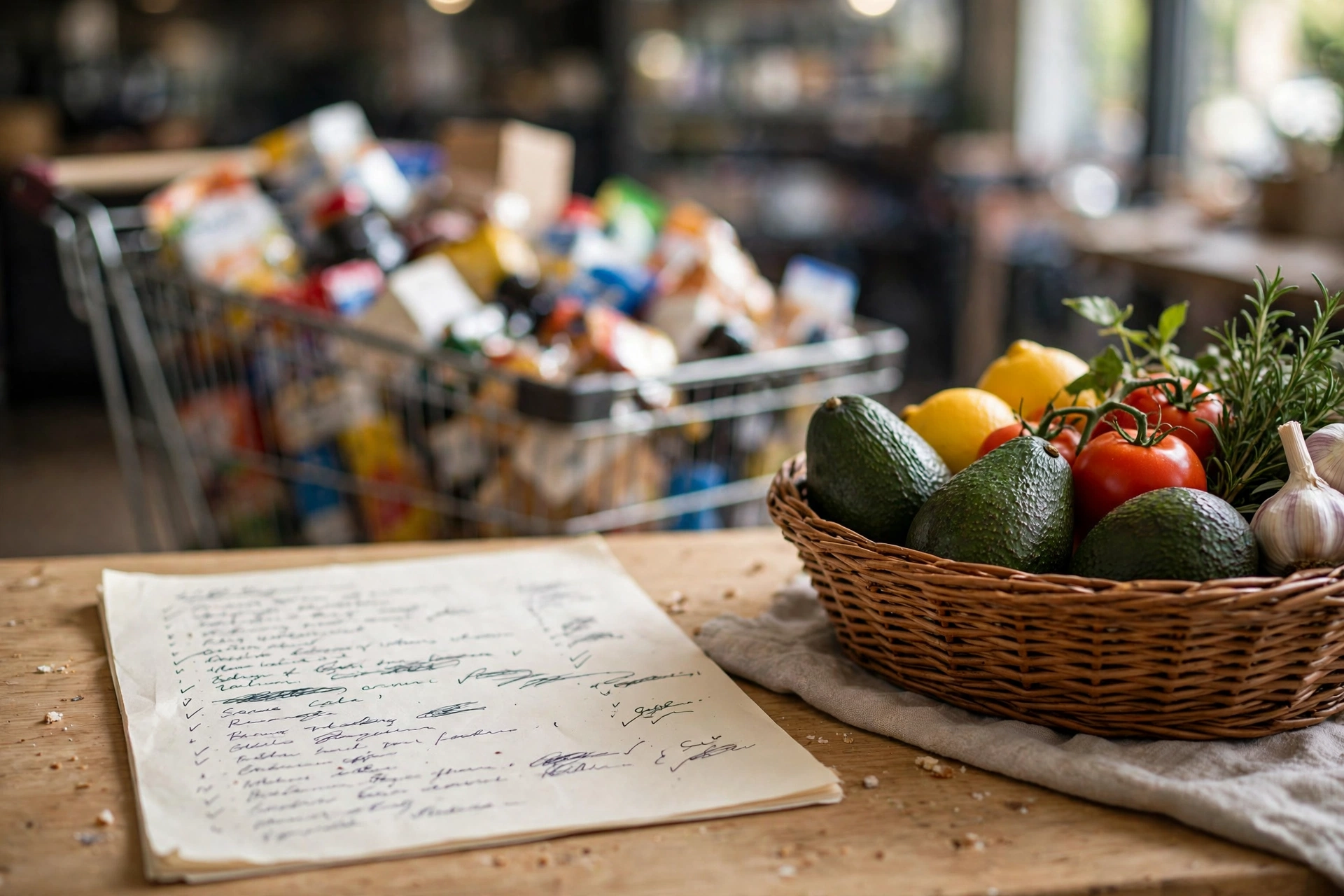
To plan a good grocery list, start by checking what you already have — fridge, freezer, and pantry — so you do not buy duplicates. Then sketch a rough meal plan for the week and list only the ingredients you are missing. Organize the list by store section (produce, dairy, meat, pantry) to shop faster and impulse-buy less. Stick to the list in the store, but stay flexible enough to swap in a great sale or seasonal deal. Shoppers who plan generally waste less food and spend less money.
Prefer
- Checking fridge, freezer, and pantry first
- A rough weekly meal plan before listing
- Grouping items by store section
- Listing quantities, not just item names
- Leaving room for seasonal deals and swaps
Avoid / check more closely
- Shopping hungry without a list
- Vague entries like “vegetables” with no plan
- Buying duplicates of what you already own
- Over-planning rigid meals you will not cook
- Ignoring what needs using up first
Start with an inventory, not a blank page
The most skipped step is also the most valuable: look before you list. Open the fridge and note what needs using up — those items should shape your meal plan, not your cravings alone. Check the freezer for proteins you forgot and the pantry for half-used staples. This five-minute scan prevents the classic duplicate purchase and turns forgotten ingredients into planned meals. Many households find that “shopping their kitchen first” cuts their list by a noticeable amount every single week.
Plan meals loosely, not rigidly
You do not need a minute-by-minute menu — a loose framework works better. Pick three to five dinners for the week, plan to repeat easy lunches, and keep breakfasts simple and consistent. Build in one flexible night for leftovers or takeout so the plan survives a busy day. Choose meals that share ingredients: a roast chicken becomes chicken soup, and extra rice becomes fried rice. This overlap is the real secret — it means fewer unique items to buy and less food stranded without a purpose.
Organize the list by store section
A list grouped by section — produce, bakery, dairy, meat, frozen, pantry — turns shopping into one efficient loop instead of zigzagging across the store. Less backtracking means less time and fewer impulse grabs. Put the most perishable picks last in your route so they spend less time warming up. If your store has a consistent layout, order the sections to match it. Phone notes apps with checkboxes work well; paper lists work just as well. The format matters less than the grouping.
Storing your haul: the post-shop routine
A good list ends with a good put-away. Unpack promptly: refrigerate cold items first, freeze what you will not use in a few days, and store pantry goods in their spots. Wash and prep produce you will eat raw — ready-to-eat fruit and vegetables get eaten far more often. Note anything close to its date and plan it into the next day or two of meals. This ten-minute routine protects everything the list just saved you.
Common questions
How often should I grocery shop?
Once a week suits most households and matches how long fresh produce keeps. Twice a week works if you buy a lot of fresh fish or delicate greens — just keep each trip list-driven.
Should I use a paper list or an app?
Whichever you will actually use. Apps make it easy to keep a running list and share it with family; paper never runs out of battery. Organized by section, both work.
How do I stop impulse buying?
Shop with a list, eat before you go, and give yourself a small “flex budget” for one unplanned find. Total bans usually backfire; a little planned flexibility does not.
References
U.S. Food and Drug Administration — Food Labeling & Nutrition. Reference for planning purchases using food labels and nutrition information.
Prepared October 13, 2026 with AI assistance. Cited sources do not endorse the entire article.