
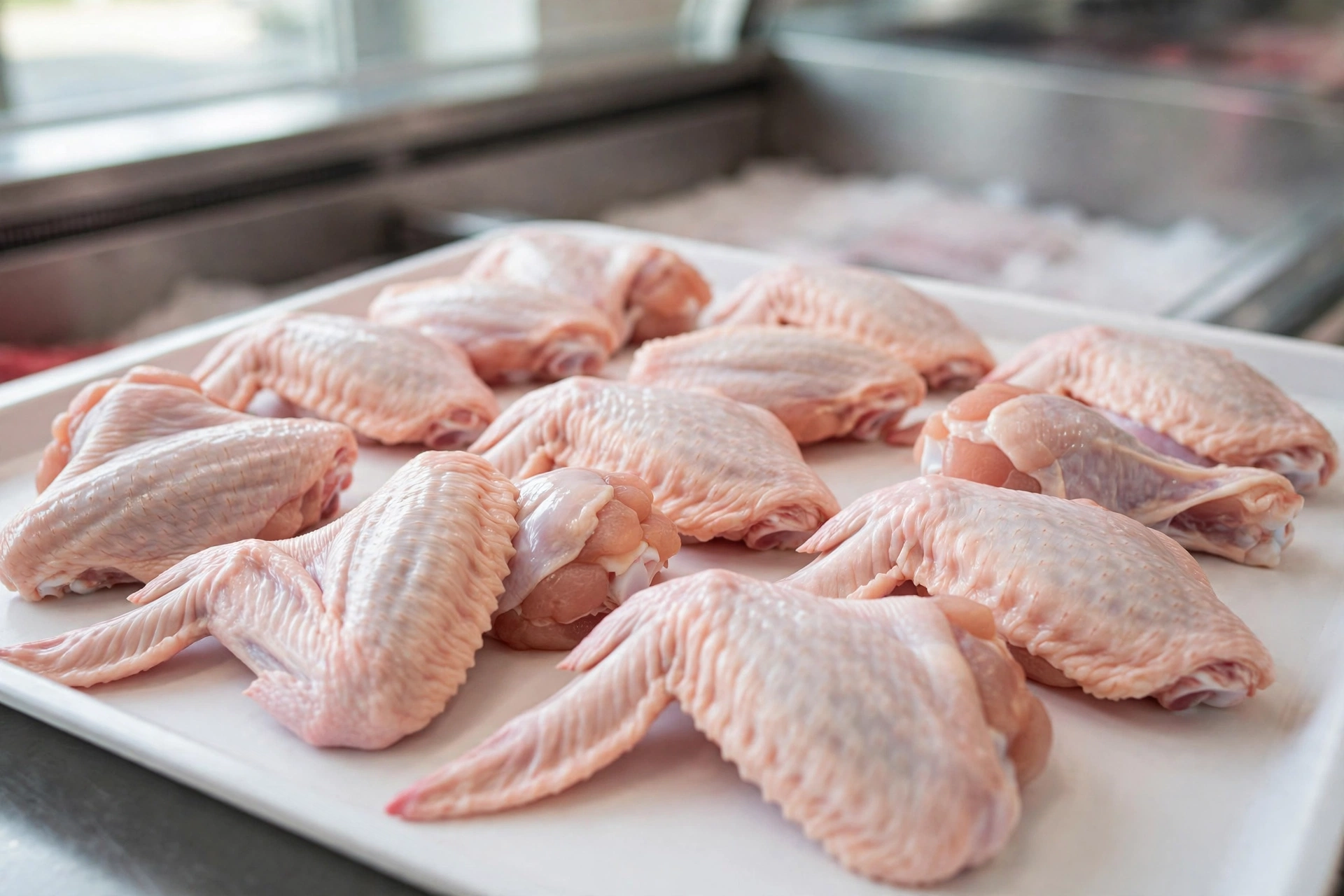
To choose fresh chicken wings, look for pieces that are plump with smooth, pale pink skin and no tears. They should smell like almost nothing — fresh chicken has a very mild scent. The package should be cold, tightly sealed, and free of excess liquid. Avoid wings with gray or yellowish skin, a slimy film, or any sour or sulfurous smell. Choose packs where the wings look uniform in size so they cook evenly.
Prefer
- Plump pieces with smooth, unbroken skin
- Pale pink, even color
- Almost no smell
- Uniform size within the pack
- Cold, tightly sealed packaging
Avoid / check more closely
- Gray, green, or yellowish discoloration
- Slimy or sticky surface film
- Sour, sulfurous, or strong odor
- Torn skin or visible bone fragments
- Excess liquid pooling in the tray
Skin and color tell the story
Fresh chicken wings have skin that looks smooth and slightly glossy, in a pale pink to light beige tone. Small variations are normal, but patches of gray or green are warning signs of spoilage, and an overall yellow cast can indicate age — though some yellowing comes from the bird’s diet and is harmless, dull yellow-gray skin combined with odor is not. The skin should be intact; tears expose the meat to air and drying. A few pinfeathers are a cosmetic issue only and pull out easily.
Smell is the decisive test
Fresh raw chicken smells like almost nothing — perhaps a faint, clean, slightly metallic note. Any sour, eggy, or sulfur-like smell means bacteria have multiplied and the wings should not be bought, no matter how they look. Because smell is so decisive, avoid packs where you cannot get a sense of freshness, and always check the sell-by date. If wings smell off after you open them at home, do not try to rinse and salvage them — discard them.
Whole wings vs. party packs
Wings are sold as whole wings (drumette, flat, and tip attached) or as “party wings” / “wingettes” with the tip removed and the two meaty sections separated. Party packs are more convenient and cook evenly, while whole wings are often cheaper per pound. If you buy whole wings, you can separate them yourself at the joints with a sharp knife and save the tips for stock. For even cooking, pick pieces of similar size — a pack mixing tiny flats with huge drumettes will cook unevenly.
Storing chicken wings at home
Refrigerate wings immediately and cook within one to two days, or freeze for up to nine months in airtight packaging. Thaw in the refrigerator, never on the counter. Pat wings dry before cooking for crispier skin — surface moisture is the enemy of browning. Because wings are often cooked from fresh, buy only what you will use soon; refreezing thawed wings is not recommended for quality.
Common questions
Why do my wings feel slimy?
A slight moistness is normal, but a distinctly slimy or sticky film that does not rinse clean usually signals bacterial growth. Combined with any off smell, it means the wings should be discarded.
Are air-chilled wings worth it?
Air-chilled chicken is cooled with cold air instead of a water bath, so it absorbs less water and the skin tends to crisp better. Many cooks prefer it for wings, though it usually costs more. The freshness checks are the same either way.
Can I freeze fresh wings I will not use in time?
Yes — freeze them as soon as possible in a single layer on a tray, then transfer to a freezer bag with air removed. They keep for several months and can be cooked from thawed for the best texture.
References
USDA Food Safety and Inspection Service — Poultry: Safe Food Handling. Reference for selecting and handling poultry safely.
Prepared October 13, 2026 with AI assistance. Cited sources do not endorse the entire article.