
To choose a good flank steak, look for a cut with even thickness from end to end, a deep cherry-red color, and a clearly visible grain running along the meat. The surface should look moist but not wet, with no gray patches or off smell. Pick the thickest, most uniform piece you can find — thin tapered ends overcook while the center is still rare. Avoid steaks with a strong sour odor, slimy film, or brown-gray discoloration.
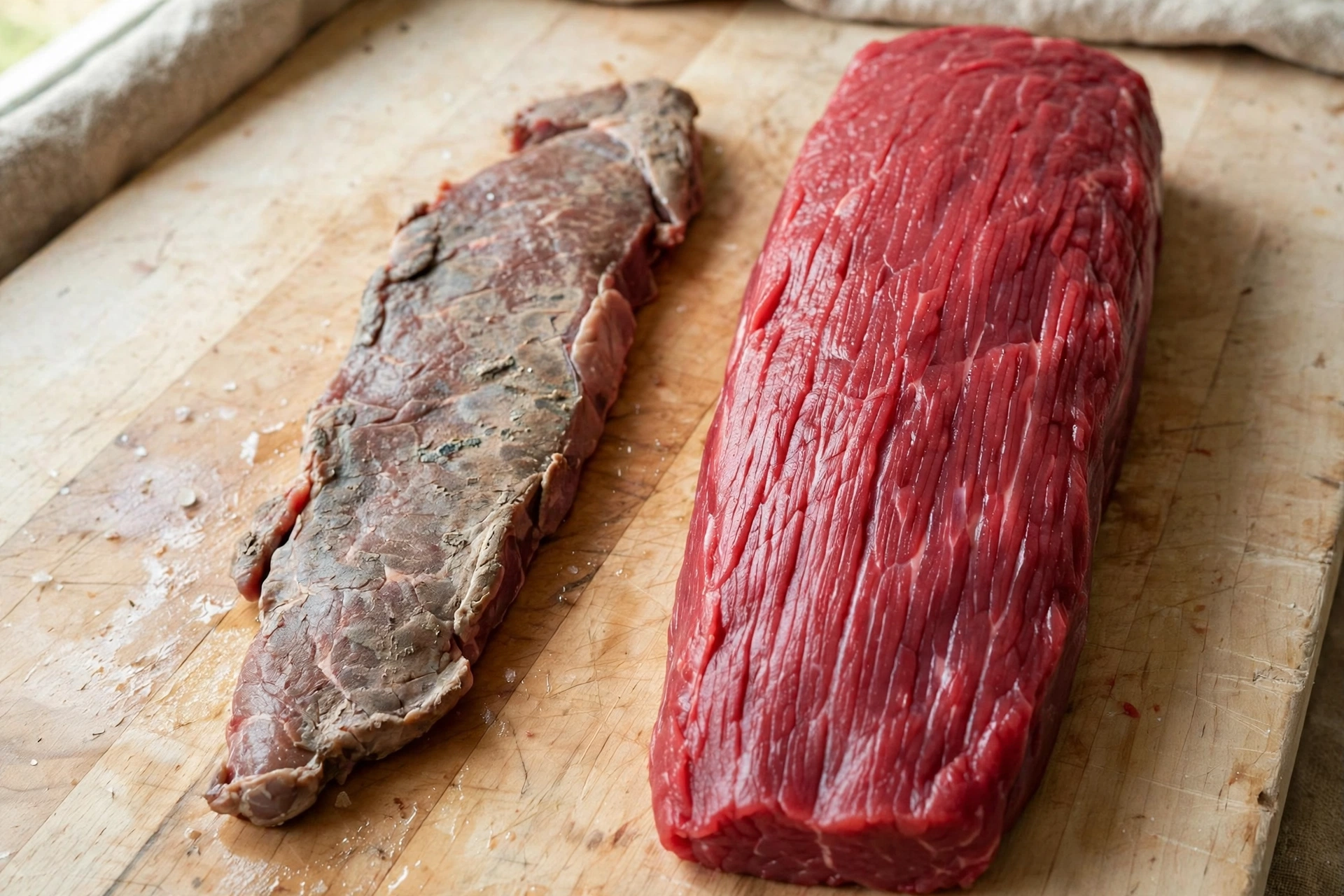
Prefer
- Even thickness across the whole cut
- Deep cherry-red color with a fresh sheen
- Clearly visible long muscle fibers (the grain)
- Moist surface with no pooling liquid
- Clean, mild meaty smell
Avoid / check more closely
- Thin, tapered ends that will overcook
- Gray or brown patches on the surface
- Slimy film or sticky texture
- Sour or ammonia-like smell
- Excessive liquid in the package
Thickness and shape matter most
Flank steak is a long, flat cut, and its shape decides how evenly it cooks. Look for a piece that is roughly the same thickness from one end to the other — ideally around an inch thick. Steaks that taper to a thin tail will have that end turn leathery while the thick center reaches medium-rare. If the only options have thin ends, you can fold the tail under and tie it for more even cooking, but starting with a uniform cut is easier. Also check the width: a very wide, short flank can be harder to slice across the grain neatly than a longer, narrower one.
Read the grain and the color
The grain — the direction the muscle fibers run — is the defining feature of flank steak, and you will slice across it later, so make sure you can see it. Long, distinct fibers running the length of the cut are normal and desirable; what you want to avoid is a surface that looks mushy or indistinct, which can indicate poor handling. Color should be a rich cherry red. A little darkening on the exterior from air exposure is normal, but widespread gray or brown tones suggest age. The fat on a flank steak is minimal — a thin outer layer is fine, but thick waxy patches of hard fat are worth trimming and add little flavor.
Freshness checks at the counter
Press the meat gently through the wrap: it should feel firm and spring back, not leave an indentation or feel soft. Check the packaging date and choose the pack with the latest date, and look for tight, intact wrapping with no tears or excess air. If buying from a butcher case, ask when it was cut — flank steak is best within a day or two of cutting. A faint metallic or bloody smell is normal for fresh beef; a sour, sweet, or ammonia note means it has turned and should be left behind.
Storing flank steak at home
Refrigerate flank steak promptly and use it within one to two days, or freeze it for longer keeping. For freezing, wrap tightly in plastic wrap, then foil or a freezer bag with the air pressed out — it keeps well for up to six months. Thaw in the refrigerator, never on the counter. Because flank is lean, it benefits from marinating: a few hours in an acidic marinade adds flavor and helps tenderness, though marinating cannot rescue a poor-quality cut. Always slice cooked flank thinly against the grain for the most tender bite.
Common questions
What is the difference between flank and skirt steak?
Both are long, flat, flavorful cuts, but flank comes from the abdominal muscles while skirt comes from the diaphragm area. Flank is thicker and leaner with a very visible grain; skirt is thinner with more intense beef flavor and looser fibers. They cook similarly — hot and fast, sliced against the grain.
Should flank steak have much marbling?
Not really. Flank is a lean working muscle, so heavy marbling is unusual. A few fine flecks are a bonus, but the cut’s flavor comes from the muscle itself rather than intramuscular fat, which is why proper slicing matters so much.
Can I tell quality from the package liquid?
A small amount of reddish juice in the tray is normal — it is mostly water and a protein called myoglobin, not blood. A large pool of liquid, though, can mean the meat was previously frozen and thawed, or has been sitting a while, so choose a drier pack when you have the choice.
References
USDA Food Safety and Inspection Service — Meat: Safe Food Handling. Reference for selecting and handling fresh meat safely.
Prepared October 13, 2026 with AI assistance. Cited sources do not endorse the entire article.