
To choose a ripe dragon fruit, look for bright, evenly colored skin — vivid pink or deep red for the common types, bright yellow for the yellow variety — with fresh, green-tipped scales. Hold it gently: a ripe fruit gives slightly under pressure, like a ripe kiwi, without feeling mushy. It should feel heavy for its size. Avoid fruit with many brown, dried-out scales, mushy spots, or a shriveled, dull appearance.
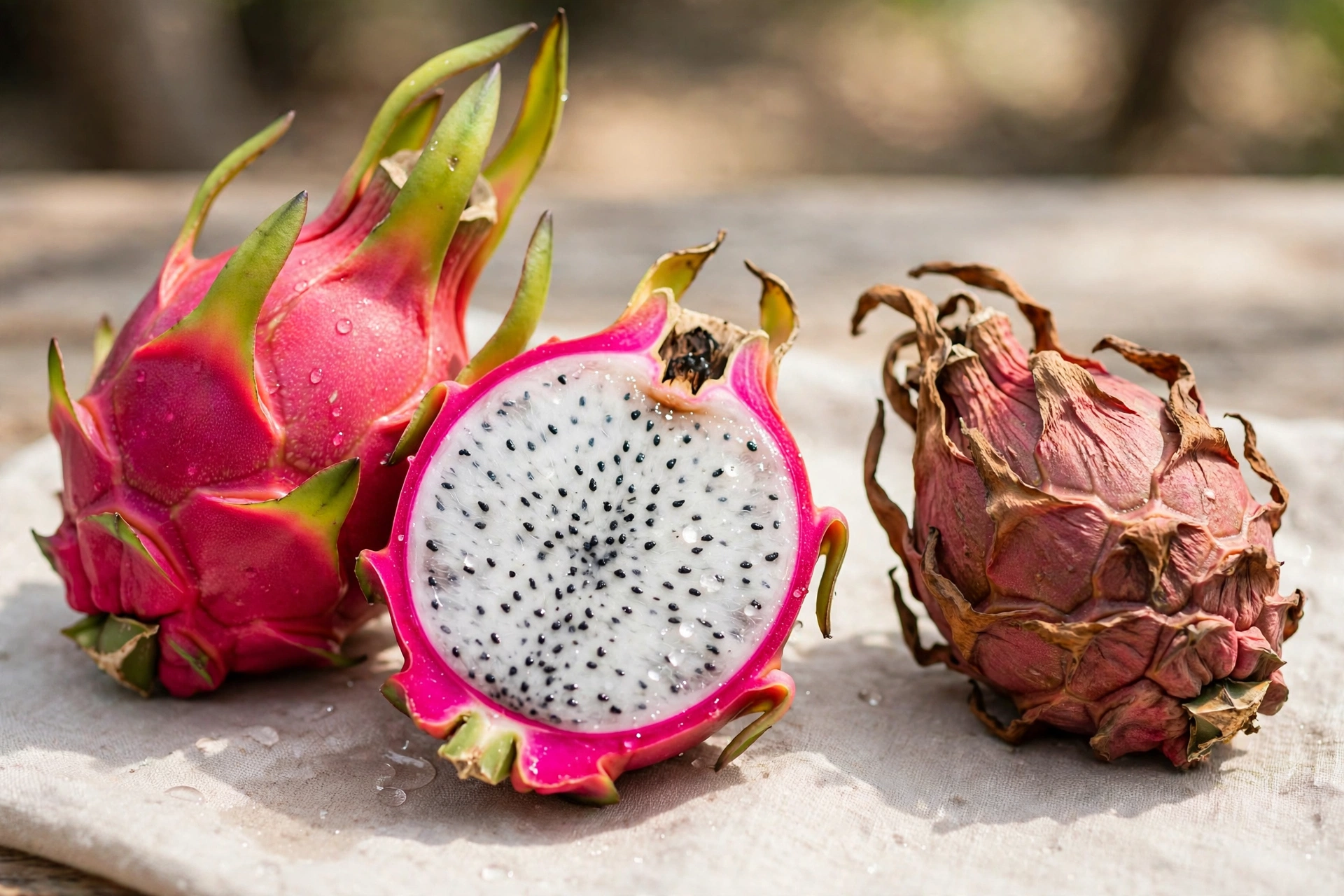
Prefer
- Bright, even, vivid skin color
- Slight give under gentle pressure
- Fresh scales with green tips
- Heavy feel for the size
- Plump, symmetrical shape
Avoid / check more closely
- Mushy or very soft spots
- Many brown, dried, brittle scales
- Shriveled, dull, or faded skin
- Cracks, splits, or leaking areas
- Light-feeling fruit that seems dried out
Color and scales tell the story
Dragon fruit skin is a billboard for freshness. The most common type has vivid magenta-pink skin; it should look bright and saturated, not faded or blotchy. The leafy scales covering the fruit should look fresh with green tips — when the tips turn brown and brittle all over, the fruit is aging. Yellow dragon fruit, a different variety, should be a clear bright yellow rather than greenish (underripe) or brownish (overripe). Some speckling is normal, but large dark blotches or a generally dull look suggest the fruit is past its best.
The gentle squeeze test
A ripe dragon fruit yields slightly when you press it gently with your palm — similar to a ripe avocado or kiwi — and springs back a little. Too firm means underripe; dragon fruit does not ripen much after harvest, so a rock-hard fruit may stay bland. Too soft or mushy means overripe, and the flesh inside may be fermenting. The fruit should also feel heavy for its size, which suggests juicy flesh rather than a dried-out interior. Avoid any fruit with cracks or splits in the skin, which let in microbes and speed spoilage.
Types and what to expect inside
The pink-skinned type usually has white flesh with tiny black seeds and a mild, subtly sweet flavor — refreshing rather than intense. Pink-skinned fruit with red or magenta flesh is typically sweeter and more flavorful. Yellow-skinned dragon fruit, smaller and thornier-looking, is often the sweetest of all. Since you cannot see inside before buying, choose by the ripeness signs above and buy from a store with good turnover. Dragon fruit flavor is delicate, so serve it chilled and fresh to enjoy it at its best.
Storing dragon fruit at home
Ripe dragon fruit keeps a few days at room temperature and up to a week refrigerated. An underripe fruit can sit at room temperature for a day or two to soften slightly, though it will not sweeten much. Once cut, wrap the halves tightly or store in a covered container in the fridge and eat within two to three days. The flesh browns slowly, but cut fruit dries out and picks up odors, so keep it sealed. Cubed dragon fruit also freezes well for smoothies.
Common questions
How do I eat dragon fruit?
Cut it in half lengthwise and scoop out the flesh with a spoon, or peel the skin away from the flesh. The tiny black seeds are edible — they add a slight crunch similar to kiwi seeds.
Why is my dragon fruit tasteless?
Dragon fruit is naturally mild, but blandness often means it was picked underripe. Choosing fruit with bright color, slight give, and good weight gives you the best flavor the variety offers; the red-fleshed and yellow types are sweeter choices.
Can the skin be eaten?
No — only the flesh is eaten. The thick, scaly skin is not palatable; scoop or cut the flesh away from it.
References
U.S. Food and Drug Administration — Selecting and Serving Produce Safely. Reference for produce selection, handling, and visible damage.
Prepared October 13, 2026 with AI assistance. Cited sources do not endorse the entire article.