
To choose a ripe nectarine, start with your nose — a ripe one smells sweet and floral at the stem end, while an underripe one smells like nothing. Hold it gently in your palm: it should yield slightly to pressure, like the fleshy part of your thumb, without feeling mushy. The skin should be smooth, taut, and richly colored with a red blush over a warm yellow or orange background. Avoid nectarines with green patches, bruises, or wrinkled skin.
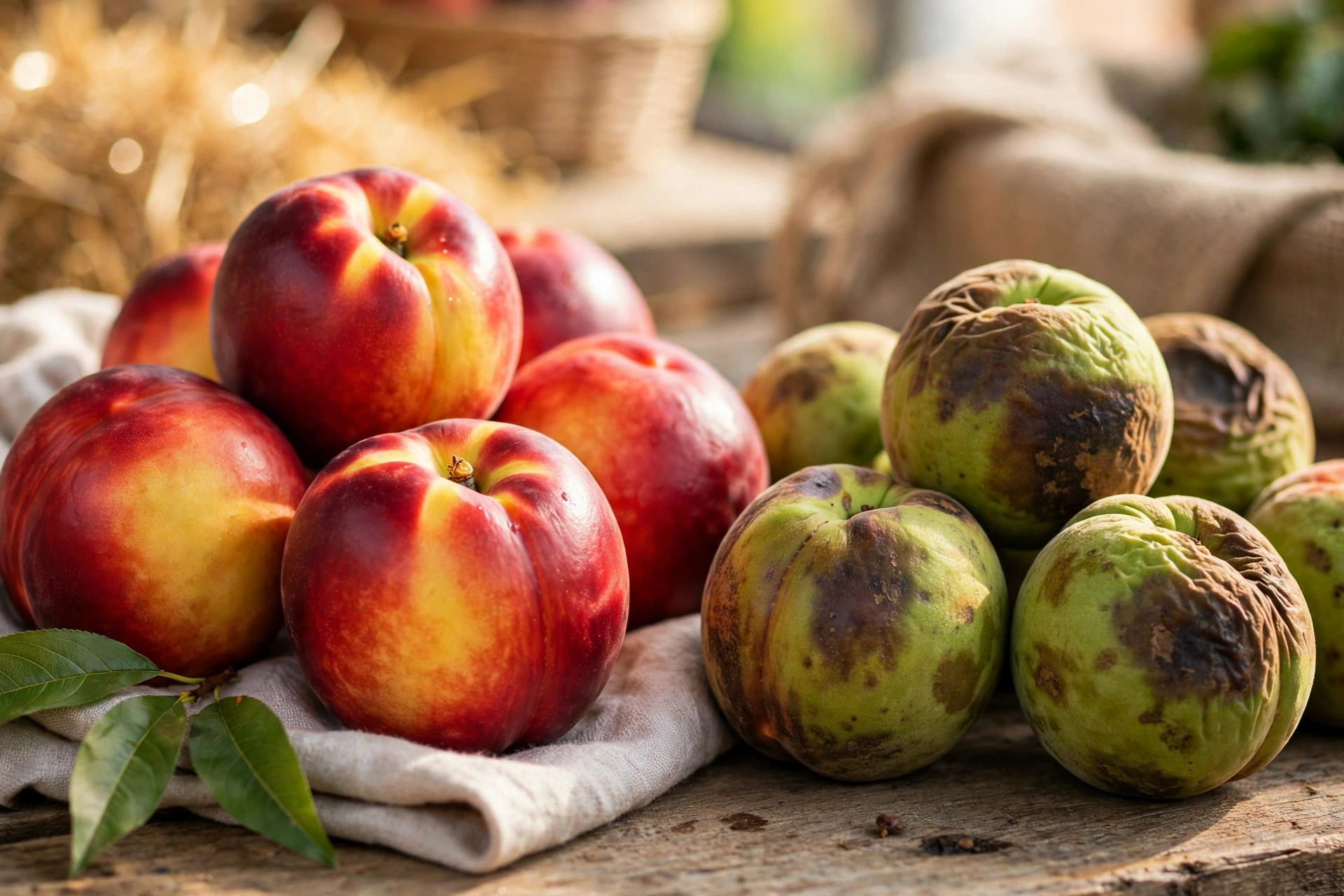
Prefer
- Sweet, floral fragrance at the stem end
- Slight give under gentle palm pressure
- Smooth, taut, unblemished skin
- Deep red blush over a golden background
- Plump, symmetrical shape
Avoid / check more closely
- Green skin near the stem, a sign of underripeness
- Bruises, soft dents, or broken skin
- Wrinkled or shriveled skin
- No fragrance at all
- Overly soft or mushy texture
Smell and touch beat looks
Nectarines are one of the fruits where fragrance is the most honest ripeness signal. A ripe nectarine gives off a sweet, almost honeyed perfume you can detect without pressing your nose to it. If it smells like nothing, it was likely picked too early and may never develop full flavor. The touch test comes next: cradle the fruit in your whole palm and squeeze very gently. Ripe flesh yields slightly and springs back; hard fruit needs more time, and fruit that dents easily is overripe. Never poke with a fingertip — that bruises the flesh and ruins the fruit for the next shopper too.
Reading the skin
Unlike peaches, nectarines have smooth skin, which makes inspection easier — every flaw shows. Look for rich, even color: a deep red or pinkish blush spread over a warm yellow-to-orange background. The background color matters more than the blush: green or pale background near the stem means underripe, while a golden background suggests ripeness. A few tiny white speckles are natural and harmless. Avoid fruit with wrinkled skin, which indicates moisture loss, and skip any with cuts or punctures, since the smooth skin offers little protection once broken.
Season and ripening at home
Nectarines are a summer fruit, at their best from late spring through early fall depending on the region. Out-of-season fruit is often picked hard for shipping and can taste bland. If you can only find firm nectarines, ripen them at home: place them stem-side down in a single layer at room temperature, out of direct sun, and check daily. A paper bag speeds things up by trapping natural ethylene. Once they smell sweet and yield gently, refrigerate and eat within a few days — cold stops ripening but keeps ripe fruit fresh.
Storing nectarines at home
Keep unripe nectarines at room temperature until they soften and smell fragrant, usually one to three days. Ripe nectarines go in the refrigerator, where they keep for three to five days. Do not stack them — their delicate flesh bruises under weight. Wash just before eating, not before storing, since moisture encourages spoilage. For longer keeping, slice and freeze: nectarines freeze well for smoothies and baking, though the texture softens on thawing.
Common questions
What is the difference between a nectarine and a peach?
They are the same species; nectarines simply lack the fuzzy skin gene. Flavor and nutrition are very similar, so choose based on texture preference — many people find nectarines a little firmer and tangier.
Why is my nectarine mealy?
Mealy texture usually comes from fruit that was chilled before it fully ripened, which damages the cell structure. Buying fragrant, in-season fruit and ripening it at room temperature before refrigerating helps avoid it.
Can I eat nectarine skin?
Yes — the smooth skin is entirely edible and nutritious. Just rinse the fruit well first, as with any fresh produce.
References
U.S. Food and Drug Administration — Selecting and Serving Produce Safely. Reference for produce selection, handling, and visible damage.
Prepared October 13, 2026 with AI assistance. Cited sources do not endorse the entire article.