
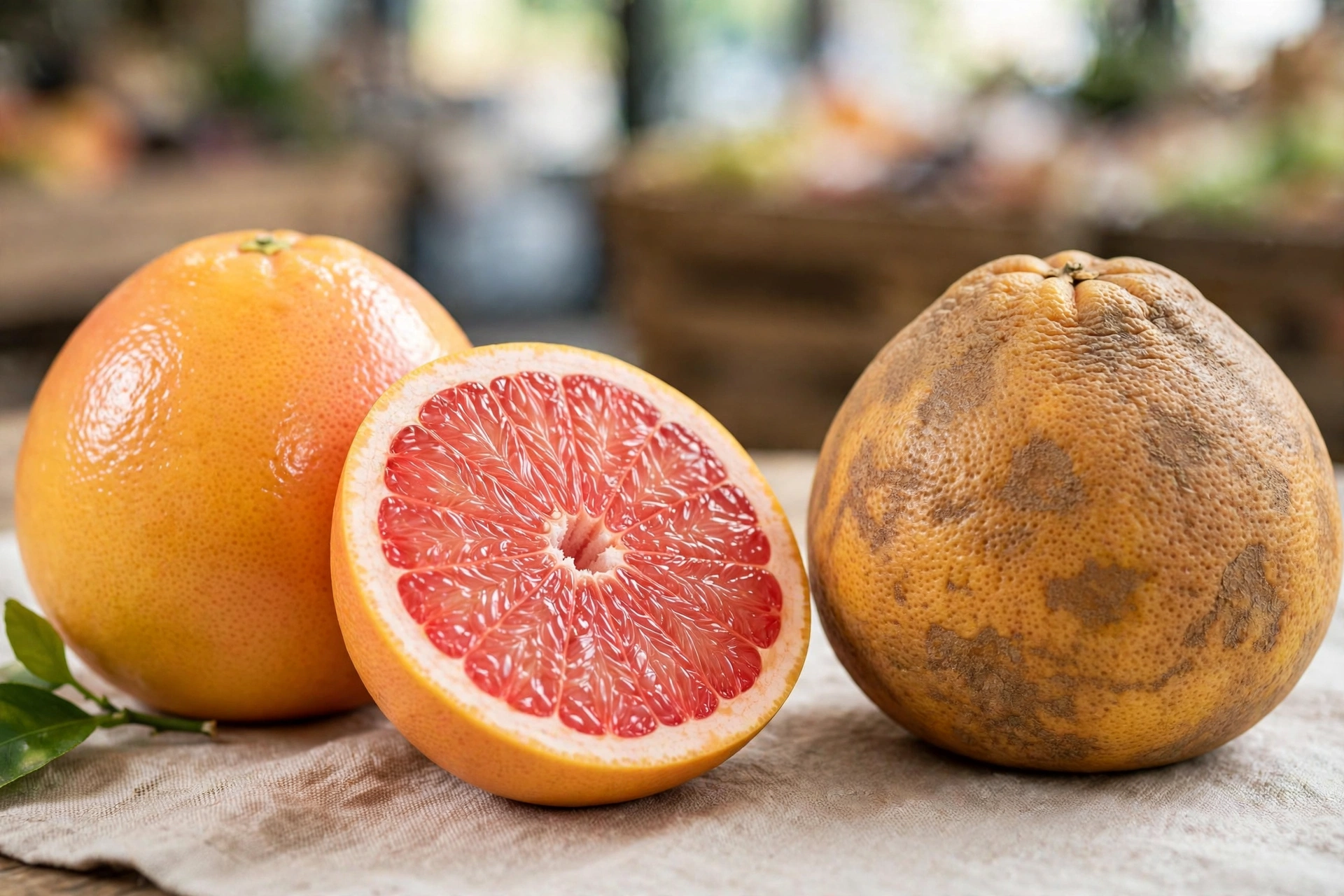
To choose a juicy grapefruit, pick it up first — a good one feels heavy for its size, which is the best sign of plenty of juice inside. The skin should be firm, smooth, and relatively thin, with a bright color appropriate to the variety, from sunny yellow to blushing pink. Give it a gentle squeeze: it should feel firm with just a hint of spring, not rock-hard or spongy. Avoid grapefruit that feels light, has soft spots, or shows rough, thick, bumpy skin.
Prefer
- Heavy feel for the size — the best juiciness clue
- Firm flesh with a slight spring when squeezed
- Smooth, thin-feeling skin with a slight gloss
- Bright, even color for the variety
- Round, well-shaped fruit without flat sides
Avoid / check more closely
- Light-feeling fruit that seems dry inside
- Soft spots, bruises, or spongy areas
- Rough, thick, or bumpy rind
- Dull, shriveled, or wrinkled skin
- Mold or dark patches at the stem end
Weight tells the juiciest story
With grapefruit, weight is the single most reliable quality test you can do in the store. Two fruits of the same size can hold very different amounts of juice, and the heavier one is almost always the juicier. Pick up several and compare them in your hands — the difference is easy to feel once you try. A grapefruit that feels surprisingly light is likely drying out inside, even if the outside looks fine. Thin skin is another good sign, since thick, puffy rinds usually mean less flesh relative to the fruit’s size. A gentle squeeze should meet firm resistance with a little give; hard-as-a-rock fruit may be underripe, while spongy fruit is past its prime.
Skin texture and color cues
Good grapefruit skin looks smooth, taut, and slightly glossy. Minor surface blemishes or light scarring from the grove are cosmetic and do not affect the eating quality, but avoid fruit with deep cuts, punctures, or large soft patches. Color depends on the variety: white grapefruit stays yellow, pink varieties blush, and red or ruby types show a rosy tint — a deeper blush often, though not always, signals a sweeter segment inside. Dull, matte skin or a wrinkled texture suggests the fruit has been stored too long and is losing moisture. Also check the stem end: it should look clean and dry, not moldy or sunken.
Varieties and peak season
The main types you will see are white (pale yellow flesh, more tart), pink, and red or ruby (sweeter and milder). If you prefer less bitterness, choose pink or red varieties. Grapefruit is a winter citrus, with peak season running roughly from November through April, when the fruit is sweetest and best priced. Outside that window, imported fruit is available but may be less consistent. Grapefruit does not ripen further once picked, so buy it ready to eat — color and weight at the store are what you get at home.
Storing grapefruit at home
Grapefruit keeps about a week at cool room temperature, but refrigeration extends that to two or three weeks. Store it loose in the crisper drawer rather than sealed in plastic, which can trap moisture. Keep it away from strong-smelling foods, since citrus can pick up odors. Cut grapefruit should be wrapped tightly or placed cut-side down in a covered container and eaten within a day or two. If you juice it, fresh juice keeps a couple of days refrigerated, though the flavor is brightest right after squeezing.
Common questions
Should grapefruit be refrigerated?
It is not required for a few days, but refrigeration keeps grapefruit fresh much longer — up to three weeks versus about one week on the counter. If you buy several at once, refrigerate them.
Why does my grapefruit taste bitter?
Some bitterness is natural, especially in white varieties and in the pith and membranes. Pink and red types are milder. Bitterness can also come from underripe fruit, so choosing heavy, smooth-skinned fruit in peak season helps.
Can I eat grapefruit with a blemished peel?
Yes, if the blemish is only on the surface. Light scarring or discoloration of the rind does not affect the segments inside. Discard fruit with soft, sunken, or moldy areas that go beneath the skin.
References
U.S. Food and Drug Administration — Selecting and Serving Produce Safely. Reference for produce selection, handling, and visible damage.
Prepared October 13, 2026 with AI assistance. Cited sources do not endorse the entire article.