Best before dates are about quality, not safety: food past this date may taste less fresh but is often still fine if it was stored properly. Use by dates, found mostly on perishable foods like deli meat and dairy, deserve more caution. Neither date marks the exact day food becomes unsafe; both are the manufacturer’s estimate under proper storage conditions.
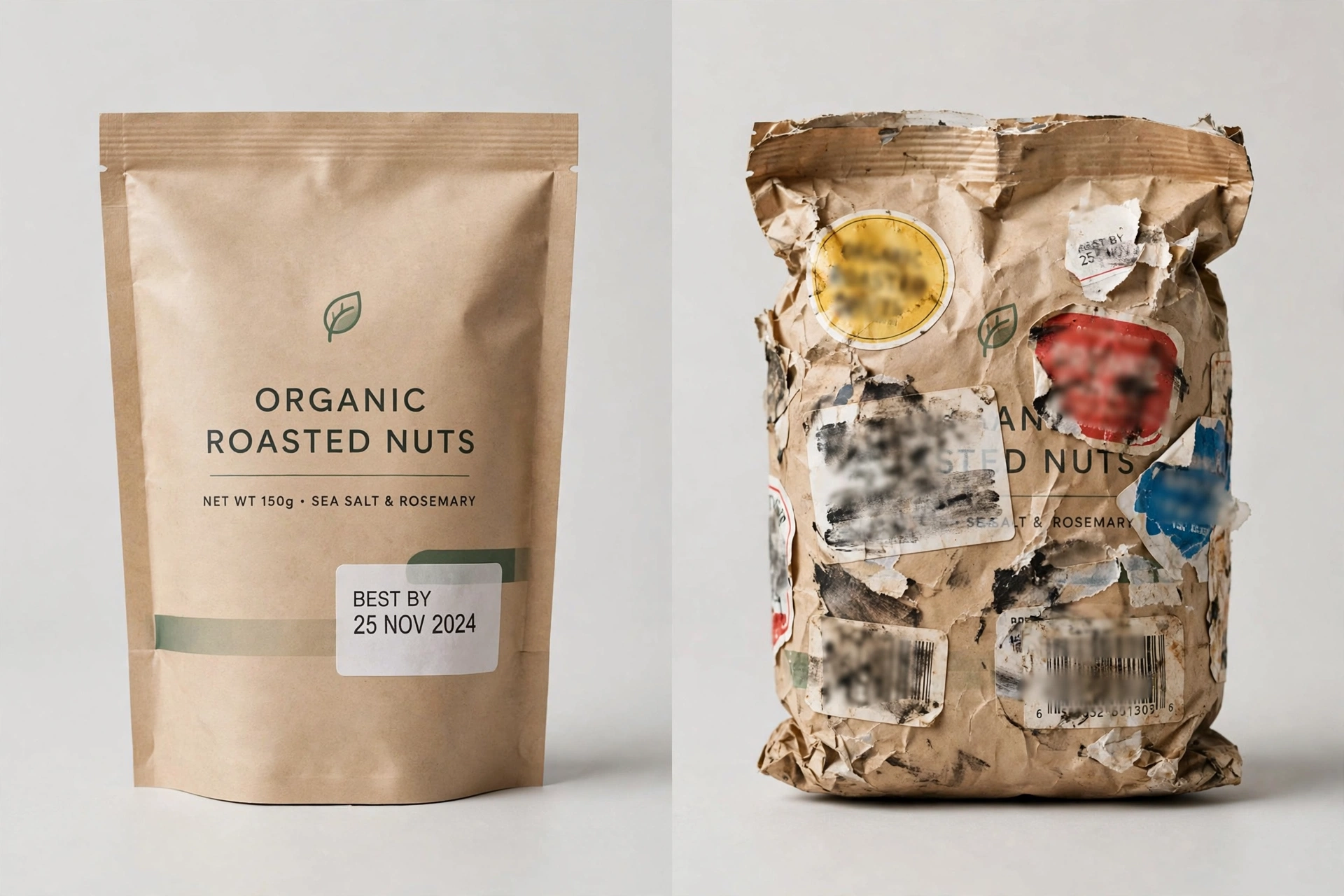
Prefer
- Read the full phrase, not just the date — “best before,” “use by,” and “sell by” mean different things.
- Treat “best before” as a quality guide for shelf-stable foods like crackers, pasta, and canned goods.
- Take “use by” more seriously on perishables such as deli meat, soft cheese, and ready-to-eat salads.
- Check the storage instructions on the label — date labels assume the food was kept as directed.
- Use your senses as a backup: off smells, unusual textures, and damaged packaging are warning signs no date can replace.
- Freeze foods before their date if you cannot use them in time.
Avoid / check more closely
- Treating every date label as a strict safety deadline — most are quality estimates.
- Buying perishables past their “use by” date without a clear plan to use them right away.
- Ignoring how the food was stored — a date means little if the cold chain was broken.
- Assuming “sell by” is the last day you can eat something — it is mainly guidance for stores.
- Judging safety by the date alone while ignoring bulging cans, torn seals, or leaking packages.
What “best before” actually means
“Best before” (sometimes written as “best if used by”) is the manufacturer’s estimate of when the food will be at its peak quality. After that point, flavor, texture, or color may slowly decline, but the food is often still perfectly usable — especially shelf-stable items like crackers, dry pasta, rice, and canned goods.
In the United States, these dates are not federally regulated for most foods (infant formula is the exception). That means the wording and the date itself are the manufacturer’s guidance, not a government-tested safety deadline.
When to take “use by” more seriously
“Use by” dates appear most often on perishable foods with a short shelf life: deli meat, dairy products, prepared salads, and ready-to-eat meals. These are the labels where caution pays off, because perishables can spoil in ways you cannot always see or smell at first.
Treat “use by” as a stronger suggestion than “best before,” and when you are unsure about a perishable item past its date, choosing caution is the sensible move.
What about “sell by” and other phrases?
“Sell by” is mainly a signal for stores about stock rotation, not a deadline for you. Milk and yogurt often stay fine for days after the sell-by date when kept cold. Other phrases you may see include “freeze by,” which suggests when to freeze for best quality, and “packed on,” which simply tells you when the food was packaged.
Because manufacturers choose their own wording, two similar products can carry different phrases. This is exactly why the full phrase — not just the date — is the part worth reading.
Why storage matters as much as the date
Every date label quietly assumes the food was stored as directed: refrigerated foods kept cold, pantry items kept cool and dry. A “best before” date cannot protect food that sat in a warm car for hours or a fridge that lost power overnight.
Once a package is opened, the original date matters less than any “use within X days of opening” instruction on the label. And for leftovers or foods you will not finish in time, the freezer is your best friend — freeze early rather than deciding late.
A simple date-label checklist
- Read the phrase before the date, not just the numbers.
- Match the phrase to the food type: quality guide for shelf-stable, more caution for perishables.
- Follow the storage instructions on the label.
- Check the package condition — seals, cans, and wrappers included.
- When unsure about a perishable past its “use by” date, choose caution.
- Freeze before the date if you cannot use the food in time, and label it with the freeze date.
Common questions
Is food safe after its best-before date?
Often yes for shelf-stable foods, as long as storage was proper and the packaging is intact — though quality may have declined. The date is one clue among several: storage history, package condition, and your senses all count.
Does freezing reset the date?
Freezing pauses quality decline but does not make old food new again. For the best results, freeze before the date rather than after, and write the freeze date on the package so you can keep track.
Why do different brands use different phrases?
Because the wording is largely up to the manufacturer for most foods in the US. There is no single required format, which is why learning what each phrase means is more useful than memorizing any one date.
References
- U.S. Food and Drug Administration — Food Labeling
- USDA Food Safety and Inspection Service — Food Product Dating
Prepared October 8, 2026 with AI assistance. Cited sources do not endorse the entire article.