
A good brisket bends. Pick up the packaged brisket and flex it — a pliable, bendy brisket usually cooks up more tender than a stiff board-like one. Look for a deep red color, an even fat cap (ideally around 1/4 inch after trimming), and visible marbling in the flat. Decide first whether you want a whole packer, just the flat, or just the point, since each cooks differently. Avoid stiff briskets, gray meat, damaged packaging, or sour smells.
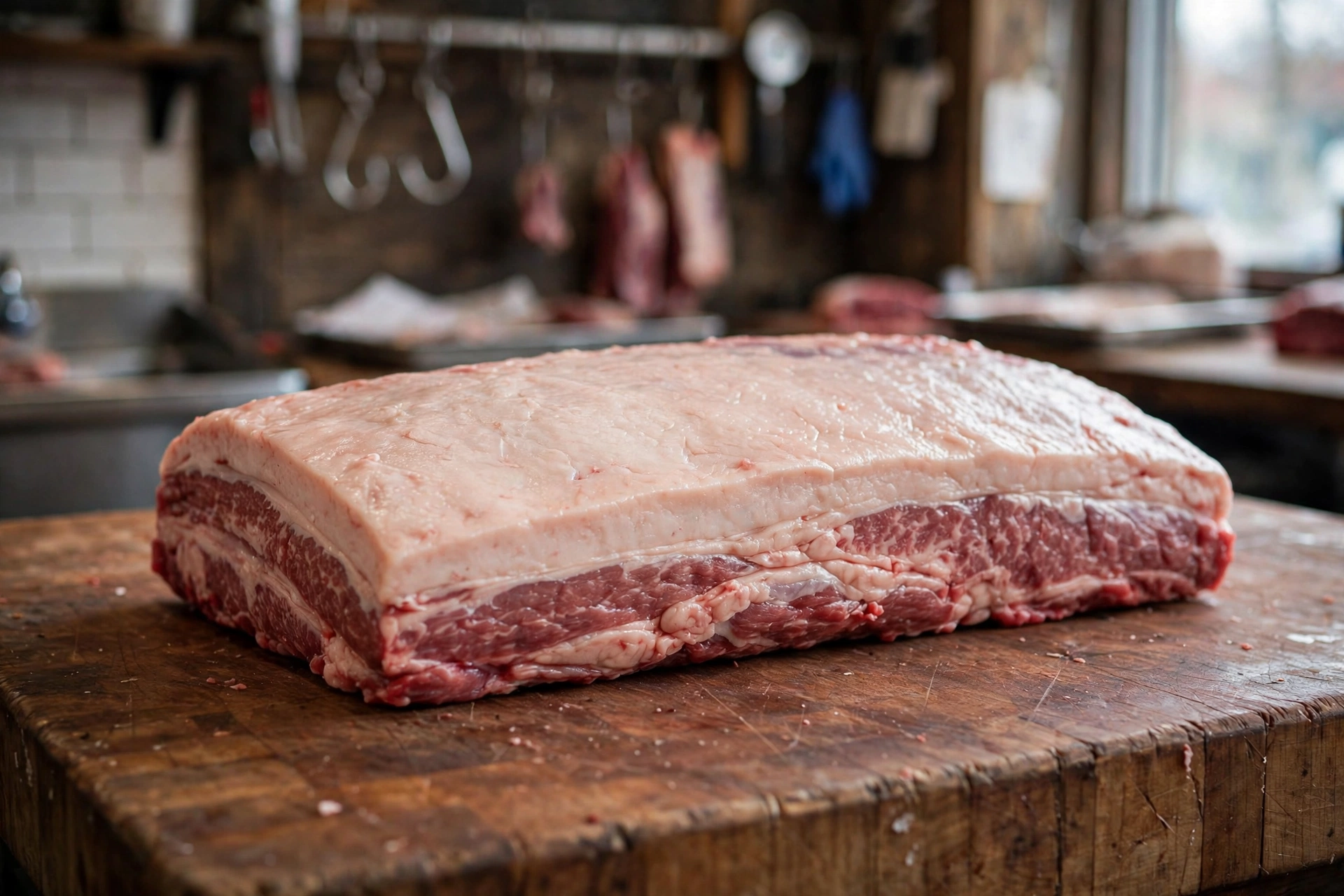
Prefer
- A flexible, bendy feel when you lift and flex the package
- Deep red color throughout the visible meat
- An even fat cap, roughly 1/4 inch thick
- Visible marbling in the flat section
- Intact vacuum packaging with little excess liquid
- A thick, even flat with no thin, tapered tail end
Avoid / check more closely
- A stiff, board-like brisket that barely bends
- Gray, brown, or dull patches on the meat
- A fat cap that is paper-thin or excessively thick and hard
- Torn or leaking cryovac packaging
- Sour or off smells
- A very thin, uneven flat that will dry out
The bend test
Pitmasters swear by the bend test, and it works in the store too. Hold the packaged brisket at the middle and see how readily it drapes — a brisket that bends easily tends to have looser muscle structure and more intramuscular fat, both of which point toward a more tender result after a long cook. A brisket that stays rigid as a plank is often leaner and denser, and it is more likely to eat dry or tough. This is not a guarantee — cooking method still matters enormously — but among several briskets at the same price, the flexible one is generally the better bet.
Flat, point, or whole packer?
A whole “packer” brisket includes two muscles: the leaner flat and the fattier, richer point, joined by a fat seam. Packers give you the best of both worlds but are large — typically 10 to 16 pounds — and need long cooking times. The flat alone is leaner, more uniform, and easier to slice neatly, but it dries out faster and benefits from careful cooking. The point is fattier and more forgiving, ideal for shredding or burnt ends. Whichever you choose, look for an even fat cap of about 1/4 inch: too thin and the meat loses protection during a long cook; too thick and you are paying meat prices for fat you will trim away. Check the flat’s thickness too — a flat that tapers to a thin tail will overcook at the thin end.
Storing brisket at home
Keep brisket refrigerated at 40°F (4°C) or below and cook or freeze it within 3 to 5 days of purchase. Do not leave it at room temperature for more than two hours. For longer storage, freeze it in its sealed packaging or rewrap tightly with air pressed out — it generally keeps good quality for several months frozen. Thaw in the refrigerator, allowing a full day or more for a large packer, and never thaw on the counter. Brisket is a low-and-slow cut; when cooking, use a food thermometer to confirm safe temperatures rather than relying on time or appearance alone.
Common questions
What is the difference between the flat and the point?
The flat is the leaner, rectangular muscle that slices neatly; the point is the thicker, fattier section with richer flavor. A whole packer contains both. Choose the flat for tidy slices, the point for shredding and maximum juiciness.
How much brisket should I buy per person?
A common rule of thumb is about 1/2 pound of raw brisket per person, since it shrinks considerably during a long cook. For a whole packer, plan on roughly 3/4 to 1 pound raw weight per guest to be safe.
What does “packer” brisket mean?
“Packer” (or “packer cut”) means the whole brisket as it came off the animal — both the flat and the point together, usually in cryovac packaging. It is the cut competition barbecue cooks typically buy.
References
U.S. Department of Agriculture — Cooking Meat: Is It Done Yet?. Reference for safe minimum internal temperatures and food thermometer use for meat.
Prepared October 12, 2026 with AI assistance. Cited sources do not endorse the entire article.