
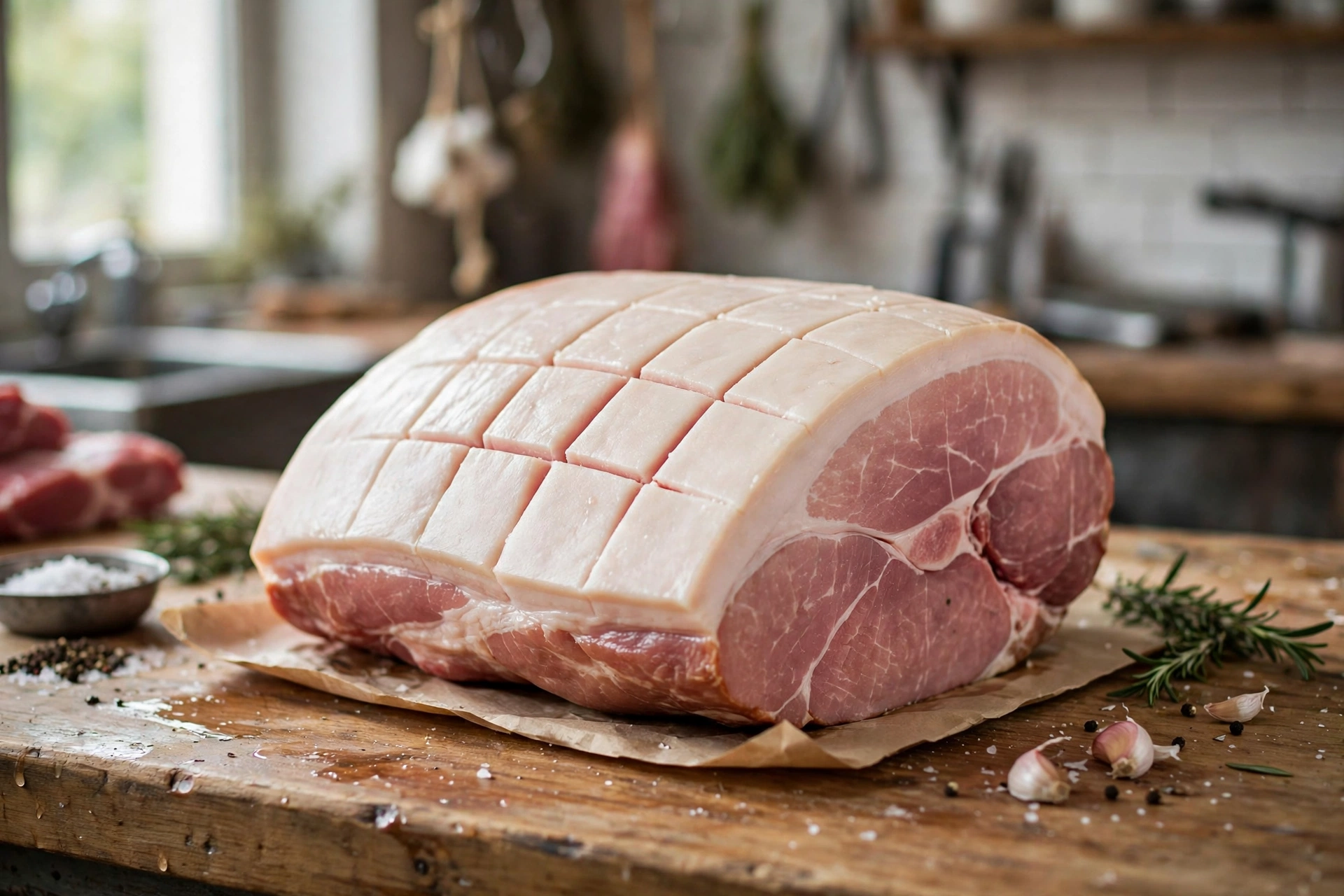
Good ham starts with the label: decide whether you want fully cooked, cook-before-eating, bone-in, or boneless before you shop. Look for firm, rosy-pink meat, intact vacuum packaging with little excess liquid, and a clear sell-by or use-by date. Avoid ham that looks gray or green, feels slimy, has torn packaging, or smells sour — and never buy it past its date.
Prefer
- A label that matches your plan: “fully cooked” vs. “cook before eating”
- Firm, rosy-pink meat with an even color
- Intact vacuum-sealed packaging with minimal liquid
- Clear sell-by or use-by date, well in the future
- An even fat cap and tidy, even slicing if pre-sliced
- Meat that feels cold and firm through the package
Avoid / check more closely
- Gray, green, or iridescent discoloration
- Slimy or tacky film on the meat
- Torn, leaking, or bloated packaging
- Sour or unpleasant odors
- Excessive milky liquid pooling in the package
- Dates that have passed or are missing
Read the label before the price
The single most important thing on a ham package is the cooking instruction. “Fully cooked” ham only needs reheating, while “cook before eating” ham is raw and must reach a safe internal temperature — the USDA recommends using a food thermometer rather than guessing by color or time. Also watch for wording like “ham with natural juices” versus “ham and water product”: the more added water, the less ham flavor per bite, and the spongier the texture. Country-style and dry-cured hams are a different category entirely — intensely salty and firm — so make sure that is what you actually want before buying. Bone-in hams generally offer deeper flavor and make excellent soup bones afterward, while boneless hams are easier to slice and serve.
Color, texture, and packaging
Fresh ham should be a rosy, appetizing pink — even and consistent through the cut. Some surface darkening on exposed edges can be normal oxidation, but gray or green patches, or a rainbow-like sheen across large areas, are reasons to pass. Press the package gently: the meat should feel firm and spring back, not soft or mushy. The vacuum seal should be tight against the meat; a loose, air-filled bag or one swimming in milky liquid suggests the seal failed or the ham is old. And trust your nose after opening — ham should smell mildly meaty and, if smoked, pleasantly smoky. A sour or sulfur-like smell means it should not be eaten.
Storing ham at home
Refrigerate ham promptly at 40°F (4°C) or below and do not leave it at room temperature for more than two hours. An unopened, fully cooked ham generally keeps until its printed date; once opened, plan to use sliced ham within 3 to 5 days. For longer storage, wrap it tightly — pressing out air — and freeze; it generally keeps good quality for one to two months. Thaw frozen ham in the refrigerator, never on the counter, and use a food thermometer when reheating or cooking to confirm it reaches a safe internal temperature.
Common questions
What does “fully cooked” ham mean?
It means the ham was cooked during processing and is safe to eat cold — you only need to reheat it for serving if you like it warm. “Cook before eating” ham is raw and must be cooked to a safe internal temperature measured with a thermometer.
Why does my ham feel slimy?
A light sheen can be normal on some cured hams, but a distinctly slimy or tacky film — especially with an off smell — usually means spoilage bacteria have grown. When in doubt, throw it out.
How long does opened ham last in the fridge?
Generally 3 to 5 days when kept refrigerated at 40°F or below in a sealed container or tightly wrapped. If it smells sour, looks discolored, or feels slimy, discard it even within that window.
References
U.S. Department of Agriculture — Cooking Meat: Is It Done Yet?. Reference for safe minimum internal temperatures and food thermometer use for meat.
Prepared October 12, 2026 with AI assistance. Cited sources do not endorse the entire article.