
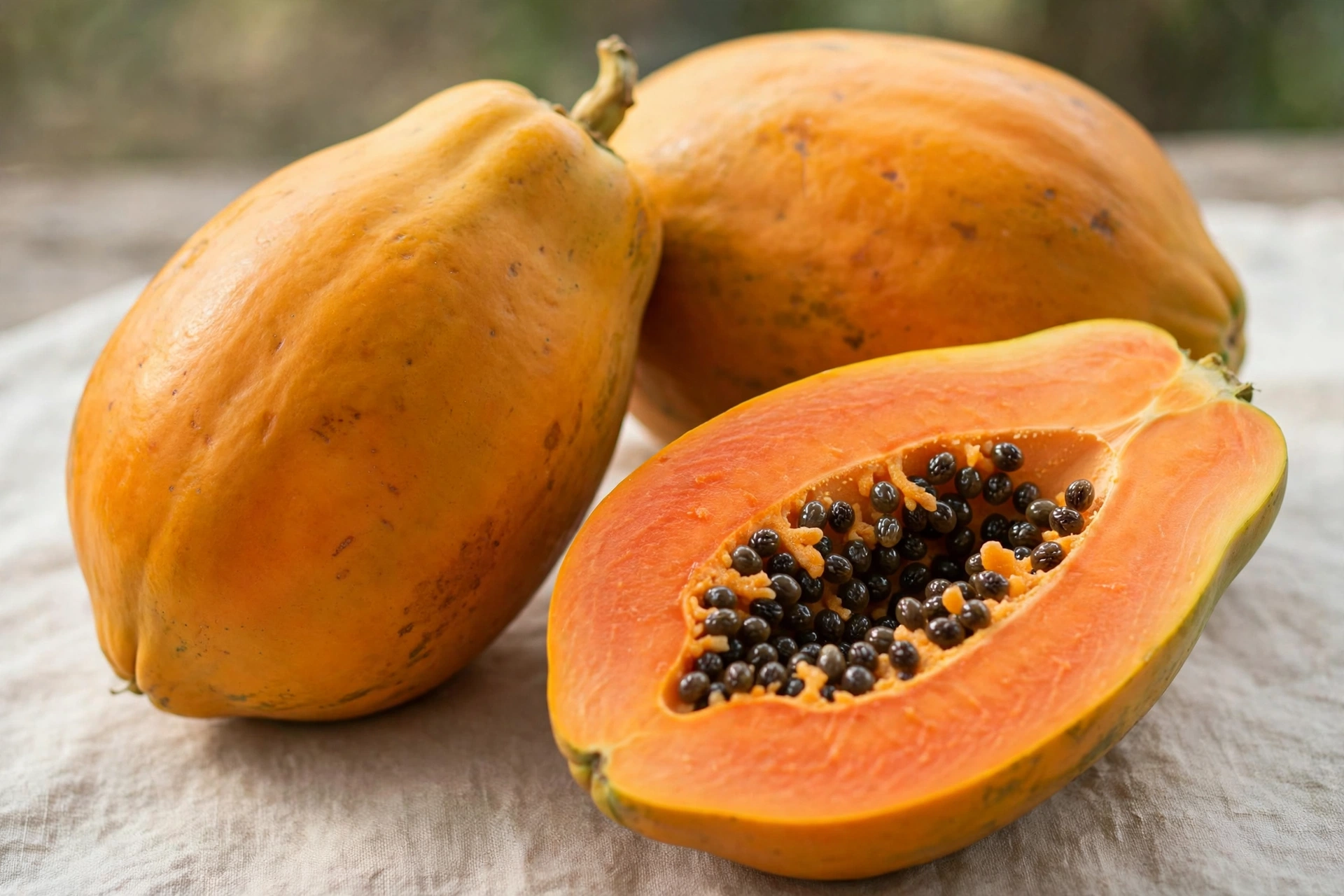
To choose a ripe papaya, look for skin that has turned from green to yellow or orange over at least half the fruit — more color generally means riper and sweeter. Press it gently: a ripe papaya yields slightly, like a ripe avocado, without feeling mushy. Sniff the stem end; it should smell sweet and faintly musky, never sour or fermented. Avoid fully green, rock-hard papayas unless you plan to ripen them at home, and skip any that are mushy, leaking, or smell sharp.
Prefer
- Skin at least half yellow to orange
- Slight give under gentle pressure
- Sweet, faintly musky smell at the stem end
- Smooth, unblemished skin
- Heavy feel for the size
Avoid / check more closely
- Fully green, rock-hard fruit with no aroma
- Mushy spots or an overall squishy feel
- Sour, fermented, or alcohol-like smell
- Deep bruises, cracks, or leaking areas
- Mold around the stem end
Read the color like a ripeness gauge
Papaya skin is a visible ripeness meter. A mature papaya shifts from dark green to yellow-green, then to golden yellow and orange as it ripens. For eating soon, choose one that is at least half to mostly yellow-orange — these are typically sweet and ready within a day. Fully green papayas are unripe; they will ripen at home over several days, but very immature ones picked too early may never sweeten properly. A few dark freckles or blemishes on the skin are cosmetic and common on sweet varieties, but avoid large sunken bruises or cracked skin, which invite spoilage.
The press and sniff tests
Once the color looks promising, confirm with touch and smell. A ripe papaya gives gently when pressed with your palm — similar to a ripe avocado or peach — and the flesh springs back slightly. If your finger leaves a dent, it is overripe. Then smell the stem end: ripeness brings a sweet, tropical fragrance with a faint muskiness that is characteristic of papaya. An unpleasant sour or fermented odor means the fruit has turned. Underripe papayas have almost no smell at all, which is itself useful information when you are deciding between fruits.
Two main types and green papaya uses
Stores commonly carry two types: the small, pear-shaped Hawaiian or Solo papaya, which is sweet and meant for fresh eating, and the much larger Mexican or Maradol type, which is milder and often used in larger servings. Choose based on how much fruit you need — a Solo papaya is a sensible size for one or two people. Fully green papaya is a different ingredient altogether, used shredded in salads like Thai som tum; if that is your plan, firm green fruit is exactly right. Just do not expect a green papaya to taste sweet eaten fresh.
Storing papayas at home
Ripen firm papayas at room temperature, ideally in a paper bag which traps the natural ethylene and speeds things along — most ripen in three to five days. Check daily by pressing gently. Once ripe, refrigerate the whole fruit and eat within a few days; cold slows further softening. Cut papaya should be wrapped tightly or stored in a sealed container in the fridge and used within two to three days. The black seeds inside a ripe papaya are edible with a peppery bite, though most people scoop them out. Papaya also freezes acceptably in cubes for smoothies.
Common questions
How do I know when my papaya is ready to eat?
When the skin is mostly yellow-orange, the fruit yields slightly to gentle pressure, and the stem end smells sweet. If it still smells like nothing and feels firm, give it another day or two at room temperature.
Why does papaya sometimes smell unpleasant?
Papaya has a naturally musky compound that some people find off-putting, and it is stronger in underripe fruit. A fully ripe papaya smells sweet; a sour or rotten smell, though, means spoilage rather than variety character.
Can I eat papaya skin?
The skin is not usually eaten — peel it away before serving. Only the orange flesh is the enjoyable part, plus the optional peppery seeds.
References
U.S. Food and Drug Administration — Selecting and Serving Produce Safely. Reference for produce selection, handling, and visible damage.
Prepared October 12, 2026 with AI assistance. Cited sources do not endorse the entire article.