
To choose juicy limes, pick them up — a good lime feels heavy for its size, which signals plenty of juice inside. The skin should be firm, smooth, and bright green with a slight gloss, not dull or rough. Give it a gentle squeeze: it should yield just a little, like a ripe lemon, rather than feeling rock-hard or spongy. Avoid limes that feel light and hard, show yellowing or brown patches, or have soft spots and wrinkled skin.
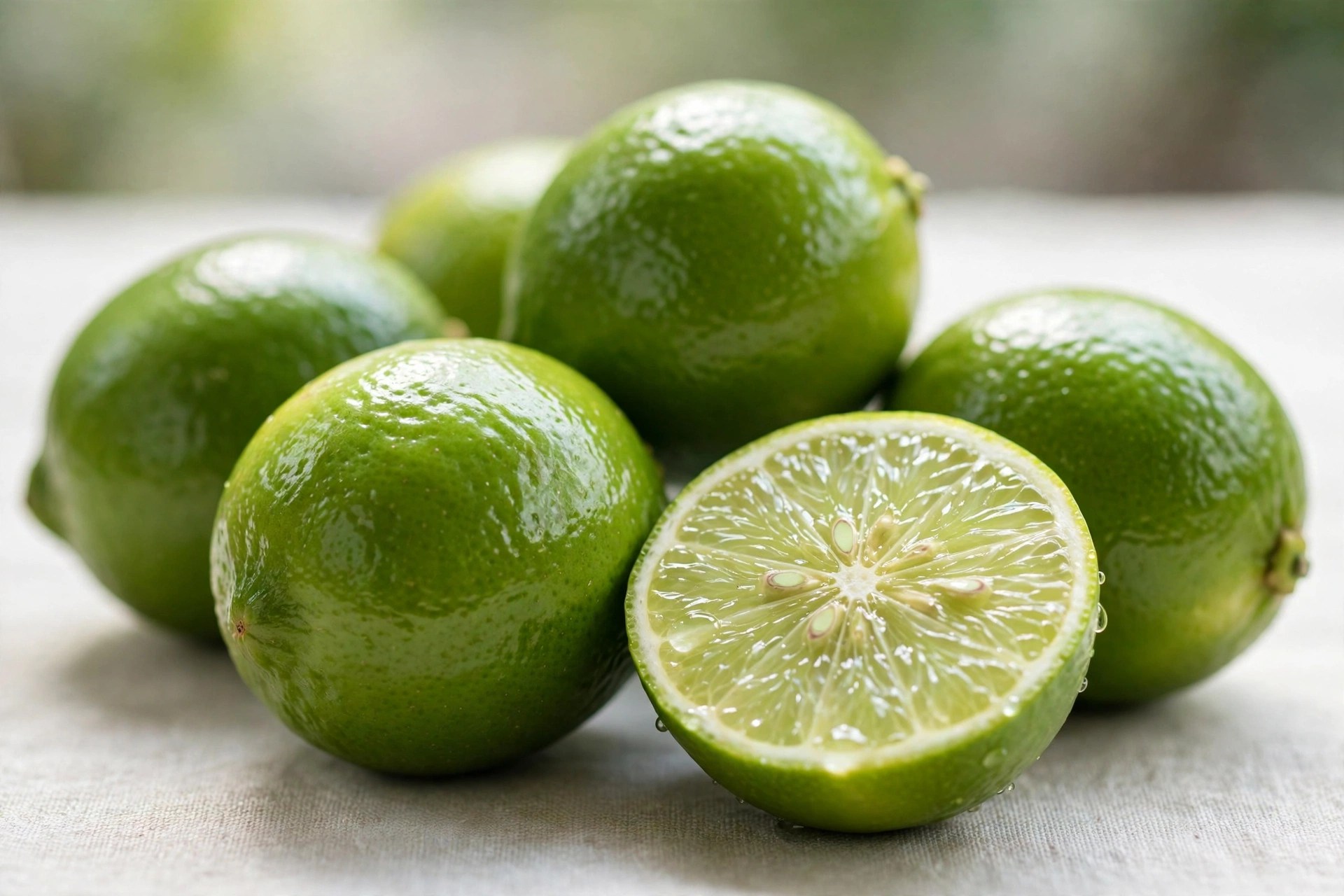
Prefer
- Heavy feel for the size — the best juice indicator
- Firm flesh with a slight give when squeezed
- Bright green, glossy, smooth skin
- Thin-feeling skin rather than thick and bumpy
- Fresh, citrusy smell at the stem end
Avoid / check more closely
- Light, rock-hard limes that feel dry inside
- Yellowing skin, a sign of overripeness
- Brown patches, soft spots, or mold
- Wrinkled or shriveled skin
- Spongy or squishy texture
Weight is the juice test
With limes, weight predicts juiciness better than anything else. Two limes of the same size can hold very different amounts of juice, and the heavier one is almost always the juicier. Pick up several and compare — you will quickly feel the difference. A lime that feels surprisingly light is likely drying out inside, even if it looks fine. Follow the squeeze test: a juicy lime gives slightly under thumb pressure and springs back, while a dry one feels hard and unyielding, and an old one feels spongy. Thin, smooth skin is another good sign, since thick, bumpy rinds often mean less flesh and juice relative to the size.
Skin color and surface clues
The common Persian lime should be a vivid, glossy green. A little variation in shade is normal, but significant yellowing means the lime is overripe and losing its sharp flavor — fully yellow limes are past their prime for most uses. The surface should look smooth and slightly shiny; dull, rough, or scarred skin suggests age or poor handling, though minor surface scarring from the grove does not affect the juice. Check the stem end for any brown mushiness or mold, which spreads fast in the bag. Limes sold in mesh bags deserve a look through the netting, since one bad lime can affect its neighbors.
Persian vs. Key limes
Most stores sell Persian limes — the large, seedless, bright green type described above. Key limes are smaller, rounder, and turn yellowish-green when ripe, with a more aromatic, floral tartness prized for pie. Do not judge Key limes by Persian standards: their yellow tinge is ripeness, not age. Key limes should still feel heavy and firm for their small size. If a recipe calls for one type, the flavor difference is noticeable, so buy accordingly rather than substituting by default.
Storing limes at home
Limes keep about a week at room temperature, but refrigeration stretches that to two or three weeks. Store them loose or in a perforated bag in the crisper drawer — sealed airtight bags can trap moisture and encourage mold. Keep them away from ethylene-producing fruits like bananas if you want maximum life. To get the most juice, roll a room-temperature lime firmly on the counter before cutting, and microwave it for about ten seconds if it is cold from the fridge. Cut limes dry out quickly, so wrap the cut face tightly and use within a day or two. Lime juice also freezes well in ice cube trays for later use.
Common questions
Are yellow limes still good?
Slightly yellow limes are overripe but usually still usable — the flavor is milder and less sharp. Fully yellow, soft limes are past their best and best avoided.
Why is my lime dry inside?
Limes lose moisture with age and poor storage. Choosing heavy, firm limes and refrigerating them promptly keeps them juicy longer. Rolling before juicing also helps release what is there.
Can I use bottled lime juice instead?
For many cooked dishes, yes, but fresh juice tastes brighter and more aromatic. For garnishes, dressings, and cocktails where lime is the star, fresh is noticeably better.
References
U.S. Food and Drug Administration — Selecting and Serving Produce Safely. Reference for produce selection, handling, and visible damage.
Prepared October 12, 2026 with AI assistance. Cited sources do not endorse the entire article.