
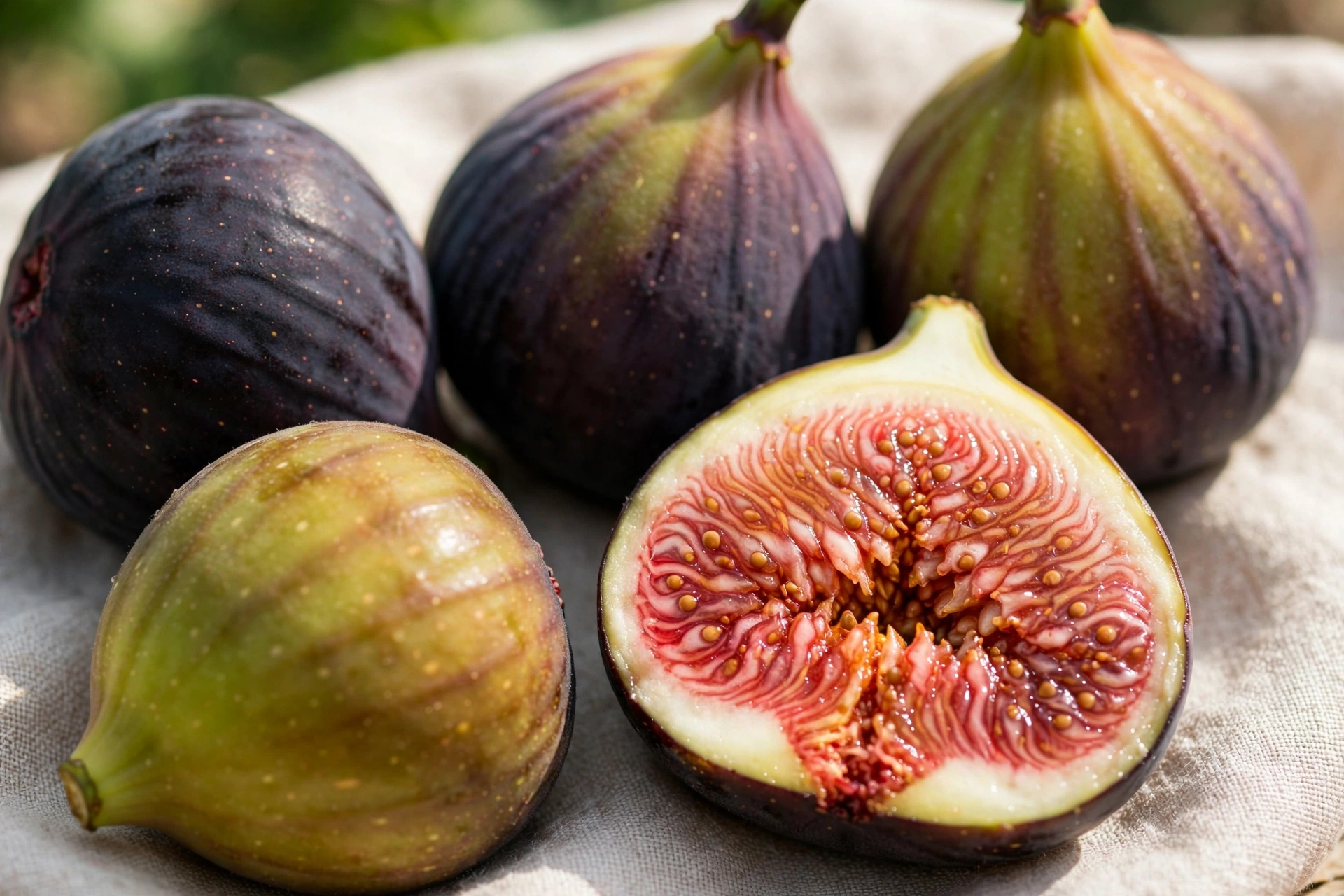
To choose ripe figs, hold one gently — it should give slightly under light pressure, like a ripe peach, without feeling mushy. Bring it close and smell the stem end: a ripe fig smells sweet and honey-like, never sour or fermented. The skin should be unbroken and look plump, with color appropriate to the variety, from deep purple to green-gold. Avoid figs that leak, smell of alcohol, or feel squishy, and skip any with mold around the small opening at the bottom.
Prefer
- Gentle give under light pressure, like a ripe peach
- Sweet, honey-like fragrance at the stem end
- Plump shape with smooth, unbroken skin
- Rich, even color for the variety
- Slight bend or droop at the neck
Avoid / check more closely
- Sour, fermented, or alcohol-like smell
- Mushy, watery, or leaking flesh
- Cracked or split skin with visible weeping
- Mold around the eye, the small opening at the bottom
- Hard, unyielding figs with no fragrance
Touch and smell beat looks
Figs are one of the few fruits where gentle touch is the most reliable test. A ripe fig yields softly when you cup it — firm enough to hold its shape, soft enough to suggest juicy flesh inside. Too firm means underripe and bland; too soft means overripe and possibly fermenting. Smell is the second check: the stem end of a ripe fig gives off a sweet, almost honeyed scent. If you catch a sour or boozy note, the sugars have started fermenting and the flavor will be off. These two tests together are more dependable than color, which varies widely between varieties.
Know your variety’s color
Fig color tells you about variety, not ripeness, so learn what you are buying. Black Mission figs ripen to a deep purple-black; Brown Turkey to a dusky purple-brown; Kadota stays green-gold even when fully ripe; Calimyrna turns golden yellow. Within any variety, look for rich, even color and skin that looks plump rather than wrinkled — though a few fine wrinkles on very ripe figs are normal and often signal extra sweetness. The neck of the fig, where it meets the stem, often bends or droops slightly when ripe. A tiny drop of syrup at the eye, the small opening at the blossom end, can indicate peak ripeness, but active leaking or stickiness all over means the fig is past it.
Season and ripening at home
Figs have a short season, typically late summer into early fall, with some varieties producing two crops. They are highly perishable, which is why truly fresh figs are a seasonal treat. If you can only find firm figs, you can ripen them at home: keep them at room temperature, stem-end up, out of direct sun, and check daily. They will soften and develop fragrance over a day or two. Figs do not ripen as dramatically as bananas, though — a rock-hard, unscented fig may never become a great one, so buy the ripest-looking fruit you can find.
Storing figs at home
Ripe figs are fragile and highly perishable, so plan to eat them within one to two days. Refrigerate ripe figs in a single layer, ideally on a paper towel in a shallow container, and keep them dry. Do not stack them — their soft skins bruise and split under weight. If your figs are still firm, leave them at room temperature until they soften and smell sweet, then refrigerate. Wash gently just before eating. For longer keeping, figs freeze reasonably well when halved and frozen on a tray first, though the texture softens on thawing and suits cooked uses best.
Common questions
Can you eat fig skin?
Yes, fig skin is edible — just rinse the fruit gently first. Thin-skinned varieties are pleasant to eat whole; thicker-skinned ones can be peeled if you prefer.
What is the white sap when I pick a fig?
Fresh figs exude a milky latex sap from the stem when picked. It is natural and washes off, though it can irritate sensitive skin, so rinsing the fruit is a good habit.
Why do my figs taste sour?
A sour or fizzy taste usually means the fig overripened and began fermenting. Choose figs that smell sweet rather than sharp, and refrigerate ripe ones promptly to slow the process.
References
U.S. Food and Drug Administration — Selecting and Serving Produce Safely. Reference for produce selection, handling, and visible damage.
Prepared October 12, 2026 with AI assistance. Cited sources do not endorse the entire article.