
To choose sweet blackberries, look for berries that are plump, firm, and uniformly deep black from tip to stem — a glossy, even color usually means full ripeness. Gently tilt the container: the berries should look dry, with no juice pooling at the bottom and no crushed fruit. Give the pack a quick sniff; fresh blackberries smell faintly sweet, never sour or fermented. Avoid containers with moldy, mushy, or leaking berries, since one spoiled berry can quickly affect the rest.
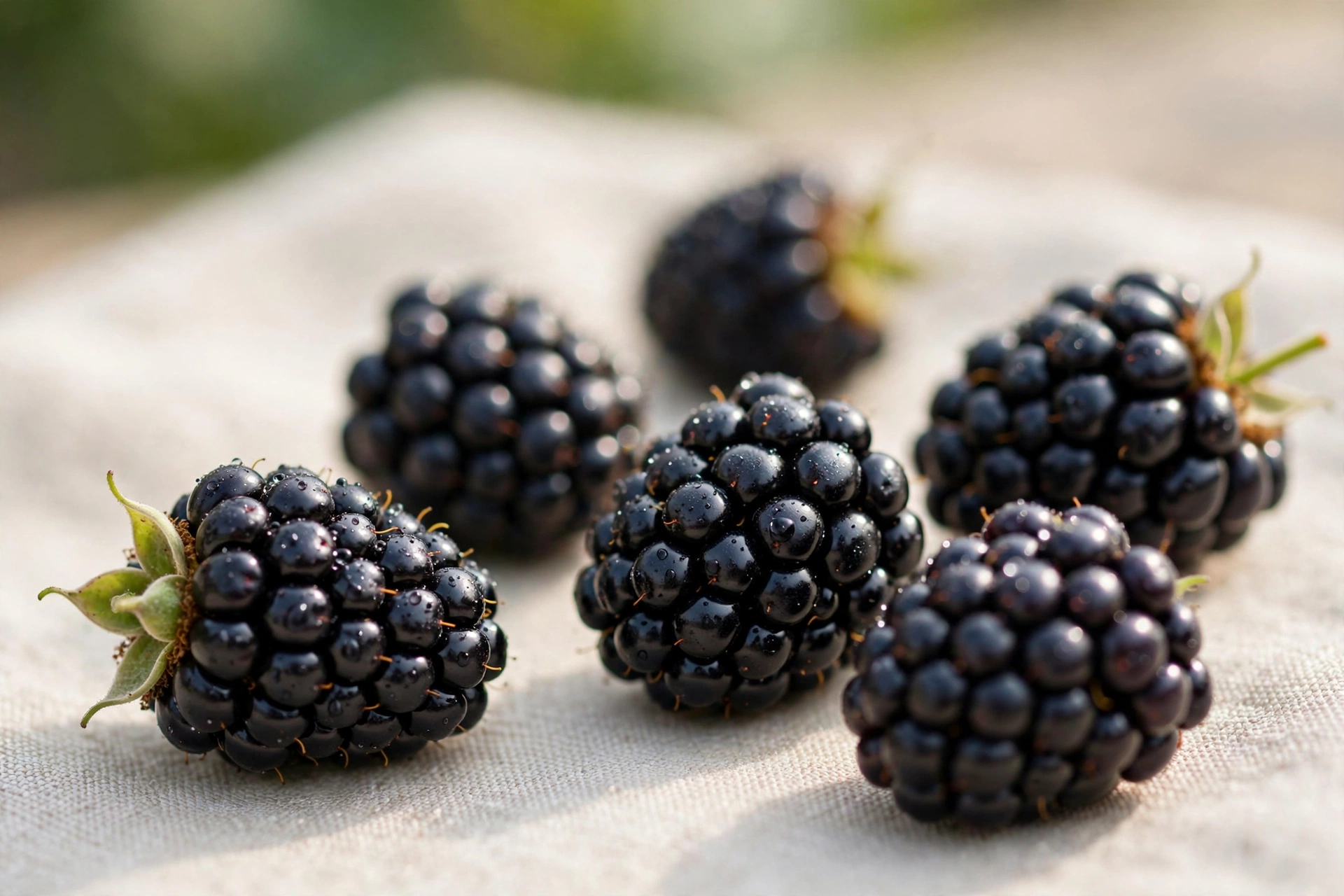
Prefer
- Plump, firm drupelets that hold their shape
- Uniform deep black color with a natural sheen
- Dry container with no juice stains underneath
- Berries with the green cap or hull still attached
- Faintly sweet, fresh smell
Avoid / check more closely
- Mushy, deflated, or leaking berries
- White or gray fuzz, a sign of mold
- Red or pink drupelets, which taste tart and underripe
- Juice pooling at the bottom of the container
- Sour or fermented smell
Color and plumpness come first
Blackberries do not continue to ripen once picked, so what you see is what you get. A ripe blackberry is fully black — every drupelet, the tiny round bead that makes up the berry, should be dark with no red or pink patches. Reddish drupelets are underripe and will taste sharp and tart rather than sweet. The berry should look plump and full, with the drupelets swollen and glossy rather than dull or shrunken. Dull, matte berries are often past their best. Size varies by variety, so judge plumpness relative to the other berries in the pack rather than expecting a particular size.
Check the container, not just the top layer
Stores usually sell blackberries in clear clamshells, which makes inspection easy — use it. Look through the sides and bottom of the container, because the top layer is often the prettiest. Check for crushed berries, juice stains on the bottom, and any white fuzz hiding underneath. A little condensation inside the pack is normal from refrigeration, but visible liquid pooling around the berries is a warning sign. If several berries look damaged, choose another container rather than picking through it, since mold spreads quickly between touching berries.
Freshness clues: caps, smell, and season
Blackberries picked recently often still have their small green cap, called the hull, attached at the stem end — its presence is a good freshness clue, though its absence is not a flaw. Smell matters too: ripe berries have a light, sweet fragrance, while a sour or wine-like odor means fermentation has started. Blackberries are a summer fruit, so mid-summer packs are usually the sweetest and best value, though greenhouse and imported berries are available year-round. If you buy from a farm stand, ask when they were picked; berries picked the same morning keep noticeably better than ones picked days earlier.
Storing blackberries at home
Refrigerate blackberries as soon as you get home and do not wash them until just before eating — moisture speeds up mold. Keep them in their ventilated container or spread them in a single layer on a plate lined with a paper towel, which absorbs condensation. Use them within one to two days for the best flavor. If you cannot finish them in time, freeze them: spread unwashed berries in a single layer on a tray, freeze until firm, then transfer to a freezer bag. Frozen blackberries keep for several months and work well in smoothies and cooked dishes.
Common questions
Should blackberries be shiny or dull?
Shiny is better. A glossy sheen usually indicates a fresh, juicy berry, while dull, matte berries are more likely to be old or drying out. That said, some varieties are naturally less glossy, so compare berries within the same container.
Can I eat blackberries with a few red drupelets?
Yes, they are safe to eat, but the red parts will taste tart. If most of the berry is deep black with only a drupelet or two showing red, the flavor difference is minor.
Why do my blackberries mold so fast?
Blackberries are delicate and mold spreads quickly in damp, crowded conditions. Buying dry, undamaged berries, refrigerating promptly, and keeping them unwashed until serving all slow it down. A brief rinse in a diluted vinegar solution before drying and refrigerating may also help, according to common kitchen practice.
References
U.S. Food and Drug Administration — Selecting and Serving Produce Safely. Reference for produce selection, handling, and visible damage.
Prepared October 12, 2026 with AI assistance. Cited sources do not endorse the entire article.