
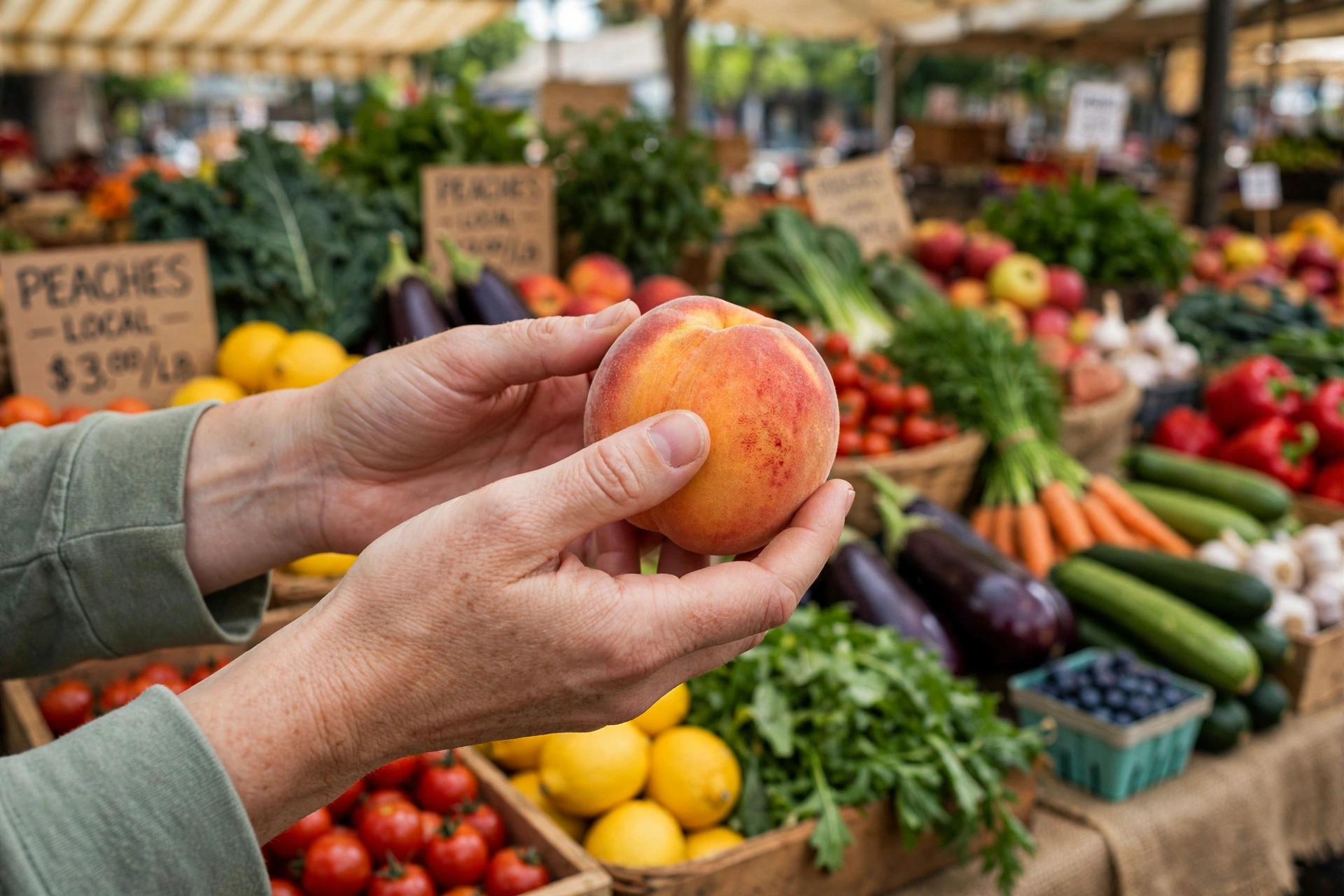
To spot ripe produce, use all three senses: look for full, even color; feel for gentle give without mushiness; and smell for the fruit’s characteristic aroma at the stem end. Most fruits ripen from the inside out, so color alone can mislead — the touch and smell tests are more reliable. Practice on one fruit at a time and you will quickly build the instinct.
Prefer
- Full, even color for the variety
- Gentle give under thumb pressure, not mushiness
- Sweet, characteristic aroma at the stem end
- Heavy feel for the size (juiciness)
- Learning one fruit’s cues at a time
Avoid / check more closely
- Judging ripeness by color alone
- Mushy spots or leaking juices
- No aroma at all in fruits that should smell fragrant
- Overly hard fruits you need today
- Squeezing aggressively and bruising produce
Touch: the give test
Press gently near the stem end, not the middle — ripe fruit yields slightly and springs back. Stone fruits (peaches, plums, nectarines) should give gently; avocados yield to firm palm pressure; melons feel heavy with a slightly soft blossom end. Mushy or leaking spots mean overripe. Handle produce gently — your testing should not damage what others will buy.
Smell and sight: the aroma check
Ripe fruit smells like itself: pineapples sweet at the base, peaches fragrant, melons subtly sweet at the stem end. No smell often means underripe (or a variety bred for shipping over flavor). Visually, look for full color development, matte rather than shiny skin on many fruits, and dried, brown stems on melons. Green shoulders on tomatoes and white patches on melons suggest underripeness.
Storing produce at home
Ripen underripe fruit on the counter, ideally in a paper bag to trap ethylene gas — add a banana to speed things up. Once ripe, refrigerate to slow further ripening. Keep ethylene producers (bananas, avocados, tomatoes) away from ethylene-sensitive items (greens, herbs) if you want them to last. Use ripe fruit promptly; freeze what you cannot eat in time.
Common questions
How can I ripen fruit faster?
Place it in a paper bag with a banana or apple — their ethylene gas speeds ripening. Check daily.
Why does store fruit have no smell?
Many commercial varieties are picked early for shipping and bred for durability over aroma. Farmers markets often offer more fragrant options.
Is it okay to eat overripe fruit?
Often yes — use it in smoothies, baking, or sauces. Discard anything moldy, fermented-smelling, or slimy.
References
U.S. Food and Drug Administration — Selecting and Serving Produce Safely. Reference for produce selection, handling, and visible damage.
Prepared October 11, 2026 with AI assistance. Cited sources do not endorse the entire article.