
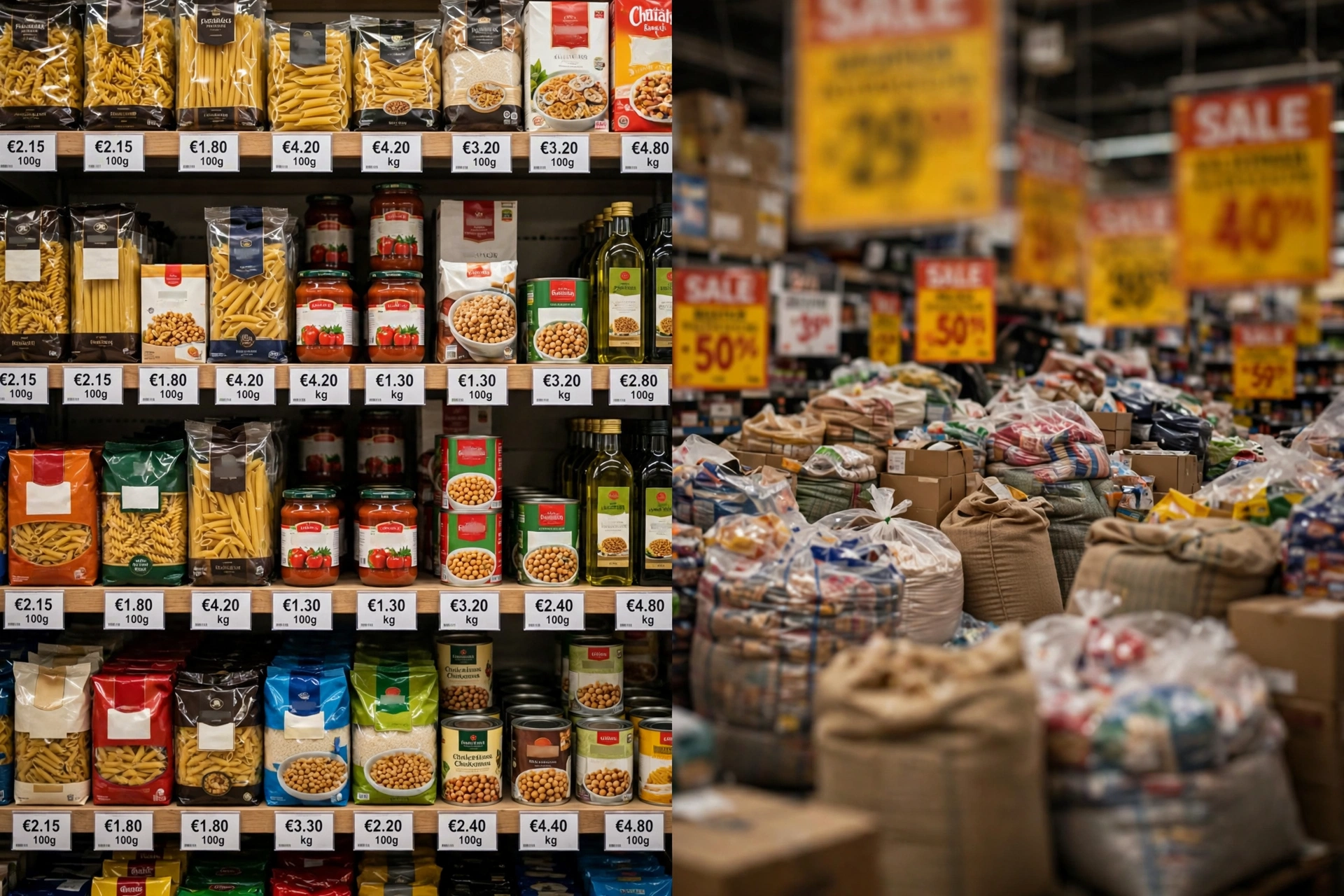
To compare unit prices, look at the small print on shelf tags — the price per ounce, per pound, or per 100 count — not the big package price. The biggest box is not always the cheapest per unit, and sale tags can hide worse unit prices than regular items. A phone calculator and thirty seconds beat every “value pack” claim.
Prefer
- Checking the unit price on shelf tags
- Comparing identical units (per oz vs per oz)
- Doing quick phone-calculator math when tags are missing
- Watching for sale items with worse unit prices
Avoid / check more closely
- Assuming bigger is always cheaper
- Comparing different units without converting
- “Value” and “family” packs at premium unit prices
- Bulk buys of perishables you will waste
Reading the shelf tag
Most shelf tags show the unit price in small print — “$0.18/oz” next to the big “$4.99.” That small number is the real comparison tool. Line up the same unit across brands and sizes: per ounce to per ounce, never per ounce to per pound without converting. Store brands often win on unit price, but not always — the tag tells the truth the packaging hides.
The bulk trap and sale illusions
Bulk and “value” packs frequently cost more per unit than the regular size — the bigger box just looks like a deal. Sale tags can also mislead: a “2 for $5” deal may carry a worse unit price than the everyday store brand. And the ultimate unit-price killer is waste — a cheap-per-ounce perishable you throw half of away is the most expensive food you buy.
Quick math and smart habits
No unit price on the tag? Divide price by quantity on your phone — thirty seconds, done. Keep a rough mental list of your staples’ good unit prices so sales stand out. Buy the best unit price you will actually use up before it expires. For pantry staples you use constantly, stock up at true unit-price lows; for experiments, buy small.
Common questions
What is unit price?
The price per standard unit — per ounce, per pound, per count. It is the only fair way to compare different package sizes.
Is bulk always cheaper?
No — check the unit price. Bulk packs often cost more per unit, and waste erases any savings on perishables.
Do sale items always save money?
Not always. Compare the sale unit price against regular store-brand unit prices before celebrating.
References
U.S. Food and Drug Administration — Food Labeling & Nutrition. Reference for how food labels present quantity and nutrition information.
Prepared October 10, 2026 with AI assistance. Cited sources do not endorse the entire article.