
To choose a good turkey, decide fresh vs frozen first: fresh turkeys offer convenience and slightly better texture, while properly thawed frozen birds are excellent value. Size it at about 1–1.5 pounds per guest, check the skin is intact with no off-odors, and read the label — “basted” or “enhanced” means added salt solution.
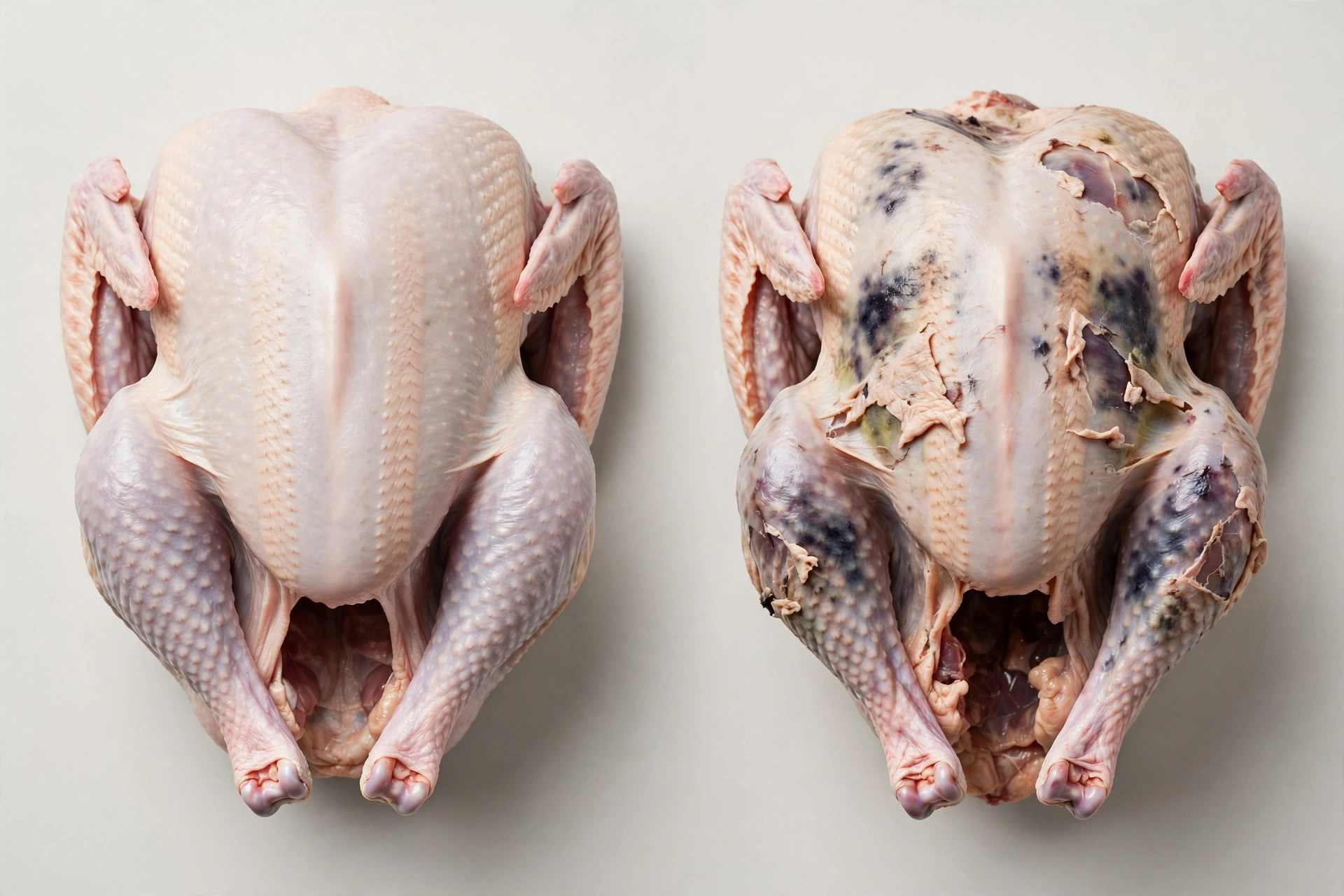
Prefer
- Skin that is smooth, intact, and pale — no tears, bruises, or dark patches
- No sour or off smell; fresh poultry smells like almost nothing
- The right size: roughly 1 pound per guest (1.5 if you want leftovers)
- Frozen birds rock-solid with no thawed soft spots or torn packaging
- Labels you understand — plain “turkey” with no injected solution if you season yourself
Avoid / check more closely
- Any sour, sulfur, or strong off-odor
- Torn packaging or freezer-burned patches (dry, pale, leathery spots)
- Birds with lots of pinfeathers and rough plucking — a processing-quality sign
- “Basted/enhanced” birds if you plan a salty brine — the salt stacks up
- Oversized birds for a small gathering — they cook unevenly and dry out
Fresh vs frozen: the honest trade-off
Fresh turkeys were never frozen, so you skip the multi-day thaw and often get marginally juicier breast meat — but they cost more and must be cooked within a couple of days of purchase. Frozen turkeys are flash-frozen at peak quality and, thawed slowly in the refrigerator, cook up nearly indistinguishable from fresh for most eaters. The real enemy is a rushed thaw: plan about 24 hours of fridge thawing per 4–5 pounds. Never thaw a turkey on the counter — the outside enters the bacterial danger zone while the inside stays frozen.
Sizing and label language
Buy about 1 pound per person, or 1.5 pounds if leftovers are the point of the meal. Smaller birds (12–14 pounds) cook more evenly and stay juicier than 20-plus-pound giants, so for a big crowd, two medium turkeys beat one monster. On labels, “basted,” “enhanced,” or “contains up to X% solution” means the bird was injected with salt water and flavorings — it will be juicier out of the bag but saltier, so adjust your seasoning and skip the brine. Terms like “natural” have a specific regulatory meaning (minimally processed, no artificial ingredients) but say nothing about how the bird was raised.
Inspection and safe handling
In the store, check the packaging is sealed and cold, the skin looks intact through the wrap, and there is no pooled liquid or off-smell. At home, refrigerate a fresh turkey immediately and cook within 1–2 days; keep a thawing frozen bird on a tray on the bottom shelf so drips cannot contaminate other food. After cooking, refrigerate leftovers within two hours and use within 3–4 days. When in doubt about any poultry, the USDA’s food-safety guidance below is the authority — appearance and smell are useful, but proper temperature and timing are what keep you safe.
Common questions
How far ahead should I buy a fresh turkey?
One to two days before cooking. Fresh poultry has a short refrigerated life — buy it close to the day.
Can I refreeze a thawed turkey?
Only if it thawed in the refrigerator and was never left at room temperature — though quality drops with each freeze-thaw cycle.
Does “natural” on the label mean organic or free-range?
No. “Natural” only means minimally processed with no artificial ingredients. Raising claims like organic or free-range are separate, regulated terms.
References
USDA Food Safety and Inspection Service — Turkey from Farm to Table. Reference for turkey handling, thawing, storage times, and safe cooking temperatures. Sizing and label notes are established food-shopping practice.
Prepared October 10, 2026 with AI assistance. Cited sources do not endorse the entire article.