
To choose fresh grapes, look for plump, firm berries with a light powdery bloom — the natural waxy coating that signals freshness. The stems should be green and flexible, not brown and brittle. Give the bunch a gentle shake: a few loose berries are normal, but a shower of falling grapes means the bunch is old.
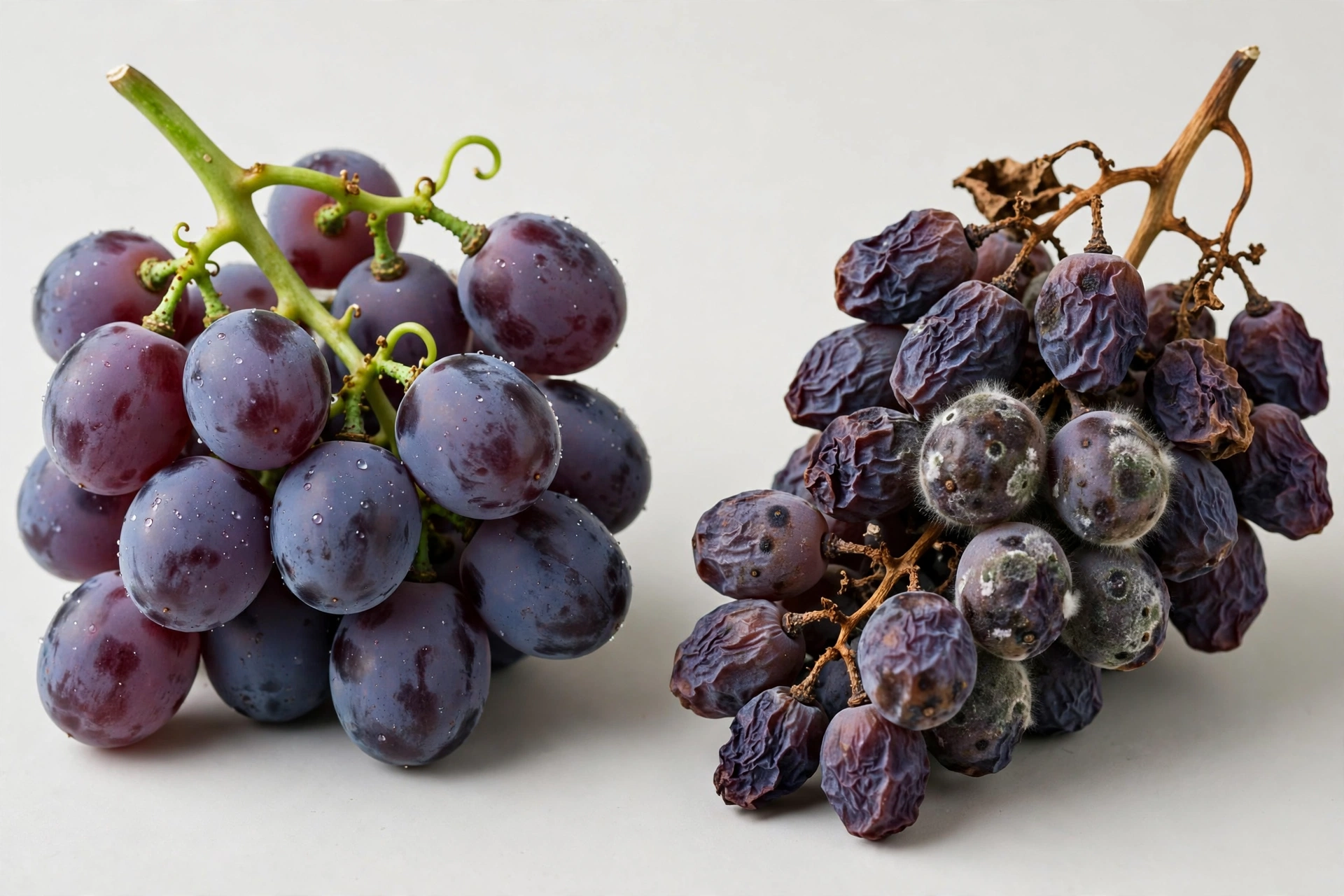
Prefer
- Plump, firm berries that feel taut, not soft
- A natural powdery bloom on the skin
- Green, flexible stems
- Berries firmly attached to the stem
- Even, vibrant color for the variety
Avoid / check more closely
- Wrinkled, shriveled, or soft berries
- Brown, dry, brittle stems
- Mold, especially near the stem ends
- Berries falling off in large numbers
- Wet, leaking, or sticky bunches
Berries and bloom: the freshness readout
Fresh grape berries look plump and almost inflated, with skin stretched smooth over juicy flesh. Like blueberries, grapes carry a natural powdery bloom — a waxy coating that protects the fruit and rubs off with handling and age, so a visible bloom usually means a recently picked bunch. Color should be even and appropriate to the variety: deep purple-black for black grapes, golden-green for green ones, rich red for red ones. Pale or uneven coloring can mean underripeness, and grapes do not sweeten after picking, so buy them at the ripeness you want to eat.
Stems and the shake test
The stems tell the bunch’s age story. Fresh stems are green and pliable; as the bunch ages, stems turn brown, dry, and brittle. Berries detach more easily from old stems, so give the bunch a gentle shake while holding it over the display — a couple of falling berries is normal, but a cascade means the bunch is past its prime. Also check where berries meet the stem for mold, which starts there first, and skip any bunch that feels damp or sticky.
Storing grapes at home
Do not wash grapes until just before eating — moisture speeds up mold. Keep them unwashed in the refrigerator in a breathable bag or their original ventilated packaging; they stay good for one to two weeks. Remove any soft or moldy berries promptly so they do not spoil the rest. Grapes also freeze wonderfully for snacking straight from the freezer or for chilling drinks without diluting them.
A simple grape-shopping checklist
Before you buy, check four things: berries (plump with bloom?), stems (green and flexible?), attachment (shake test?), and dryness (no stickiness?). These quick checks work for every color and variety, from Thompson seedless to Concord.
Common questions
What is the white powder on grapes?
That is bloom, a natural waxy coating the grape produces — not pesticide residue and not mold. It is a sign of freshness and washes off easily.
Should I wash grapes before storing?
No — wash just before eating. Storing wet grapes encourages mold, so keep them dry and refrigerated until serving time.
Can I freeze grapes?
Yes, they are excellent frozen. Wash, dry thoroughly, spread on a tray to freeze individually, then bag them. Frozen grapes make great snacks and drink chillers.
References
U.S. Food and Drug Administration — Selecting and Serving Produce Safely. Reference for produce selection, handling, and visible damage. Storage guidance reflects standard kitchen practice.
Prepared October 10, 2026 with AI assistance. Cited sources do not endorse the entire article.