
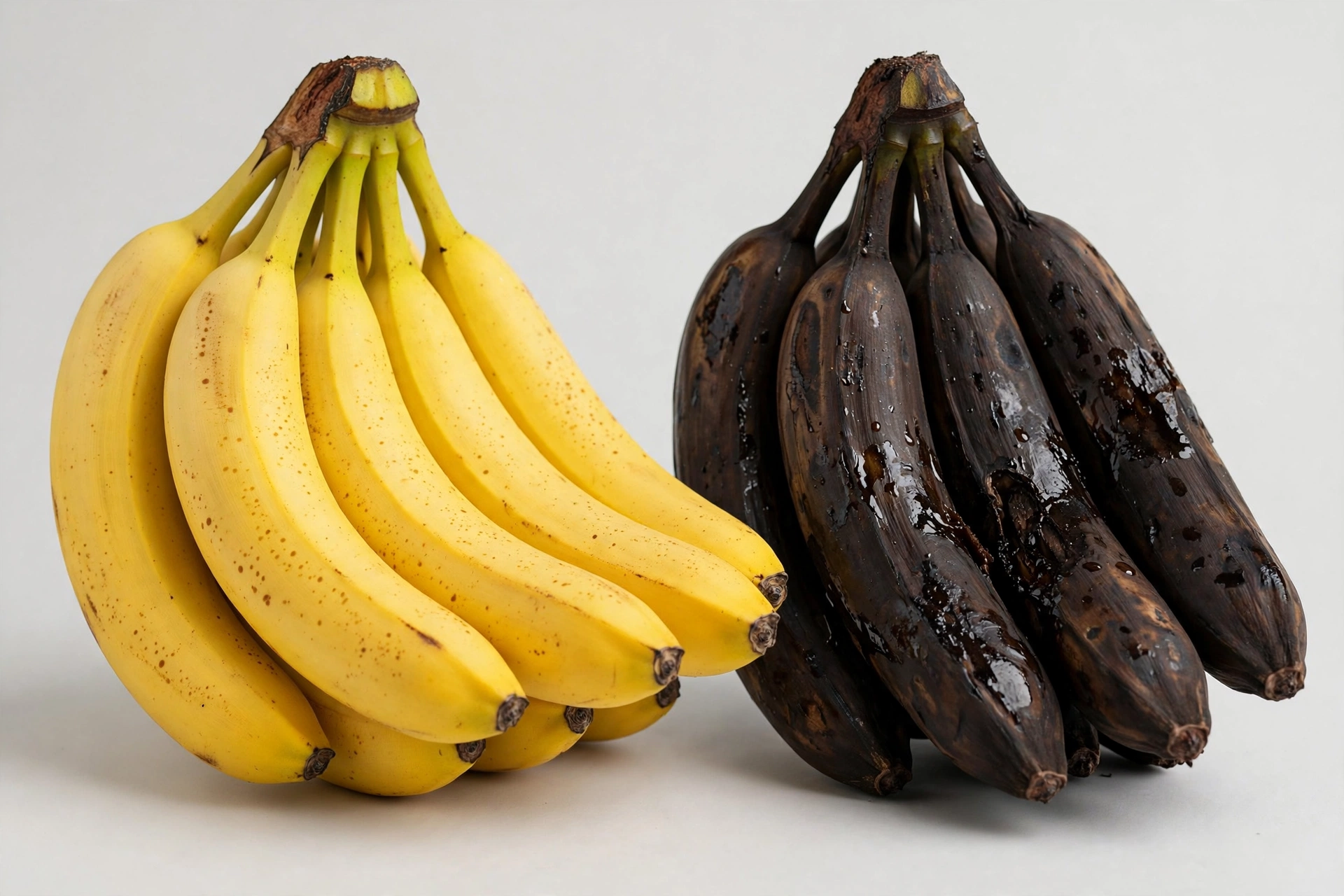
To choose ripe bananas for eating now, pick bunches with bright yellow peels flecked with small brown sugar spots — those spots signal peak sweetness. The fruit should feel firm but yield slightly to gentle pressure. For eating later in the week, choose mostly yellow bananas with green tips; they will ripen on your counter in a few days.
Prefer
- Bright yellow peels with small brown sugar spots for eating today
- Yellow peels with green tips if you want them later in the week
- Firm fruit that yields slightly to gentle pressure
- Intact peels with no splits or deep bruises
- Full, plump-looking bunches rather than thin, angular ones
Avoid / check more closely
- Mostly green peels if you need ripe bananas today
- Large black patches or leaking, mushy spots
- Split peels, which invite fruit flies and dry out the flesh
- A fermented or alcoholic smell
- Dull grayish-yellow skin, a sign of chill damage
Read the peel like a ripeness gauge
Banana peels change color in a predictable sequence, and each stage suits a different use. Green means starchy and tart — fine if you are buying days ahead. Bright yellow is the all-rounder stage, good for lunchboxes. Yellow with brown speckles is the sweet spot for eating fresh and for smoothies, because starches have converted to sugars. Mostly brown bananas are very soft and intensely sweet — past their prime for snacking but excellent for banana bread. Match the peel to your plan instead of hunting for one “perfect” color.
Feel, smell, and check the stems
Give a banana a gentle squeeze: ripe fruit yields slightly, like a ripe peach, while rock-hard means unripe and mushy means overripe. Sniff the stem end — fresh bananas smell mildly sweet, while a fermented or wine-like odor means the sugars have started turning. Check that the peels are intact, since splits let air in and invite fruit flies. Also look at the bunch as a whole: plump, well-filled fruit ripened properly, while thin, sharply ridged bananas were often picked too early and may never develop full flavor.
Ripening and storing bananas at home
Leave underripe bananas at room temperature and they will ripen in a few days — placing them in a loosely closed paper bag speeds things up. Once they reach your preferred ripeness, move them to the refrigerator: the peel will darken, but the flesh inside stays good for several more days. For longer storage, peel and freeze bananas in pieces for smoothies. Never refrigerate green bananas expecting them to ripen — cold stalls the process and can damage the texture permanently.
A simple banana-shopping checklist
Before you buy, decide when you will eat them, then match the peel: green-tipped for later, yellow for soon, speckled for today. Check firmness with a gentle squeeze, sniff for any fermented odor, and skip split or badly bruised fruit. These quick checks take seconds and work for every variety, from Cavendish to baby bananas.
Common questions
Do brown spots mean a banana is bad?
No — small brown speckles on a yellow peel usually mean peak ripeness and sweetness. Only worry when large areas turn black and mushy or the fruit smells fermented.
Can I ripen bananas faster?
Yes. Put them in a loosely closed paper bag at room temperature, optionally with an apple — the trapped ethylene gas speeds ripening, often within a day or two.
Why do my bananas turn gray in the fridge?
Cold damages the peel’s cells, turning the skin gray or black. The flesh inside is usually still fine to eat — the darkening is cosmetic, caused by chill injury to the peel.
References
U.S. Food and Drug Administration — Selecting and Serving Produce Safely. Reference for produce selection, handling, and visible damage. Ripening behavior is established produce science.
Prepared October 9, 2026 with AI assistance. Cited sources do not endorse the entire article.