
To choose fresh pork, look for meat with a pinkish-red color, fine white marbling, and a firm texture that springs back when pressed. It should smell neutral or faintly meaty — never sour or ammonia-like. Choose packages that are cold, tightly sealed, and well within their date, with minimal liquid pooling in the tray.
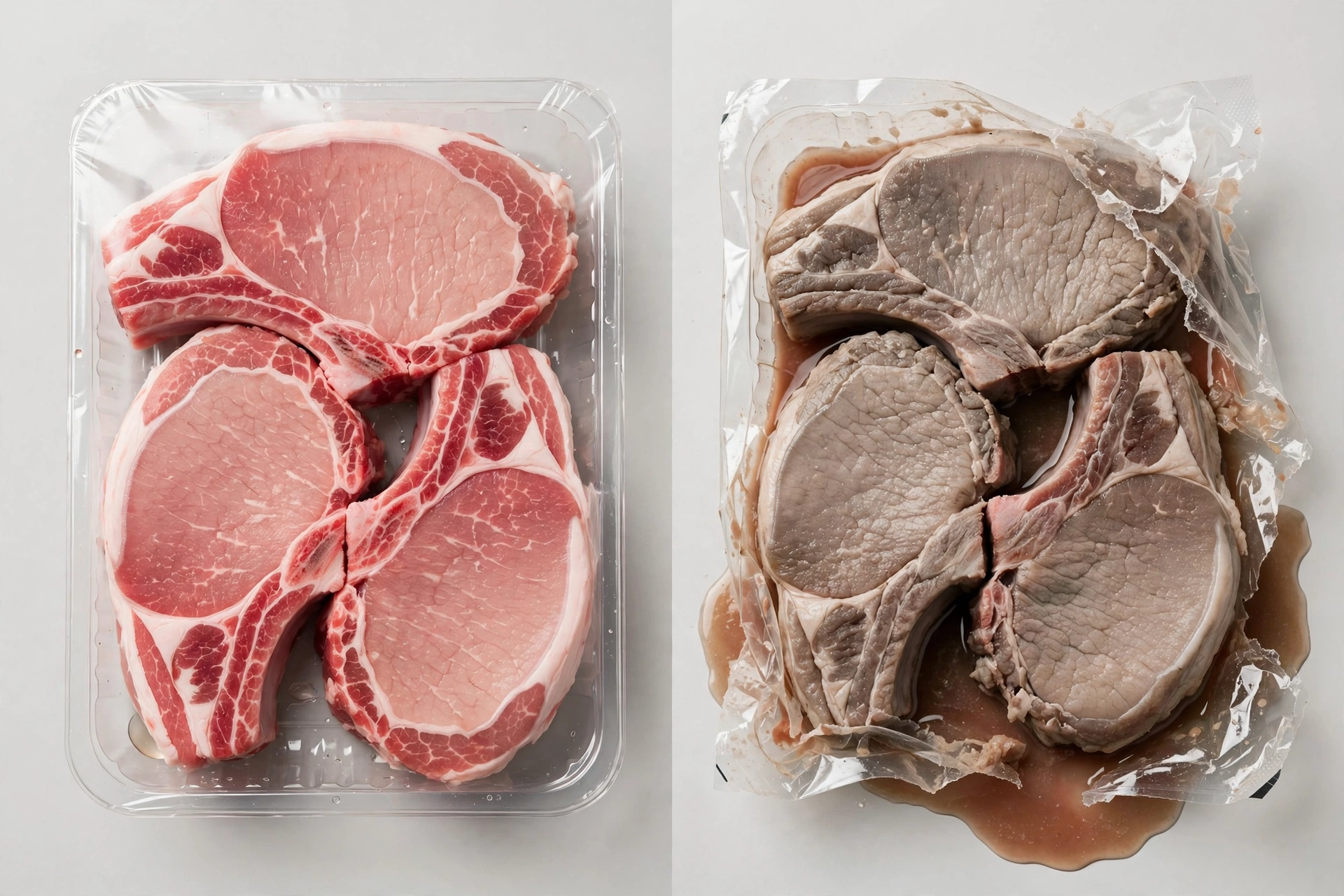
Prefer
- Pink to reddish-pink color, uniform across the cut
- Fine white marbling flecked through the meat
- Firm texture that springs back when pressed
- Neutral, clean smell with no sourness
- Cold, tightly sealed packages with a clear date label
Avoid / check more closely
- Gray, greenish, or dull brown patches
- Sour, ammonia-like, or otherwise off smells
- Slimy or sticky surface texture
- Excessive liquid (purge) pooling in the tray
- Torn, leaking, or bloated packaging, or missing date labels
Color and marbling: what fresh pork looks like
Fresh pork ranges from pink to reddish-pink depending on the cut — loin is typically paler, while shoulder runs deeper in color. What matters most is uniformity: the color should look even across the surface, without gray or greenish patches that suggest age or poor handling. Fine streaks of white fat running through the meat, called marbling, are a plus — they baste the meat during cooking and signal a more flavorful cut. Very pale, almost white pork with watery liquid in the tray tends to cook up dry, so pick deeper-colored cuts when you have the choice.
Touch, smell, and the package check
Press the meat gently through the wrap: fresh pork feels firm and springs back, while meat that stays dented or feels mushy is declining. Then trust your nose — fresh pork smells neutral or faintly meaty, and any sour, sulfur-like, or ammonia note means you should pass, even if the color looks fine. Finally, inspect the package itself. It should feel cold to the touch, be tightly sealed with no tears or leaks, and carry a clear sell-by or use-by date. Bloated trays can indicate bacterial gas buildup, and a lot of free liquid in the tray often means the meat has been stored too long or temperature-abused.
Storing pork safely at home
Get pork into the refrigerator promptly — ideally within two hours of purchase, one hour if it is a hot day. Keep it in its original sealed packaging on the coldest shelf, and plan to cook or freeze it within one to two days for ground pork and three to five days for whole cuts. For longer storage, wrap it tightly to prevent freezer burn; properly wrapped pork keeps well frozen for several months. Never thaw pork on the counter — use the refrigerator, cold water, or the microwave, and cook to a safe internal temperature.
A simple pork-shopping checklist
Before you buy, check four things: color (even pinkish-red?), texture (firm and springy?), smell (neutral?), and package (cold, sealed, dated?). Buy from the refrigerated case last during your shopping trip so the meat stays cold on the way home. These checks help you pick good-looking pork, but remember that appearance alone cannot guarantee safety — proper storage and thorough cooking do that job.
Common questions
Is pink pork safe to eat?
Color is not a safety thermometer. Pork is safely cooked when it reaches 145°F (63°C) throughout, followed by a three-minute rest — it may still look slightly pink inside at that temperature, which is fine. Use a food thermometer rather than judging by color.
What does a lot of liquid in the tray mean?
Some purge is normal, but excessive liquid often means the meat is older or was stored too warm. Choose drier packages when you can.
How long does raw pork last in the fridge?
Ground pork is best used within one to two days; whole cuts like chops and roasts keep three to five days refrigerated. When in doubt, freeze it sooner rather than later.
References
USDA Food Safety and Inspection Service — Pork from Farm to Table. Reference for pork handling, storage times, and safe cooking temperatures. Selection tips are practical shopping guidance.
Prepared October 9, 2026 with AI assistance. Cited sources do not endorse the entire article.