
To choose fresh blueberries, look for berries with a deep blue-purple color and a light silvery-white “bloom” — the natural waxy coating that signals freshness. The berries should feel firm and dry, and the container should be clean with no juice stains or mold. Reddish or greenish berries are underripe and will not sweeten after picking, so pick boxes that look uniformly ripe.
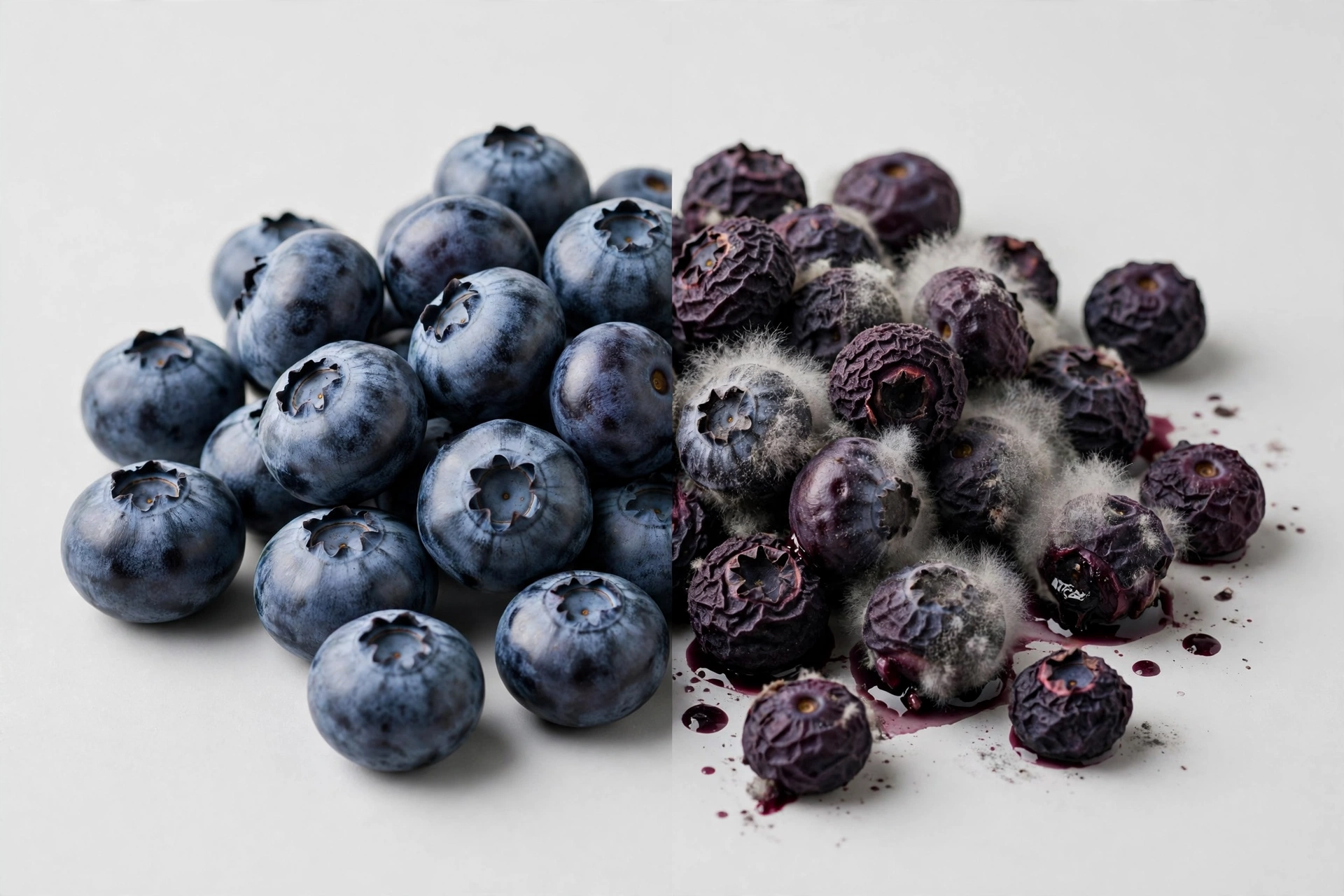
Prefer
- Deep blue to purple-black color with a silvery-white bloom
- Plump, firm berries that roll freely and feel dry
- Clean, dry containers with no stains or crushed fruit
- Uniformly colored boxes with few reddish berries
Avoid / check more closely
- Reddish or greenish berries, which are underripe
- Soft, wrinkled, or shriveled berries
- Any white or gray fuzzy mold
- Juice stains on the container, a sign of crushed berries
- Damp or leaking packages
The bloom is your freshness signal
That powdery, silvery sheen on blueberries is called bloom — a natural waxy coating the berry produces to protect itself. It is not spray residue and not mold; in fact, a strong bloom usually means the berries were handled gently and recently picked, since it rubs off with handling and time. Do not wash it off until you are ready to eat. Deeply colored berries with an even bloom are the ones to reach for, while dull, bloom-free berries have likely been sitting around or handled roughly.
Color, firmness, and the container check
Blueberries do not ripen after harvest, so color at purchase is final: fully blue-purple berries are sweet, while red or green ones will stay tart. Roll a few berries gently between your fingers — fresh ones feel firm and springy, like tiny water balloons. Mushy or wrinkled berries are past their prime. Then inspect the container itself: tilt it and look at the bottom layer for hidden mold, and check for purple juice stains, which mean berries were crushed in transit. Crushed berries mold fast and can spoil their neighbors within a day.
Storing blueberries at home
Do not wash blueberries until just before eating — moisture is the fastest route to mold. Keep them unwashed in the refrigerator in their original breathable container, or in a shallow bowl lined with a paper towel. They typically keep for about a week this way. Pick out any soft or moldy berries as soon as you spot them. Blueberries freeze beautifully: spread them in a single layer on a tray, freeze until hard, then transfer to a sealed bag for months of smoothies and baking.
A simple blueberry-shopping checklist
Before you buy, check four things: color (deep blue with bloom?), firmness (plump and springy?), container (clean and dry?), and uniformity (few red berries?). Buy only what you will use within a week, and remember that these visual checks guide you well but cannot guarantee sweetness — variety and growing conditions matter too.
Common questions
Is the white coating on blueberries mold?
No — that silvery-white coating is called bloom, a natural waxy layer the berry makes to protect itself. It is a sign of freshness, not spoilage. Real mold looks fuzzy and usually appears gray or white in patches, often near damaged berries.
Should I wash blueberries before storing?
No. Wash them just before eating. Storing wet berries encourages mold, so keep them dry and refrigerated in a breathable container until serving time.
Can I freeze fresh blueberries?
Yes, they are one of the best fruits for freezing. Spread unwashed berries in a single layer on a tray, freeze until solid, then move them to a sealed freezer bag. They keep well for several months.
References
U.S. Food and Drug Administration — Selecting and Serving Produce Safely. Reference for produce selection, handling, and visible damage. Ripening behavior is established produce science, not a laboratory finding about these berries.
Prepared October 9, 2026 with AI assistance. Cited sources do not endorse the entire article.