To store fresh herbs so they last longer, sort them first: soft herbs such as parsley, cilantro, and dill do best standing in a jar with a little water in the refrigerator, while hardy herbs such as rosemary, thyme, and oregano keep better wrapped in a slightly damp paper towel inside a bag or container in the fridge. Basil is the exception — cold often blackens its leaves, so keep basil stems in water on the counter instead. With the right method, most fresh herbs stay usable for one to two weeks.
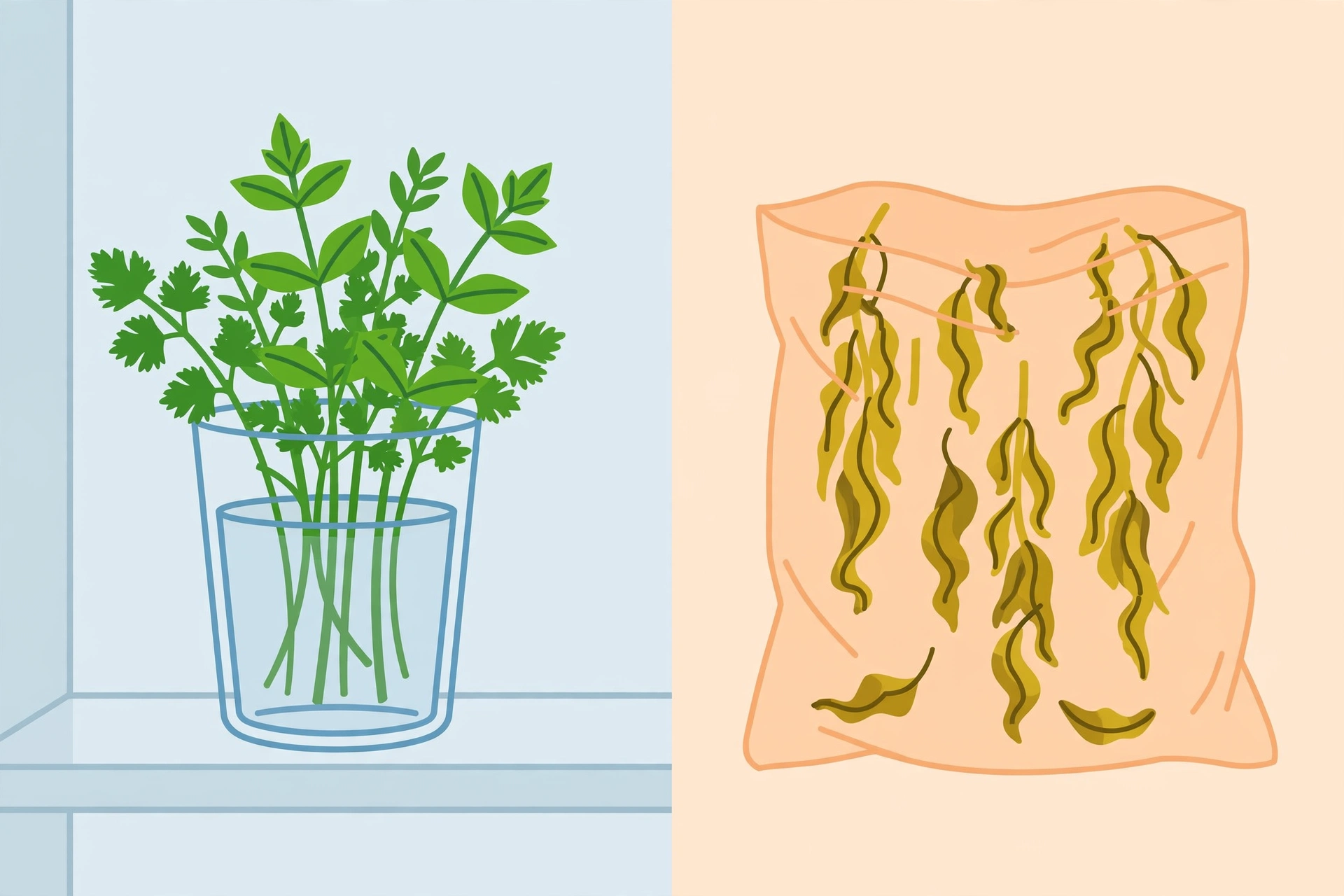
Prefer
- Stand soft herbs (parsley, cilantro, dill) in a jar with a few centimeters of water, stems freshly trimmed, in the fridge
- Wrap hardy herbs (rosemary, thyme, oregano, sage) in a slightly damp paper towel, then place them in a bag or container
- Cover the herb jar loosely — a produce bag over the top holds humidity without trapping condensation
- Shake or pat herbs dry before storing; surface moisture speeds up decay
- Keep basil in a glass of water on the counter, away from direct sunlight and heat
Avoid / check more closely
- Sealing soaking-wet herbs in airtight bags — trapped moisture encourages rot
- Refrigerating basil — its leaves often turn dark and limp in the cold
- Leaving herbs crushed in the thin store bag at the back of the fridge
- Ignoring slimy or darkened stems — remove affected pieces promptly so decay does not spread
- Forgetting to refresh the jar water every few days — cloudy water shortens herb life
Soft herbs vs. hardy herbs: choose the right method first
Soft herbs have tender stems and high water content — think parsley, cilantro, dill, mint, and tarragon. They behave a little like cut flowers and drink through their stems, which is why the water-jar method suits them. Hardy herbs have woodier stems and tougher leaves — rosemary, thyme, oregano, sage, and marjoram. They need only a humid environment, not standing water, so the damp-towel method fits them better. Sorting your bunch before storing is the single step most people skip, and it makes the biggest difference.
The water-jar method, step by step
Trim about a centimeter off the stem ends, since the cut ends may have dried during transport. Place the bunch in a jar or glass with a few centimeters of cool water, keeping the leaves above the waterline. Drape a produce bag loosely over the top to hold in humidity, then refrigerate. Change the water every two to three days, or sooner if it looks cloudy. When a few leaves or stems turn slimy, pull them out right away — one decaying piece can drag the rest down.
The damp-towel method for hardy herbs
Dampen a paper towel and wring it well — it should feel moist, not dripping. Wrap the herbs loosely, then slide the bundle into a container or a partially closed bag and refrigerate. Check the towel every few days: re-dampen it if it has dried out, and replace it if it smells off. Because hardy herbs are less thirsty, this light humidity is usually enough to keep them fresh for two to three weeks.
How long fresh herbs usually keep
Soft herbs in a water jar often stay usable for one to two weeks; hardy herbs in a damp towel often last two to three weeks. Basil on the counter typically holds for about a week. These are rough ranges, not guarantees — the herb’s freshness at purchase matters a lot. Herbs are past their prime when stems turn slimy, leaves go dark and mushy, or a sour smell develops. At that point, compost them rather than trying to rescue them.
A simple fresh-herb storage checklist
- Sort the bunch into soft herbs and hardy herbs
- Trim the stem ends before storing
- Soft herbs: jar with water, loose cover, refrigerate, refresh water regularly
- Hardy herbs: damp towel, container or bag, refrigerate
- Basil: water glass on the counter, never the fridge
- Remove decaying pieces as soon as you spot them
Common questions
Should I wash fresh herbs before storing them?
It is usually better to wash herbs just before use. If you do wash first, dry them thoroughly — a salad spinner or gentle patting works well — because lingering water shortens storage life.
Can I freeze fresh herbs instead?
Yes. Chop them, pack into ice-cube trays with a little water or oil, and freeze. The texture changes, so frozen herbs suit cooked dishes better than garnishes, but the flavor holds up well for months.
Why did my basil turn black in the fridge?
Basil is sensitive to cold, and refrigeration often darkens and wilts its leaves. Store basil stems in water at room temperature instead, and it usually stays fresh much longer.
References
- University of California Agriculture and Natural Resources — postharvest handling of fresh herbs
- National Center for Home Food Preservation (University of Georgia) — freezing herbs
Prepared October 8, 2026 with AI assistance. Cited sources do not endorse the entire article.