To freeze vegetables the right way, blanch them briefly in boiling water, cool them immediately in ice water, dry them well, then pack in portions, label with the date, and freeze quickly. Blanching slows the enzyme activity that dulls color, texture, and flavor during frozen storage. Most home-frozen vegetables keep good quality for about 8 to 12 months at 0°F (-18°C) or below.
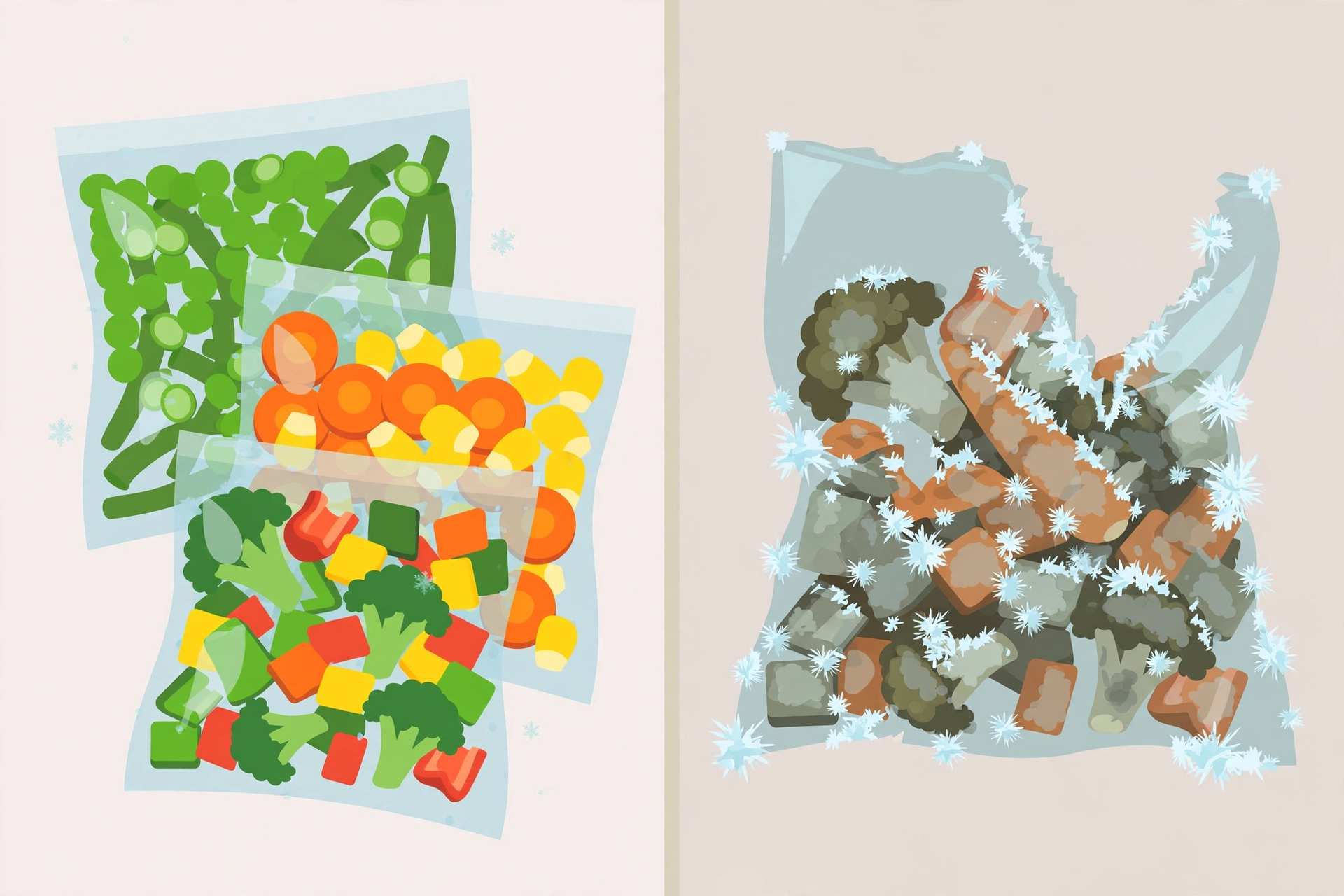
Prefer
- Blanching most vegetables before freezing to protect color, texture, and flavor
- Cooling blanched vegetables immediately in ice water for the same time they were blanched
- Drying pieces well after cooling so ice crystals stay minimal
- Packing in freezer bags or airtight containers with as much air removed as possible
- Labeling every package with the vegetable name and the freezing date
- Freezing bags flat in thin layers for faster freezing and easy stacking
Avoid / check more closely
- Freezing most raw vegetables without blanching — they often turn dull and off-textured within weeks
- Packing vegetables while still warm, which slows freezing and hurts texture
- Overfilling containers or piling bags thickly, which keeps the center from freezing quickly
- Using thin grocery bags that let air in — a fast track to freezer burn
- Refreezing thawed raw vegetables — quality drops sharply, and repeated thawing adds handling risk
Why blanching matters
Even in the freezer, natural enzymes in vegetables keep working, slowly degrading color, texture, flavor, and nutrients. Blanching — a brief dip in boiling water or steam — calms that enzyme activity before freezing. Vegetables frozen without blanching often look faded and taste flat after a short time in the freezer. A few exceptions freeze acceptably raw: diced onions, sliced peppers, and many herbs can skip blanching with decent results, though their texture still suits cooked dishes best.
Blanch, cool, and dry: the core routine
Bring a large pot of water to a full boil and prepare a bowl of ice water alongside. Blanch vegetables in small batches so the water returns to a boil quickly — crowding the pot lowers the temperature and makes timing unreliable. Blanching times vary by vegetable and piece size, so check a reliable blanching timetable for the specific vegetable you are freezing. Lift the vegetables out and plunge them into the ice water for the same amount of time, then drain and pat them dry. Dry surfaces mean fewer ice crystals and better texture later.
Pack and label for the freezer
Portion vegetables by how you will actually use them — single-meal amounts save you from thawing more than you need. Press the air out of freezer bags before sealing, and leave a little headspace in rigid containers since food expands as it freezes. Lay bags flat until solid; they stack neatly and freeze faster that way. Label each package with the contents and date. A freezer full of mystery bags is a freezer full of food you will hesitate to use.
How long frozen vegetables keep their quality
Kept at 0°F (-18°C) or below, most home-frozen vegetables hold good quality for about 8 to 12 months. Note that this is about quality, not a hard safety cutoff — flavor dulls, textures soften, and freezer burn creeps in over time. Use the oldest packages first, and if a bag shows heavy ice crystals or dry, discolored patches, its quality has likely declined even if the date looks fine.
A simple vegetable-freezing checklist
- Wash, trim, and cut vegetables into even pieces
- Blanch in small batches, then cool immediately in ice water
- Drain and pat dry before packing
- Portion by meal, press out air, seal in freezer bags or containers
- Label with vegetable name and date; freeze flat for faster results
- Use oldest packages first and check for freezer burn
Common questions
Do I really need to blanch vegetables before freezing?
For most vegetables, yes — blanching is what keeps color and texture appealing after months in the freezer. Onions, peppers, and herbs are the common exceptions that freeze acceptably without it.
Can I cook vegetables straight from frozen?
Yes. Most frozen vegetables go directly into the pan, pot, or oven without thawing, which also gives better texture. Avoid thawing on the counter and then refreezing — plan portions so each package is used in one go.
What does freezer burn look like, and is the food still usable?
Freezer burn shows up as dry, whitish or grayish patches where air reached the food. It is a quality issue rather than a danger, but the affected spots taste dry and bland — trim them off or use the rest in soups and stews where texture matters less.
References
- USDA Food Safety and Inspection Service — Freezing and Food Safety
- National Center for Home Food Preservation (University of Georgia) — freezing vegetables
Prepared October 8, 2026 with AI assistance. Cited sources do not endorse the entire article.