
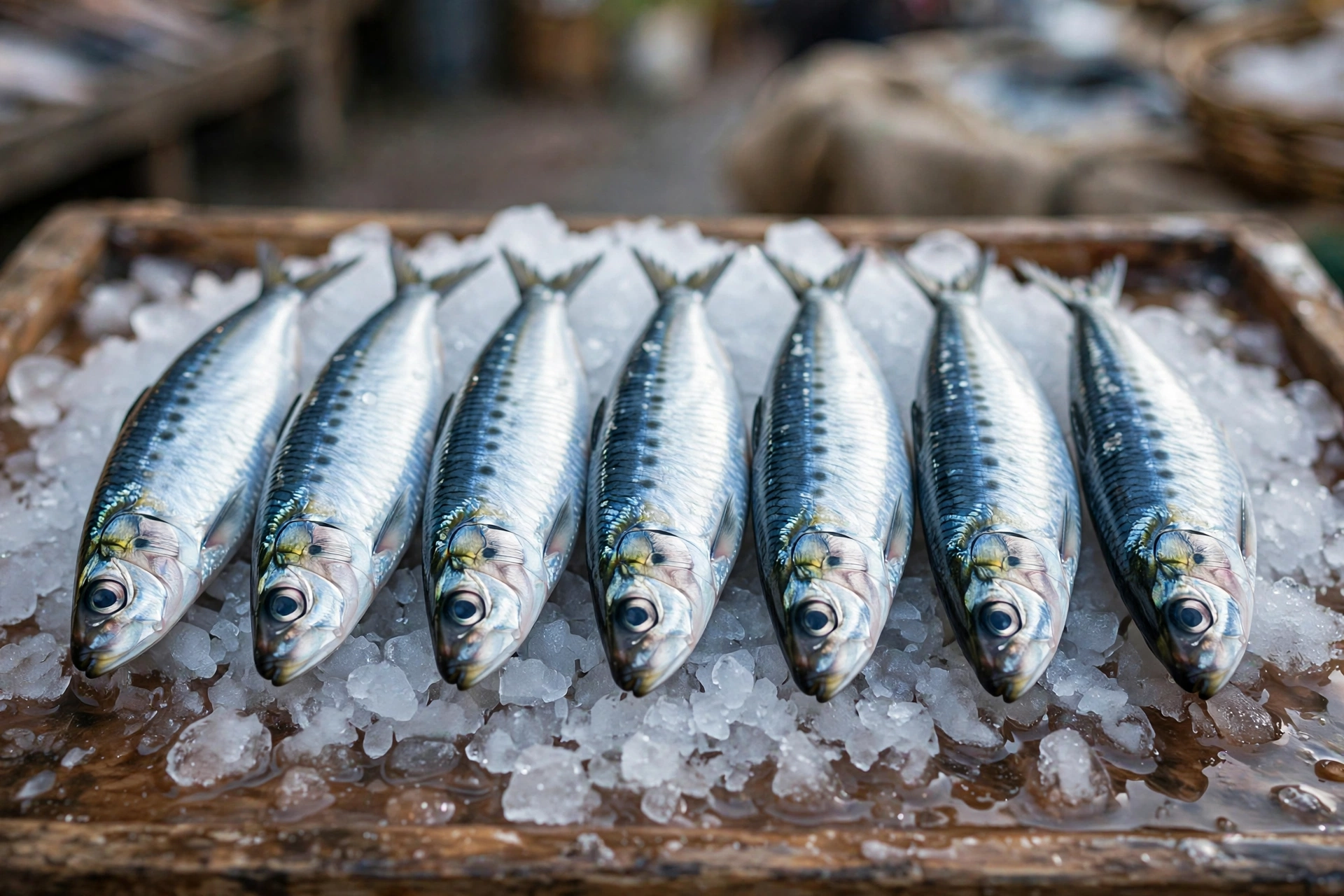
To choose fresh sardines, look for bright, silvery skin with an almost metallic shine and bodies that feel firm and springy. The eyes should be clear and bulging, the gills bright red, and the smell clean and briny — never strongly fishy. Fresh sardines hold together well and their scales stay attached. Avoid fish with dull gray skin, soft bellies, cloudy eyes, or any sour or ammonia odor.
Prefer
- Bright, silvery, almost metallic skin
- Firm bodies that spring back when pressed
- Clear, bulging eyes
- Bright red gills
- Clean, briny smell
Avoid / check more closely
- Dull, gray, or faded skin
- Soft bellies or mushy texture
- Cloudy or sunken eyes
- Brown or gray gills
- Strong fishy, sour, or ammonia smell
Shine is the first signal
Sardines are at their best when they look almost polished — the skin should gleam silver-blue with a metallic luster. As sardines age, that shine fades to a dull gray, which is the easiest visual cue at the counter. Pick one up: a fresh sardine feels firm and a little stiff, and its body springs back when gently bent. Soft, floppy sardines with bellies that feel mushy are past their prime. Scales should be mostly intact; heavy scale loss suggests rough handling or age.
Eyes, gills, and smell
The classic whole-fish checks apply perfectly to sardines. Eyes should be clear, bright, and slightly bulging — cloudiness or sinking indicates age. Lift the gill cover: fresh gills are bright red to pinkish-red; brown or gray gills mean the fish is old. Then smell: fresh sardines smell of clean seawater with barely a hint of fishiness. Because sardines are oily fish, they deteriorate faster than lean fish, so any strong, sour, or ammonia-like odor is a firm no.
Canned sardines: what the label tells you
Most sardines are bought canned, and quality varies widely. Look for sardines packed in olive oil rather than soybean oil or water for the best flavor, and check whether they are whole or skinless/boneless — whole sardines in good oil are often the tastiest. The can should be free of dents, especially along the seams, and within its best-by date. Premium brands pack larger, intact fish; budget cans may contain broken pieces, which is fine for pâtés and pasta but less pleasant on toast.
Storing sardines at home
Fresh sardines are extremely perishable — cook them the day you buy them. Keep them buried in ice in the refrigerator until cooking, and do not leave them at room temperature. They are best grilled, broiled, or fried whole; their small size means they cook in minutes. Unopened canned sardines keep for years in a cool pantry; once opened, transfer leftovers to a sealed container, refrigerate, and use within two days.
Common questions
Do I need to gut fresh sardines?
Small sardines can be cooked whole without gutting — many people eat them bones and all when grilled crisp. Larger ones benefit from a quick gutting: slit the belly, rinse, and pat dry. Your fishmonger will often do this for you if you ask.
Why do sardines spoil so fast?
Their high oil content and small size give bacteria and oxidation a head start. Buying them as fresh as possible and keeping them ice-cold until cooking is the whole game.
Are canned sardines as nutritious as fresh?
Canned sardines retain their omega-3s, calcium (from the soft edible bones), and protein well — canning preserves nutrients effectively. They are a convenient, affordable way to eat more oily fish.
References
U.S. Food and Drug Administration — Selecting and Serving Seafood Safely. Reference for selecting and handling seafood safely.
Prepared October 13, 2026 with AI assistance. Cited sources do not endorse the entire article.