
To choose fresh octopus, look for natural reddish-brown to purplish-gray skin with a moist sheen — the color should look alive, not faded or blotchy. It should smell clean like the sea, never fishy or sour. The flesh should feel firm and springy, and the suckers on the arms should look intact and well-defined. Buy from a reputable fishmonger with a cold, clean display.
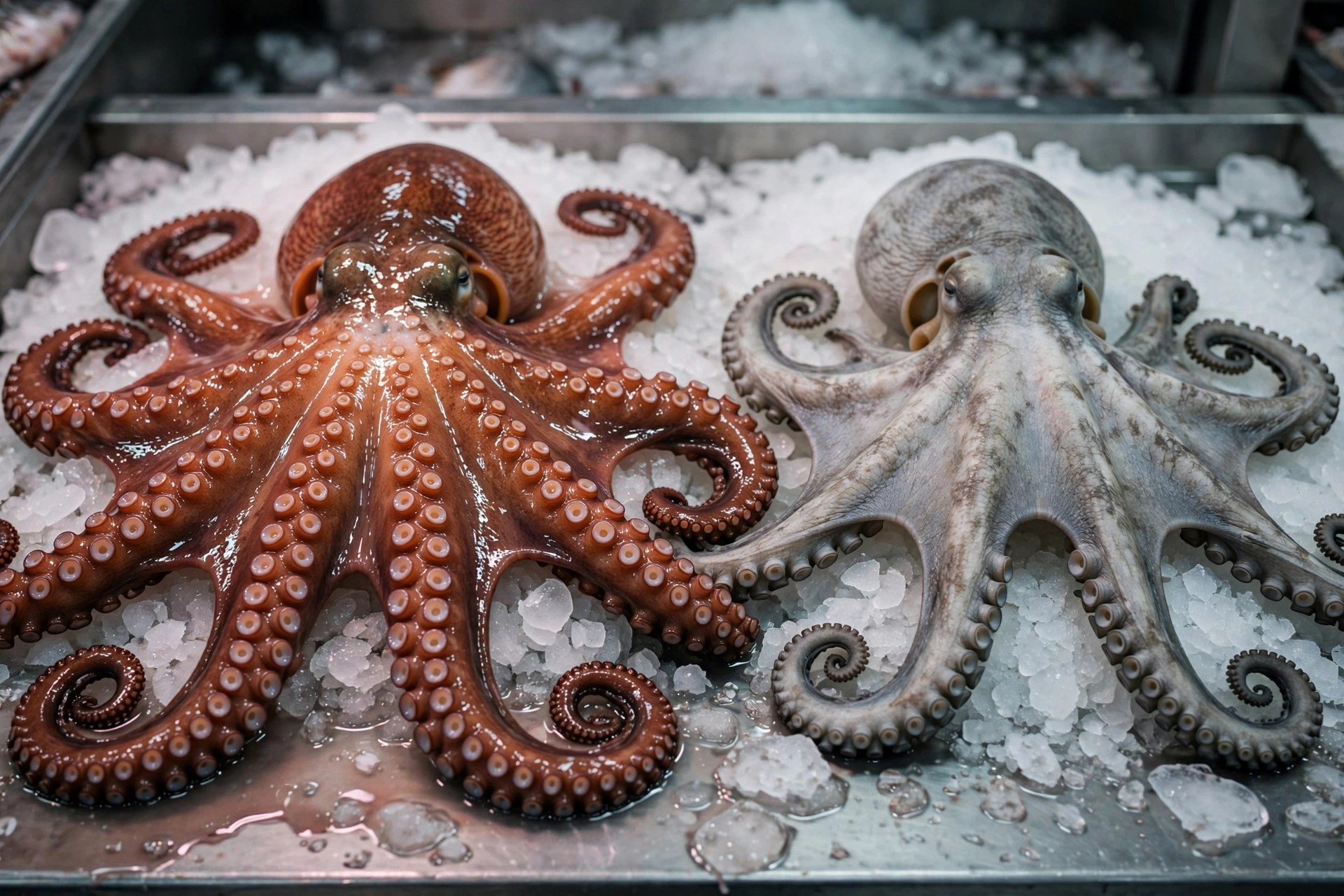
Prefer
- Natural reddish-brown to purplish-gray color
- Clean, mild sea smell
- Firm, springy flesh
- Intact, well-defined suckers
- Moist sheen with no slime film
Avoid / check more closely
- Faded, blotchy, or whitish color
- Fishy, sour, or ammonia-like smells
- Mushy or slimy texture
- Broken, falling-apart arms
- Excess cloudy liquid in the package
Color and suckers: reading the animal
Fresh octopus wears its natural camouflage colors — mottled reddish-brown, purple, or gray — with a lively, moist look. As it ages, the color fades to dull gray or whitish and the skin looks tired. Check the arms: the suckers should be distinct rings, firmly attached, and the arms should look plump, not deflated or separating. A whole octopus with intact skin and firm arms is the best sign.
Smell, texture, and the slime check
Fresh octopus smells of clean seawater — mild and briny. Any strong fishiness, sourness, or ammonia means it is past its prime. Press the mantle: it should feel firm and elastic, bouncing back. A slippery slime film (beyond the normal moist coating) signals bacterial breakdown — do not buy it. If buying frozen, which is common and often excellent, the package should be rock-hard with no thawed soft spots or freezer burn.
Storing octopus at home
Cook fresh octopus the day you buy it if possible; otherwise refrigerate on ice and use within one to two days. Frozen octopus keeps for months well wrapped — and many cooks prefer it, since freezing helps tenderize the flesh. Thaw in the refrigerator overnight. Cook it briefly (a few minutes) or long and slow (braised) — the in-between makes it rubbery, just like squid.
Common questions
Is frozen octopus good?
Yes — often better than “fresh” that has been sitting. Freezing tenderizes the flesh, and quality frozen octopus is widely available.
How long does fresh octopus last?
One to two days refrigerated on ice. Buy it last, keep it cold, cook it soon.
Why is my octopus rubbery?
Cooking time landed in the middle zone. Either flash-cook briefly or braise long and slow until tender.
References
U.S. Food and Drug Administration — Selecting and Serving Fresh and Frozen Seafood Safely. Reference for seafood selection, handling, and storage.
Prepared October 11, 2026 with AI assistance. Cited sources do not endorse the entire article.