
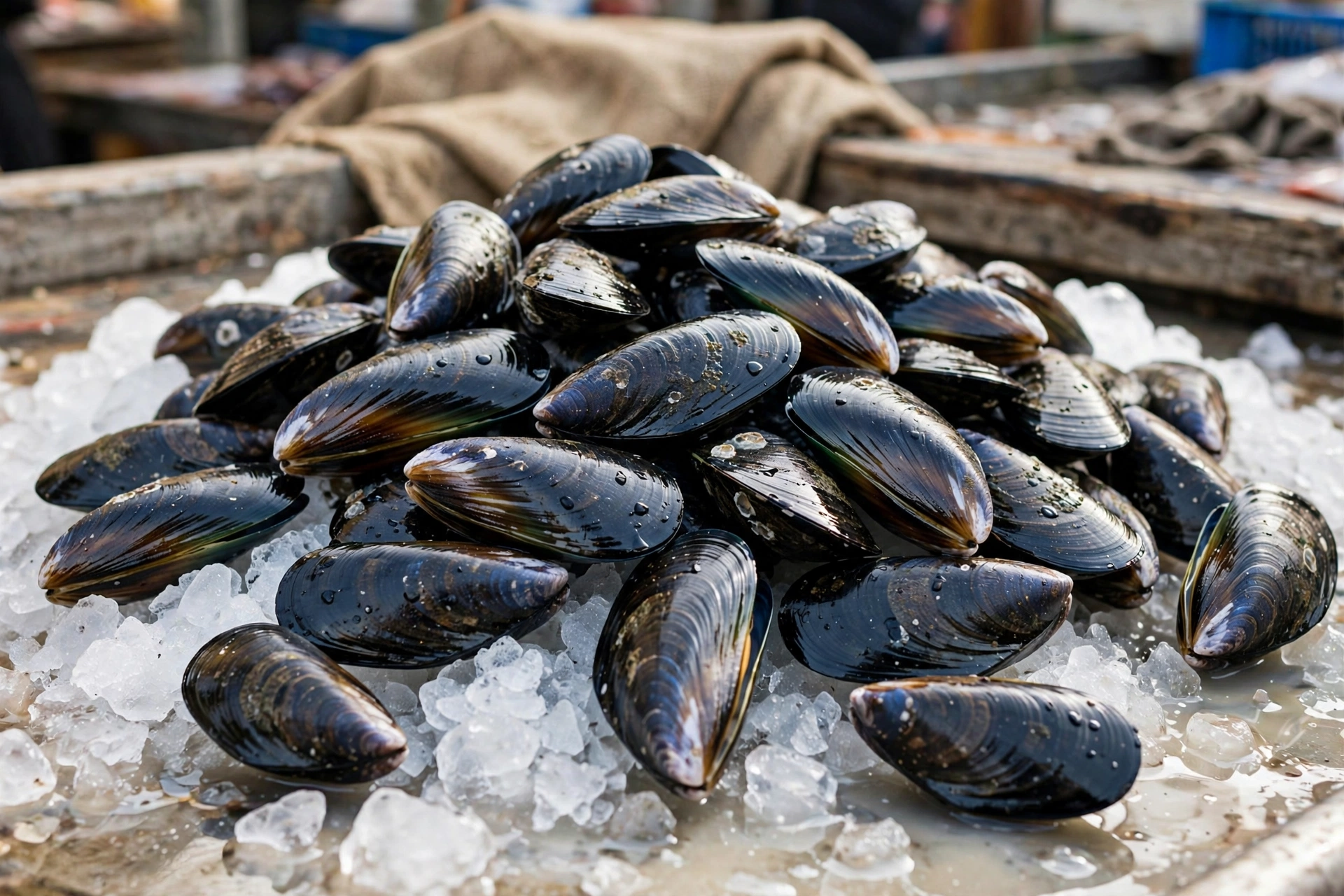
Fresh mussels should be alive when you buy them — and live mussels keep their shells tightly closed. Look for intact, unbroken shells and give any open ones the tap test: tap the shell, and a live mussel will slowly close. They should smell clean and mildly of the ocean, never strongly fishy or sour. Choose mussels that feel heavy for their size, and discard any with cracked shells or any that stay open after tapping.
Prefer
- Tightly closed shells
- Open shells that close when tapped (the tap test)
- Clean, mild, ocean-like smell
- Intact, uncracked shells
- Heavy feel for the size
- Tags or labels on the bag with harvest information
Avoid / check more closely
- Cracked or broken shells
- Shells that stay open after tapping — the mussel is likely dead
- Strong fishy, sour, or ammonia-like smells
- Lightweight, dry-feeling mussels
- Excessive mud or debris that will not rinse off
- Bags with no labeling or harvest information
The tap test
The tap test is the classic freshness check for mussels, and it is endorsed in FDA shellfish guidance. Pick up any mussel with an open shell and tap it firmly against the counter or with your finger. A live mussel will slowly pull its shell closed — it may take a few moments, so be patient. If the shell stays gaping open after tapping, the mussel is dead and should not be selected. Note that the reverse is not a perfect rule either: a mussel that is tightly closed is alive and good, while one that is slightly open but closes on tapping is also fine. When in doubt at home, discard any mussels that remain open after tapping and rinsing.
Smell and shell condition
Your nose is the second-best tool. Fresh mussels smell like a clean ocean breeze — mild, briny, and fresh. A strong fishy odor, or worse, a sour or ammonia-like smell, means the batch is turning. Inspect the shells: they should be whole and intact, typically dark blue-black and slightly glossy. Cracked or crushed shells are an automatic reject, since the animal inside is exposed and dying. Heft a few in your hand — good mussels feel dense and heavy; light, hollow-feeling ones have often lost their moisture. Also look for the tag: reputable sellers provide harvest tags or labels with the processor’s certification, which the FDA points to as a sign the shellfish were harvested under safety controls.
Storing mussels at home
Mussels are highly perishable — plan to cook them the day you buy them, or the next day at the latest. Store them in the refrigerator in a breathable container: a bowl covered with a damp cloth works well. Do not seal them in an airtight bag or container, and do not store them in standing water — they need air to stay alive. Discard any with cracked shells. Just before cooking, rinse them under cold water and pull off the “beard” (the fibrous tuft) if present, then tap-test once more and discard any that stay open.
Common questions
Should mussels be open or closed when I buy them?
Closed is ideal. Slightly open shells are fine if the mussel closes when tapped. Shells that stay open after tapping indicate a dead mussel — discard those.
What is the tap test?
Tap an open mussel shell firmly; a live mussel will slowly close its shell. It is the standard home check for whether a mussel is alive, and it mirrors the guidance the FDA gives for selecting clams, oysters, and mussels.
How long do fresh mussels last?
Generally one to two days refrigerated with proper breathable storage. They are best cooked the day of purchase, since quality fades fast.
References
U.S. Food and Drug Administration — Selecting and Serving Fresh and Frozen Seafood Safely. Reference for seafood selection, shellfish tags, and the tap test.
Prepared October 12, 2026 with AI assistance. Cited sources do not endorse the entire article.