
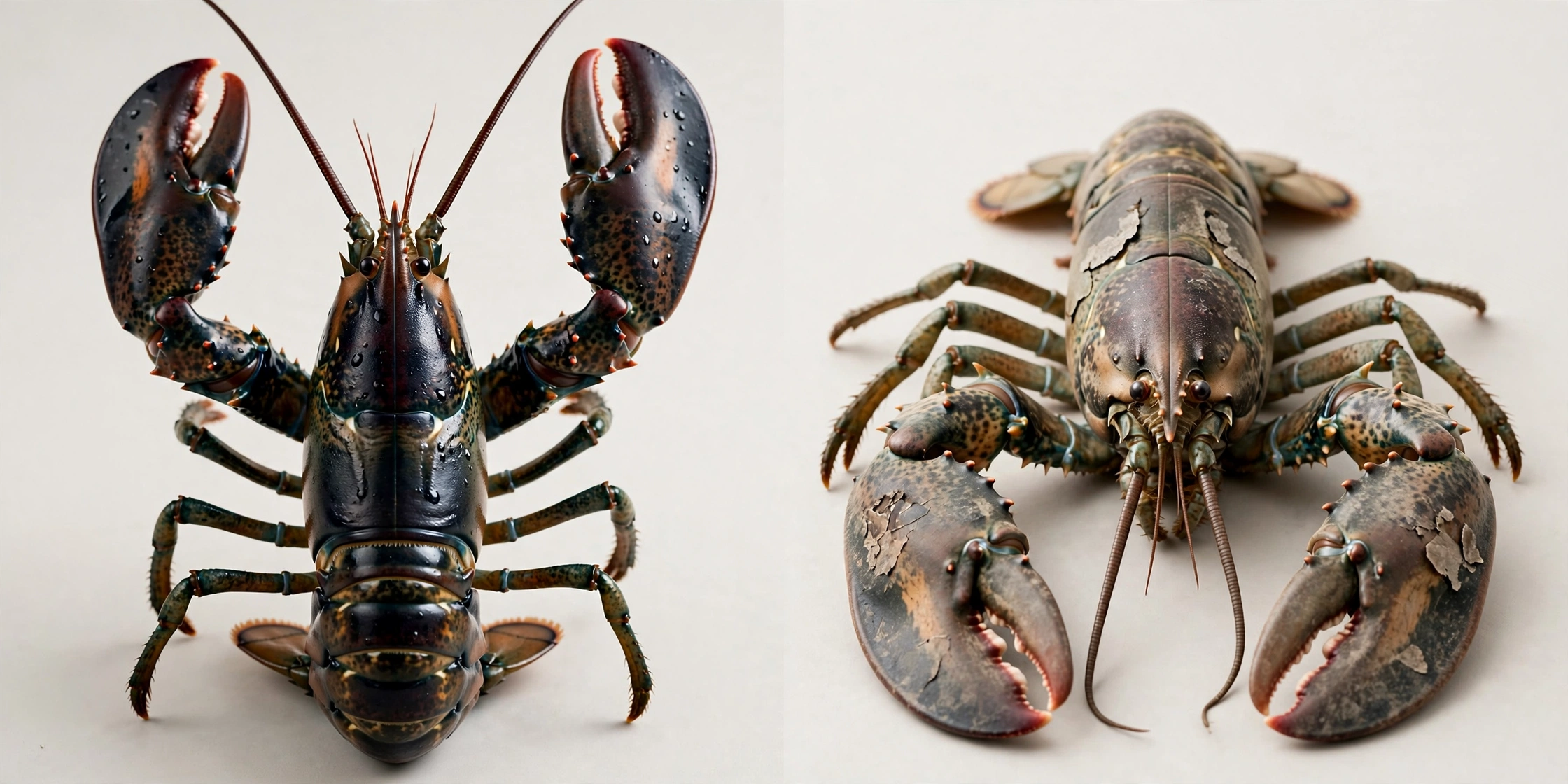
To choose a good lobster, buy it live and lively — the tail should curl strongly when handled, and the lobster should move its legs and claws. Pick one that feels heavy for its size with a hard, intact shell. Avoid limp lobsters, cracked shells, or any ammonia smell.
Prefer
- Live lobsters that move actively and curl the tail when picked up
- Heavy feel for the size — weight means meat, not water
- Hard, intact shell with both claws present
- Clean ocean smell, never ammonia or sour odors
- Lobsters kept in cold, circulating tanks at the shop
Avoid / check more closely
- Limp or motionless lobsters — do not buy dead lobster unless it was cooked the same day
- Cracked, soft, or damaged shells
- Missing claws or broken antennae (a rough-handling sign)
- Any ammonia, sour, or off smell
- Lobsters sitting in warm or stagnant water
Live and lively beats everything
Liveliness is the single most important check. A healthy lobster reacts when handled: legs move, claws lift, and the tail snaps into a curl. That tail-curl reflex is the gold standard — a lobster that cannot curl its tail is weak and should stay in the tank. Because lobster meat degrades extremely fast after death, reputable shops sell them live; a dead uncooked lobster of unknown timing is never worth the risk, no matter the discount.
Weight, shell, and the hard-shell advantage
Heft the lobster — two lobsters of the same length can differ noticeably in weight, and the heavier one carries more meat. A hard, rigid shell usually means a full, meaty lobster, while a soft, flexible shell means it recently molted and much of its weight is water rather than meat. Check that the shell is intact with no cracks or dark lesions, and that both claws are present. Smaller “chicken” lobsters (about one pound) are often sweeter per bite than giant ones, so bigger is not automatically better.
Cooked lobster and storage
If buying cooked lobster, it should have been cooked the same day — ask, and check that the meat smells sweet and clean like the ocean, with the tail still curled (a straight tail on a cooked lobster suggests it was dead before cooking). Refrigerate live lobsters in the coldest part of the fridge, covered with damp newspaper, and cook the same day you buy them. Cooked lobster meat keeps refrigerated for a day or two; freeze only as a backup, since freezing dulls the texture.
Common questions
Hard-shell or soft-shell lobster?
Hard-shell lobsters give you more meat per pound and travel better. Soft-shell (new-shell) lobsters are easier to crack and many fans find them sweeter, but you pay for water weight.
Can I keep a live lobster overnight?
Briefly, yes — cold, damp, and ventilated in the refrigerator, cooked the next day at the latest. Never put live lobsters in fresh water or sealed bags.
Why does my lobster smell like ammonia?
Ammonia odor means the lobster is spoiling — do not eat it. Fresh lobster smells only of the sea.
References
U.S. Food and Drug Administration — Selecting and Serving Fresh and Frozen Seafood Safely. Reference for shellfish selection and handling. Liveliness and shell checks are established seafood practice.
Prepared October 10, 2026 with AI assistance. Cited sources do not endorse the entire article.