
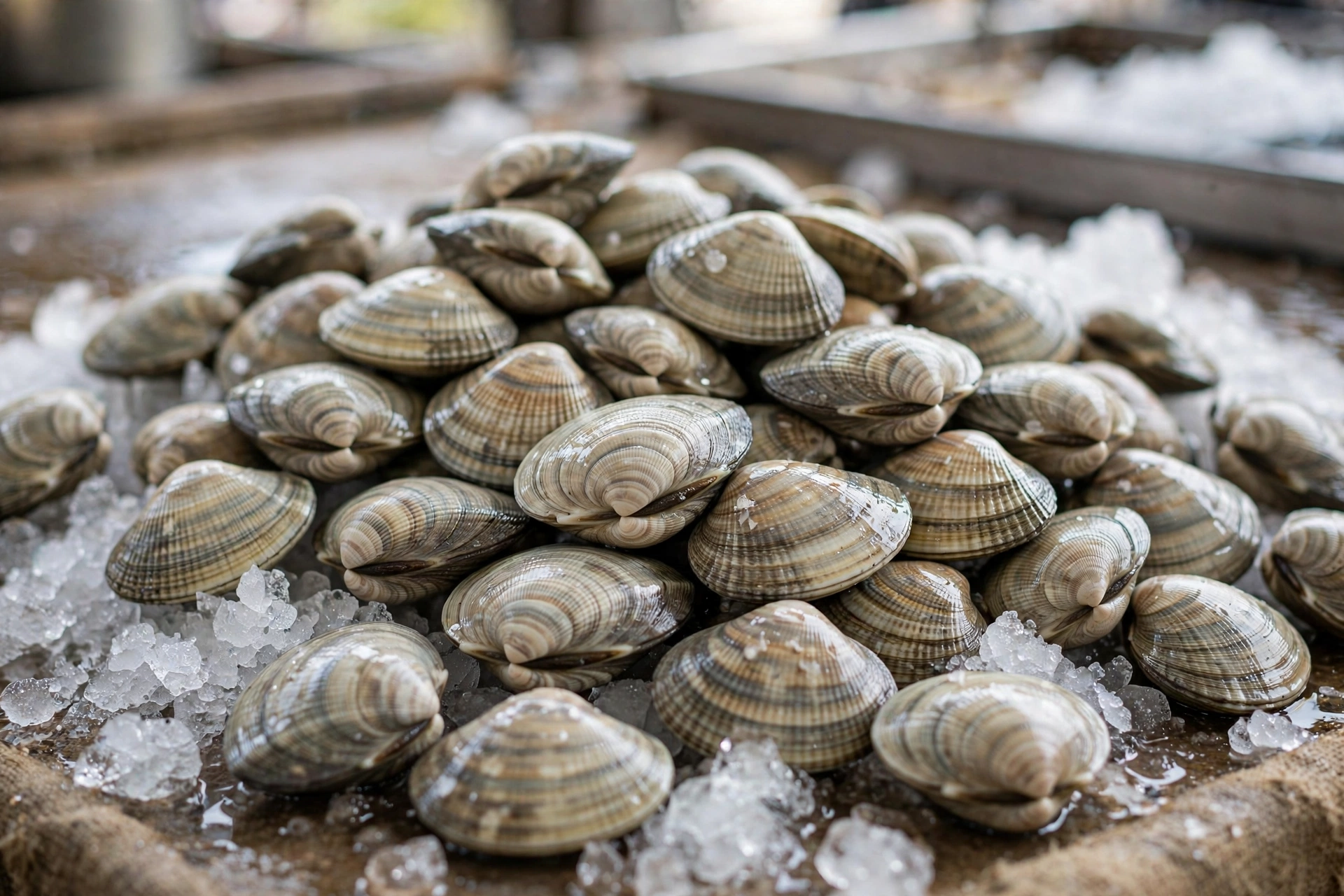
Fresh clams should be alive at purchase, with shells that are closed or that close when tapped. They should smell clean and mildly briny — never strongly fishy or sour. Look for intact shells with no cracks, and pick the size that matches your recipe: littlenecks for eating whole, cherrystones for grilling, and larger chowder clams for soups. Discard any clams with broken shells or any that stay open after tapping.
Prefer
- Closed shells, or shells that close when tapped
- Clean, mild, ocean-like smell
- Intact shells with no cracks or chips
- Heavy, solid feel for the size
- Size matched to your recipe (littleneck, cherrystone, chowder)
- Tags or labels with harvest information
Avoid / check more closely
- Cracked, broken, or chipped shells
- Shells that stay open after tapping
- Strong fishy, sour, or ammonia-like smells
- Lightweight or hollow-feeling clams
- Shells caked in mud that will not rinse clean
- Unlabeled bags with no harvest information
Know your clam sizes
Hard clams are sold by size, and the names tell you what they are best for. Littlenecks are the smallest — about 2 inches across — tender enough to eat raw on the half shell or steamed whole. Cherrystones are a step up, meatier and excellent grilled or baked. Topnecks sit in between. Chowder clams (also called quahogs) are the largest and toughest; they are built for chopping into chowders, stews, and stuffed dishes, not for eating whole. Buy the size your recipe calls for rather than grabbing whatever looks biggest — a littleneck steams open in minutes, while a chowder clam needs long cooking to become tender. Whatever the size, the freshness rules are the same: closed or tap-closes, intact, and clean-smelling.
The same freshness tests as mussels
Clams follow the same rules the FDA lays out for all live bivalves. Tap any open clam firmly: a live one will close its shell, sometimes slowly, so give it a moment. Discard cracked or broken shells outright. Smell the batch — fresh clams smell like clean seawater, while sour or strongly fishy odors mean trouble. Pick them up: good clams feel heavy and solid, a sign they are full of seawater and alive; light ones may be dead and dried out. Check for the harvest tag or label too — it shows the shellfish were harvested and processed under national shellfish safety controls. At home, give them a final tap test after rinsing and discard any that remain open.
Storing clams at home
Clams are best cooked the day you buy them, and keep at most one to two days refrigerated. Store them in the refrigerator in a breathable container — a bowl covered with a damp cloth is ideal. Never seal them in an airtight bag or submerge them in fresh water, which will kill them. Do not store them in standing water of any kind. Before cooking, scrub the shells under cold running water and discard any with cracked shells. Many cooks purge clams in salted cold water for 20 to 30 minutes to help them expel sand — change the water once, then rinse before cooking.
Common questions
Do clams need to be purged of sand?
It helps, especially with wild-harvested clams. Soaking in cold salted water for 20 to 30 minutes encourages them to expel sand; farmed clams are often already quite clean. Rinse well afterward.
What is the difference between littlenecks and cherrystones?
Both are hard clams (quahogs) at different sizes: littlenecks are smaller and more tender, ideal for steaming and eating whole; cherrystones are larger and meatier, great for grilling and baking. Chowder clams are larger still and best chopped for soups.
Should clam shells be open or closed?
Closed, or closing when tapped. Shells that stay open after a firm tap indicate a dead clam — discard it.
References
U.S. Food and Drug Administration — Selecting and Serving Fresh and Frozen Seafood Safely. Reference for seafood selection, shellfish tags, and the tap test.
Prepared October 12, 2026 with AI assistance. Cited sources do not endorse the entire article.