
Ripen whole avocados on the counter, then refrigerate them once ripe to buy three to five extra days. A ripe avocado gives slightly to gentle palm pressure; at that point the fridge slows it without hurting texture much. For a cut avocado, leave the pit in the half you are saving, brush the flesh with lemon or lime juice, press wrap directly onto the surface, and refrigerate — expect good quality for about one to two days, not longer. Hard, unripe avocados should never be refrigerated, because the cold can stop them ripening properly.
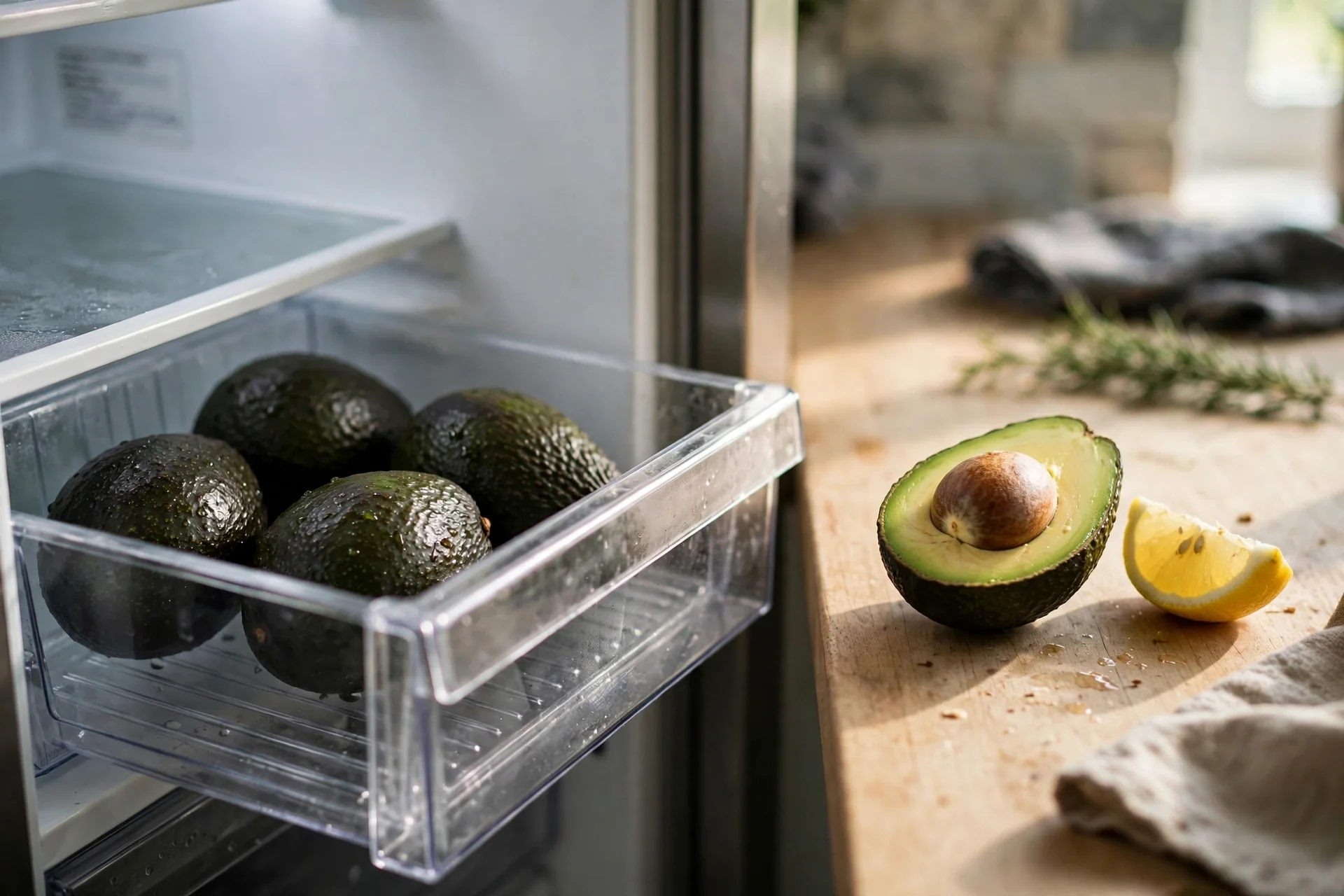
Prefer
- Ripening whole avocados on the counter
- Refrigerating once fully ripe
- Leaving the pit in the saved half
- Citrus juice plus wrap pressed on the flesh
- Using cut avocado within one to two days
Avoid / check more closely
- Refrigerating hard, unripe avocados
- Leaving a cut avocado uncovered
- Storing cut avocado for many days
- Squeezing with fingertips and bruising fruit
- Ripening in direct sunlight or heat
Whole avocados: counter first, fridge second
The two-stage method works because avocados only ripen off the tree. Stage one is the counter: leave hard fruit at room temperature for a few days, checking daily with a gentle palm squeeze — never fingertips, which bruise the flesh under the skin. The selection cues in how to choose avocados help you judge how far along a fruit already is in the store. Stage two begins the moment it yields: move it to the fridge, where ripe avocados hold well for about three to five days. To speed stage one, put the avocado in a paper bag with a banana or apple.
Cut avocados: fight the browning
Cut flesh browns when it meets air. Slow it three ways at once: keep the pit in the stored half (it limits exposed surface nearby), brush the flesh with citrus juice, and press plastic wrap or a fitted lid directly onto the surface so there is no air pocket. Some people store the half cut-side down in a shallow container or with a slice of onion in the box; the wrap-pressed-on-flesh method is the most reliable. Even done perfectly, plan to use a cut avocado within one to two days, and scrape off any thin browned layer before eating — the flesh underneath is usually fine. Guacamole follows the same rules: press wrap onto the surface and refrigerate.
Avocados in meals and leftovers
Avocado added to salads, sandwiches, and grain bowls is best prepared at serving time. Prepared dishes containing avocado that need storing follow the general guidance in how to store leftovers — refrigerate within two hours, in a covered container, and eat within a few days, accepting that the avocado element will darken first. For longer keeping, avocado flesh can be frozen as halves with citrus juice or as a purée in bags; thawed avocado suits smoothies, dressings, and guacamole rather than slicing.
Reading ripeness across a whole bag
Bagged avocados rarely ripen in sync. Sort them on the counter: eat or refrigerate the ones that yield today, leave the firm ones out, and check the group daily, moving each fruit to the fridge as it peaks. This rolling system is the same principle behind how to store fruit generally — counter for ripening, fridge for holding, and nothing left to drift past its best. Discard avocados that feel hollow, rattle with a loose pit, smell off, or show extensive dark, stringy flesh when cut; a few small brown flecks in an otherwise good fruit can simply be trimmed.
Common questions
How can I tell when an avocado is ripe?
Hold it in your palm and squeeze gently — a ripe avocado yields slightly without feeling mushy. Color darkens on Hass varieties, but the gentle give is the more reliable test across types.
Does the pit really stop an avocado browning?
Only partly — it shields the flesh directly beneath it. Citrus juice and wrap pressed onto the exposed surface do most of the work, so combine all three for a cut half.
Can I freeze avocados?
Yes, as halves brushed with citrus or as purée, for a few months. Thawed avocado is soft, so use it blended — smoothies, dressings, spreads, and guacamole — rather than sliced.
References
U.S. Food and Drug Administration — Selecting and Serving Produce Safely. Reference for selecting, storing, and serving fresh produce safely.
Prepared October 21, 2026 with AI assistance. Cited sources do not endorse the entire article.