
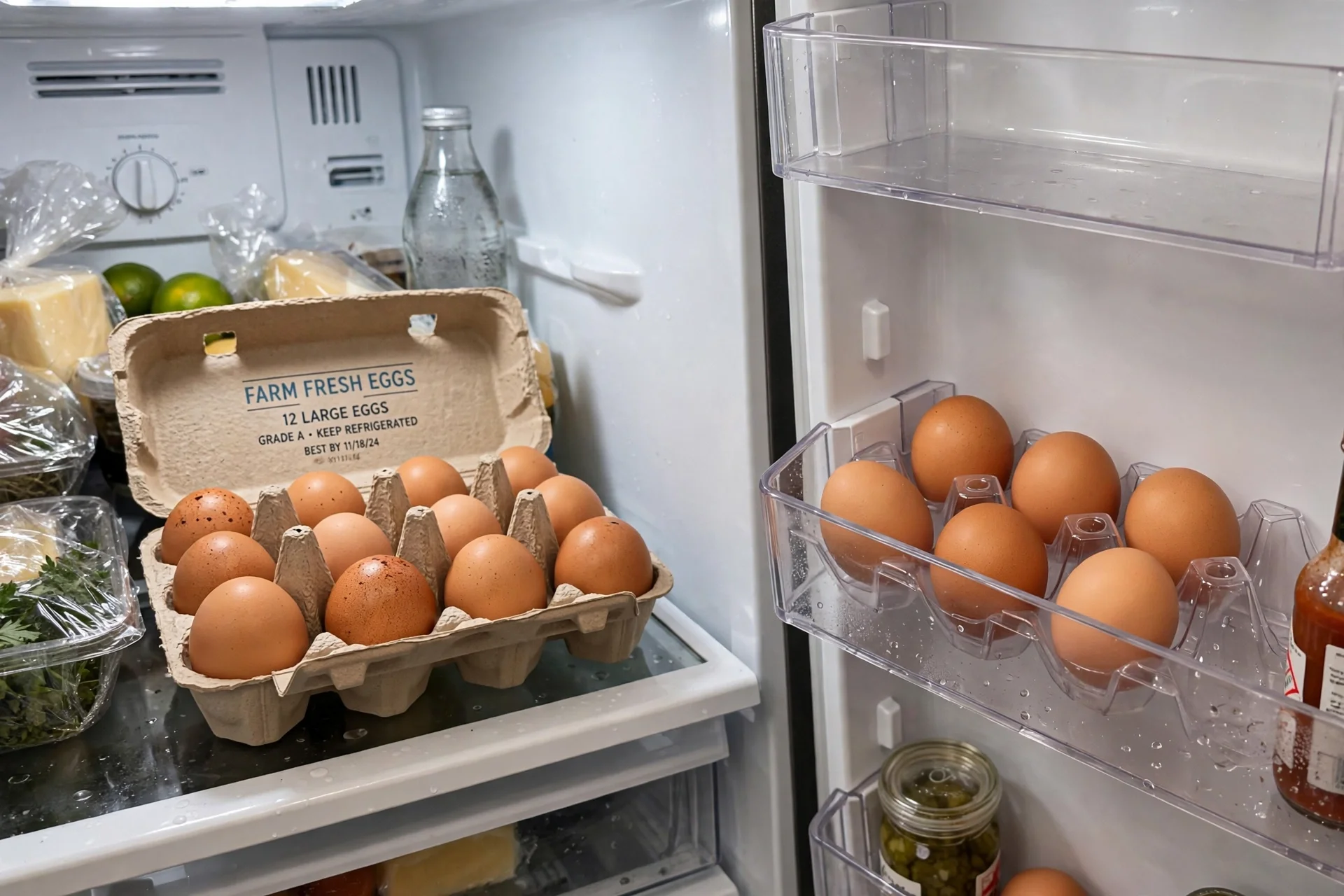
Store eggs in their original carton, in the main body of the fridge — not the door — at or below 40°F (4°C). Kept that way, shell eggs typically keep for three to five weeks from packing, often a week or two past the date on the carton if they have stayed cold. The carton protects them from bumps, slows moisture loss, and keeps them from picking up fridge odors. Hard-boiled eggs keep for about one week refrigerated. If an egg smells off when cracked, discard it regardless of dates.
Prefer
- Original carton on a main fridge shelf
- Fridge at or below 40°F (4°C)
- Big end up, as packed in the carton
- Checking the pack or sell-by date
- Cracking each egg into a small bowl first
Avoid / check more closely
- Storing eggs in the fridge door
- Washing shell eggs before storing
- Leaving eggs at room temperature for hours
- Keeping hard-boiled eggs for over a week
- Using cracked or dirty eggs
Why the carton and the main shelf matter
The fridge door is the warmest, most temperature-unstable spot in the appliance — exactly what eggs do not need. The carton on a middle shelf keeps eggs colder and more stable, and the lid blocks odors from foods like onions or leftovers that can pass through the porous shell. If you are still at the buying stage, how to choose eggs covers carton checks in the store; at home, resist transferring eggs to a pretty countertop bowl or the built-in door rack. In the United States, eggs are washed and must stay refrigerated; do not leave them on the counter for extended periods.
How long eggs actually last
USDA guidance puts refrigerated shell eggs at three to five weeks from the pack date. The date printed on the carton may be a sell-by or best-by date rather than a hard expiry, so eggs stored continuously cold are often still fine shortly after it — but quality, especially for frying, fades gradually as whites thin and yolks flatten. Raw yolks and whites kept out of the shell should be used within two to four days, and opened liquid egg products within a few days. When shelf life matters, cook surplus eggs: a frittata or egg muffins use them up safely and reheat well.
Freshness checks that actually help
The most talked-about check is the water test described in the egg float test: an older egg with a larger air cell tilts or floats, while a fresh one sinks and lies flat. Treat it as an age clue, not a safety verdict — a floating egg may simply be old, and a sinking egg can still be spoiled. The decisive test is after cracking: crack each egg into a small bowl, look and sniff, then add it to your dish. A rotten egg is unmistakable. A runny white and flat yolk just mean an older egg, better suited to scrambling or baking than poaching.
Hard-boiled and leftover eggs
Hard-boiled eggs are more perishable than raw ones because cooking removes the shell natural protective coating. Refrigerate them promptly, in the shell where possible, and eat within one week — the full timeline is covered in how long hard-boiled eggs last. Peeled eggs keep for a shorter window and are best eaten within a few days. Egg-based leftovers such as quiche or egg salad should be refrigerated within two hours and eaten within three to four days. Never leave cooked eggs in a lunchbox or picnic basket at room temperature for an afternoon.
Common questions
Do eggs need to be refrigerated?
In the United States, yes — commercial eggs are washed, which removes the natural coating, so they must be kept cold. Once refrigerated, keep them refrigerated; repeated warming and cooling encourages condensation on the shell.
Can I freeze eggs?
Yes, but not in the shell. Beat whole eggs or separate whites and yolks, freeze in ice-cube trays or small containers, and use within a few months for baking and scrambling. Hard-boiled eggs do not freeze well.
What does the date on the carton mean?
It is usually a sell-by or best-by date for quality and store rotation, not an instant safety deadline. Storage matters more: eggs kept continuously at or below 40°F (4°C) often remain usable one to two weeks beyond it, if they look and smell normal when cracked.
References
U.S. Food and Drug Administration — Safe Food Handling. Reference for safe food storage, refrigeration, and handling at home.
Prepared October 21, 2026 with AI assistance. Cited sources do not endorse the entire article.