
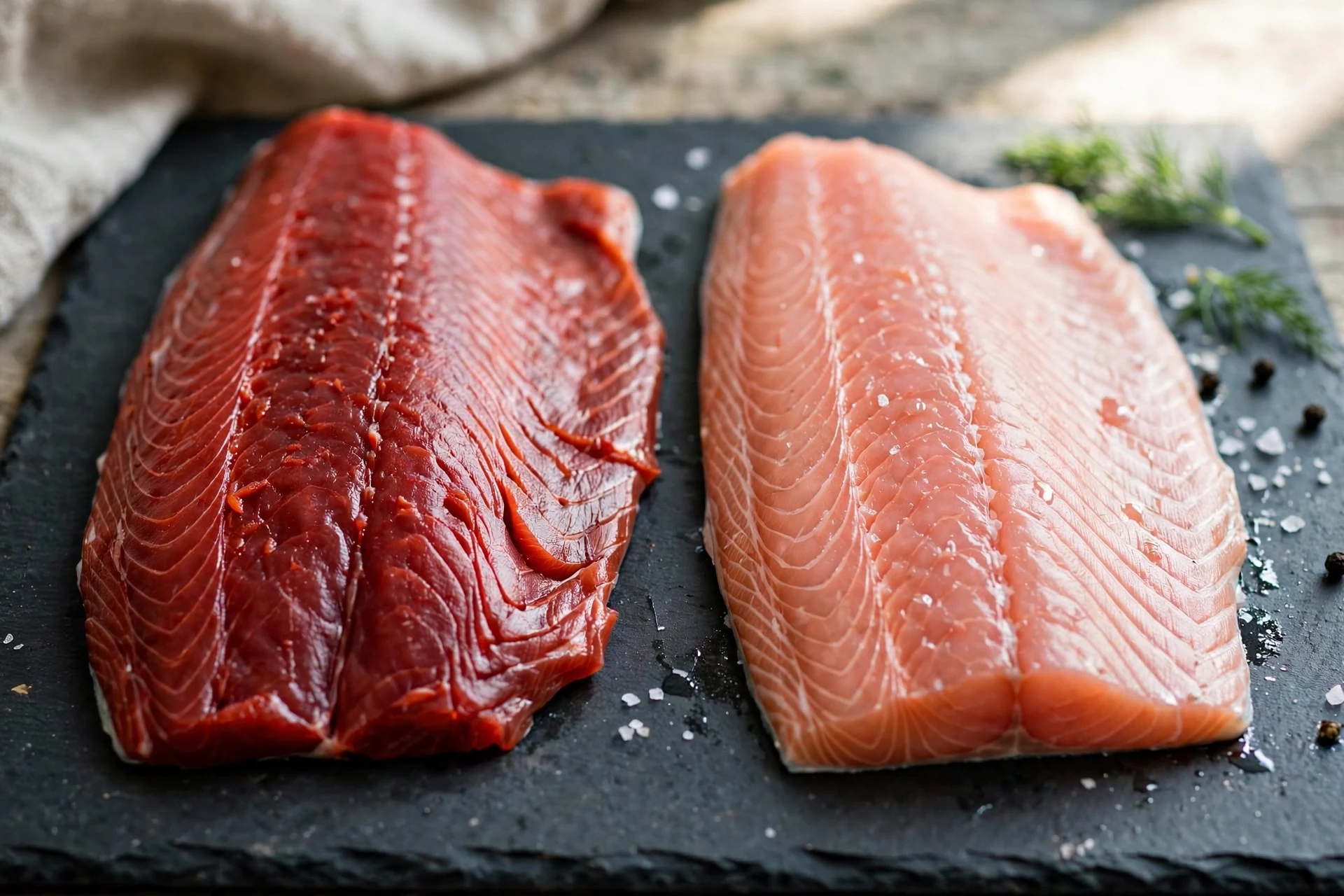
Farmed and wild salmon differ in species, color, fat, price, and flavor, and the label tells you which you are getting if you know where to look. Wild salmon is usually a named Pacific species such as sockeye or king, with deeper color and leaner flesh, while farmed salmon is almost always Atlantic salmon, paler and fattier with a milder taste. Neither is automatically the better buy — the right choice depends on your recipe, budget, and preferences.
Choose wild salmon when…
- You want a firmer texture and more pronounced salmon flavor
- The label names a Pacific species such as sockeye, king, or coho
- You prefer leaner flesh for grilling or roasting
- It is in season and priced competitively
- You are cooking a dish where salmon is the clear centerpiece
Choose farmed salmon when…
- You want a milder flavor and richer, fattier texture
- You need consistent availability year-round
- Budget matters and farmed is notably cheaper
- You are cooking for people new to salmon
- The recipe benefits from extra fat, such as gentle poaching
Reading the label: species and origin
The most useful words on a salmon label are the species and the production method. “Atlantic salmon” on a label almost always means farmed fish, wherever it was raised, while names like sockeye, king (chinook), coho, pink, and chum refer to Pacific species that are typically wild-caught. Country-of-origin labeling should state where the fish was caught or raised and processed. The general freshness checks still apply to both types, and our guide to how to choose salmon walks through color, smell, and firmness in detail. Be cautious with vague terms like “ocean-raised” or “sustainably sourced” unless the label also gives the species and method clearly.
Color and fat: what the differences mean
Wild salmon tends to be deeper red-orange and leaner because of its natural diet and active life, while farmed salmon is usually lighter pink with more visible white fat lines and a softer bite. Color alone does not tell you which fillet is fresher — a pale farmed fillet can be perfectly fresh, and a deeply colored wild fillet can still be old. Judge freshness by smell, firmness, and a moist surface, not by intensity of color. If you want to get better at decoding label claims across the whole store, our guide to reading food labels is a useful companion read.
Fresh, frozen, and smoked forms
Both farmed and wild salmon are sold fresh, frozen, canned, and smoked. Frozen wild salmon, processed during the short fishing season, is often excellent value in winter. Smoked salmon deserves its own storage care once opened, so it helps to check whether smoked salmon needs refrigeration before you stock up. Whichever form you buy, keep it cold on the way home, refrigerate it promptly, and respect the use-by date on packaged products. Previously frozen fish should not be refrozen raw at home, so plan portions before you thaw.
Price and cooking fit
Wild salmon usually costs more, especially king salmon, while farmed Atlantic is the everyday, budget-friendlier option in most supermarkets. For weeknight meals, curries, and fish cakes, farmed salmon performs reliably and its extra fat forgives slight overcooking. For a simple grilled fillet where texture and flavor carry the dish, many cooks prefer wild. Think of it as matching the fish to the job rather than ranking one as universally superior, and buy the freshest-looking option your budget allows on the day.
Common questions
Is farmed salmon dyed to look pink?
Farmed salmon gets its pink color from carotenoid pigments added to its feed, similar to the pigments wild salmon get naturally from eating krill and shrimp. The color itself is expected; freshness should still be judged by smell, firmness, and appearance of the flesh.
Which tastes better, farmed or wild?
It depends on preference. Wild salmon is typically firmer and more strongly flavored, while farmed salmon is milder, richer, and more consistent. Trying both in the same simple preparation is the easiest way to find your favorite.
Does “Atlantic salmon” mean it came from the Atlantic Ocean?
Not necessarily. Atlantic is the species name, and most Atlantic salmon sold today is farmed in places such as Norway, Chile, Canada, and Scotland. The label’s country-of-origin line tells you where it was actually raised.
References
U.S. Food and Drug Administration — Selecting and Serving Fresh and Frozen Seafood Safely. Reference for seafood selection, handling, and storage.
Prepared October 21, 2026 with AI assistance. Cited sources do not endorse the entire article.