
To choose good shrimp, look for firm, translucent flesh with a mild, clean smell like seawater — never sour or ammonia-like. The shells should look moist and intact, the color should be even for the variety, and the shrimp should feel springy rather than soft or slimy. Whether you buy fresh or frozen, size counts, color, and smell tell you more than the price tag.
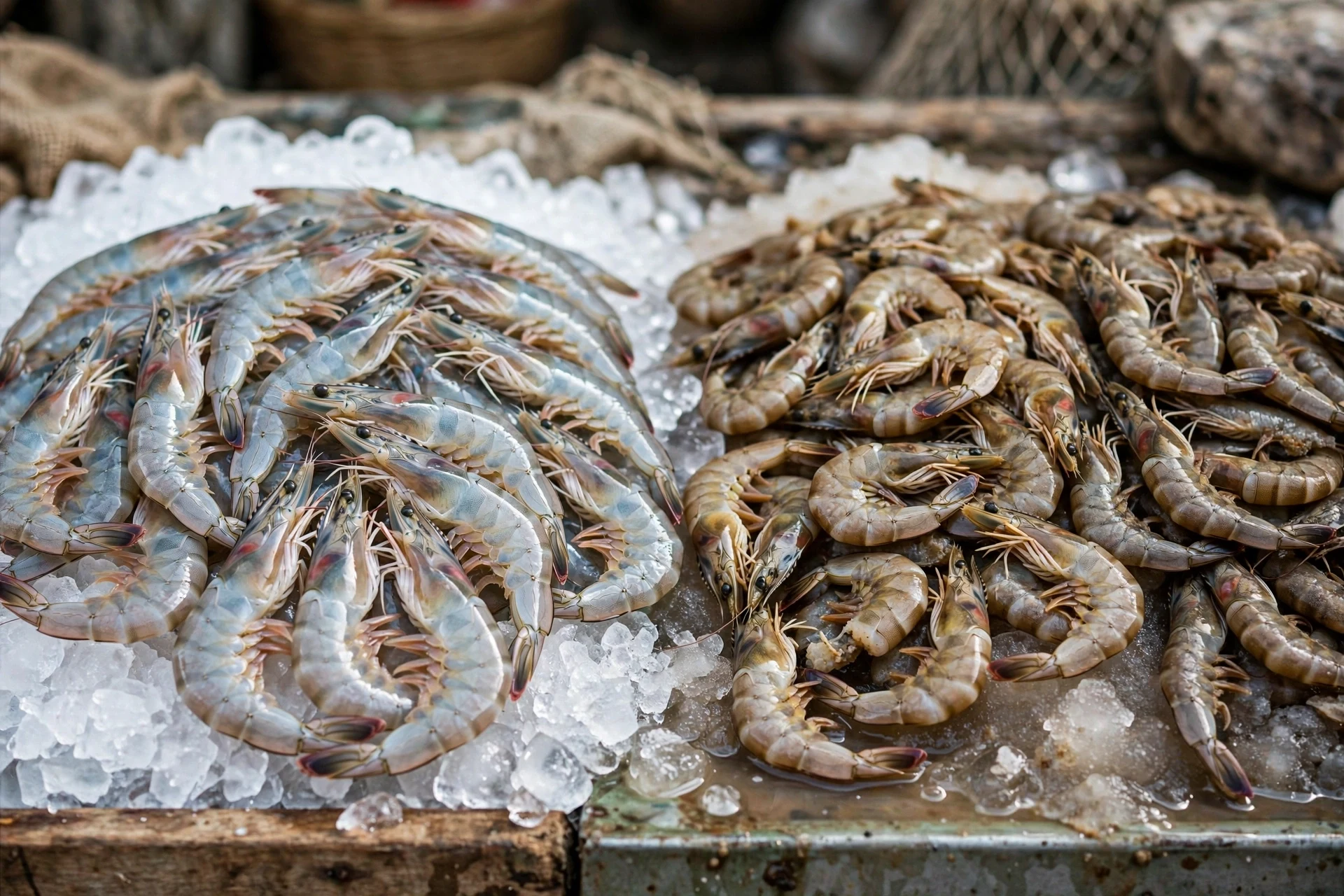
Prefer
- Firm, springy flesh that bounces back when pressed
- Translucent, even color with no dark spots on the shell
- Mild, clean smell like the sea
- Intact shells with no yellowing or black edges
- Frozen shrimp with no thick ice glaze or freezer burn
Avoid / check more closely
- Sour, ammonia, or strong fishy odor
- Soft, mushy, or slimy texture
- Black spots spreading along the shell or tail
- Yellowed shells or dried, cracked flesh
- Packages with heavy frost and shrimp frozen in one solid lump
What shrimp size numbers actually mean
Shrimp are sold by count per pound, and the numbers can be confusing at first. A label like “16/20” means you get roughly 16 to 20 shrimp per pound — the lower the numbers, the larger the shrimp. Terms like “jumbo” and “medium” are not standardized, so the count is the more reliable guide. Larger shrimp suit grilling and shrimp cocktail, while medium shrimp work well in pasta, stir-fries, and soups where you want several pieces per bite. If you are new to buying shrimp cooked versus raw, our guide to raw vs. cooked shrimp explains when each form makes more sense in the kitchen.
Color, shells, and the smell test
Raw shrimp color varies by species — gray, blue-gray, pinkish, or brownish are all normal before cooking, and shrimp turn pink-orange as they cook. What matters is evenness: look for consistent color and be cautious with dark spots, called melanosis, that signal age even if they are not immediately a safety issue. The shell should hug the flesh closely; a loose, dry shell often means the shrimp has been sitting a while. Smell is your best final check. Fresh shrimp smell faintly sweet and briny. A sharp or sour smell is a clear reason to choose a different batch. The same senses help with other shellfish and cephalopods, as you can see in our guide to how to choose squid, where firmness and smell matter just as much.
Fresh, frozen, and previously frozen
Much of the “fresh” shrimp at a seafood counter was frozen at sea and thawed for display, so a well-handled frozen bag is often the fresher choice. Frozen shrimp should be individually solid, with a thin, even glaze and no large ice crystals inside the bag, which can suggest thawing and refreezing. Check the use-by date and keep the bag frozen until you are ready to thaw it in the refrigerator or under cold running water. For a broader walkthrough of labels, glazing, and storage, see our tips on how to buy frozen seafood before your next shop. At home, refrigerate thawed shrimp and plan to cook it promptly, ideally the same day.
Shell-on, peeled, and deveined
Shell-on shrimp usually keep more moisture and flavor during cooking, and the shells protect the flesh in the freezer, but they take a few extra minutes to peel at the table or in the kitchen. Peeled and deveined shrimp cost more per pound because you are paying for the labor, yet they save real prep time on a weeknight. Tail-on shrimp look attractive for appetizers and hold up well for dipping, while tail-off is more convenient for pasta and fried rice. Whichever form you choose, look for clean deveining — a dark, gritty vein left behind is edible but less pleasant to eat.
Common questions
Is gray shrimp safe to buy?
Yes. Many raw shrimp are naturally gray or blue-gray and turn pink when cooked. Judge them by firmness, even color, and a clean smell rather than by the raw shade alone.
What do black spots on shrimp mean?
Small dark spots on the shell are usually melanosis, a natural reaction that appears with age and handling. A few spots do not automatically mean the shrimp is unsafe, but widespread spotting combined with a sour smell or soft flesh is a good reason to pass.
Should I buy fresh or frozen shrimp?
Either can be a good choice. Frozen shrimp that was processed quickly after harvest often tastes fresher than thawed counter shrimp that has sat for days. Buy from a busy counter with fast turnover, or choose a well-sealed frozen bag with a recent date.
References
U.S. Food and Drug Administration — Selecting and Serving Fresh and Frozen Seafood Safely. Reference for seafood selection, handling, and storage.
Prepared October 21, 2026 with AI assistance. Cited sources do not endorse the entire article.