
To store bread well, match the method to the timeline: keep daily bread at room temperature in a bread box or paper bag, and freeze anything you will not eat within two to three days. For ordinary unfilled bread, freezing is a useful way to keep extra portions; follow refrigeration instructions on packaged products or bread with perishable fillings. Slice before freezing so you can toast single portions straight from frozen. Avoid plastic-wrapped storage for crusty loaves, which need airflow to stay crisp.
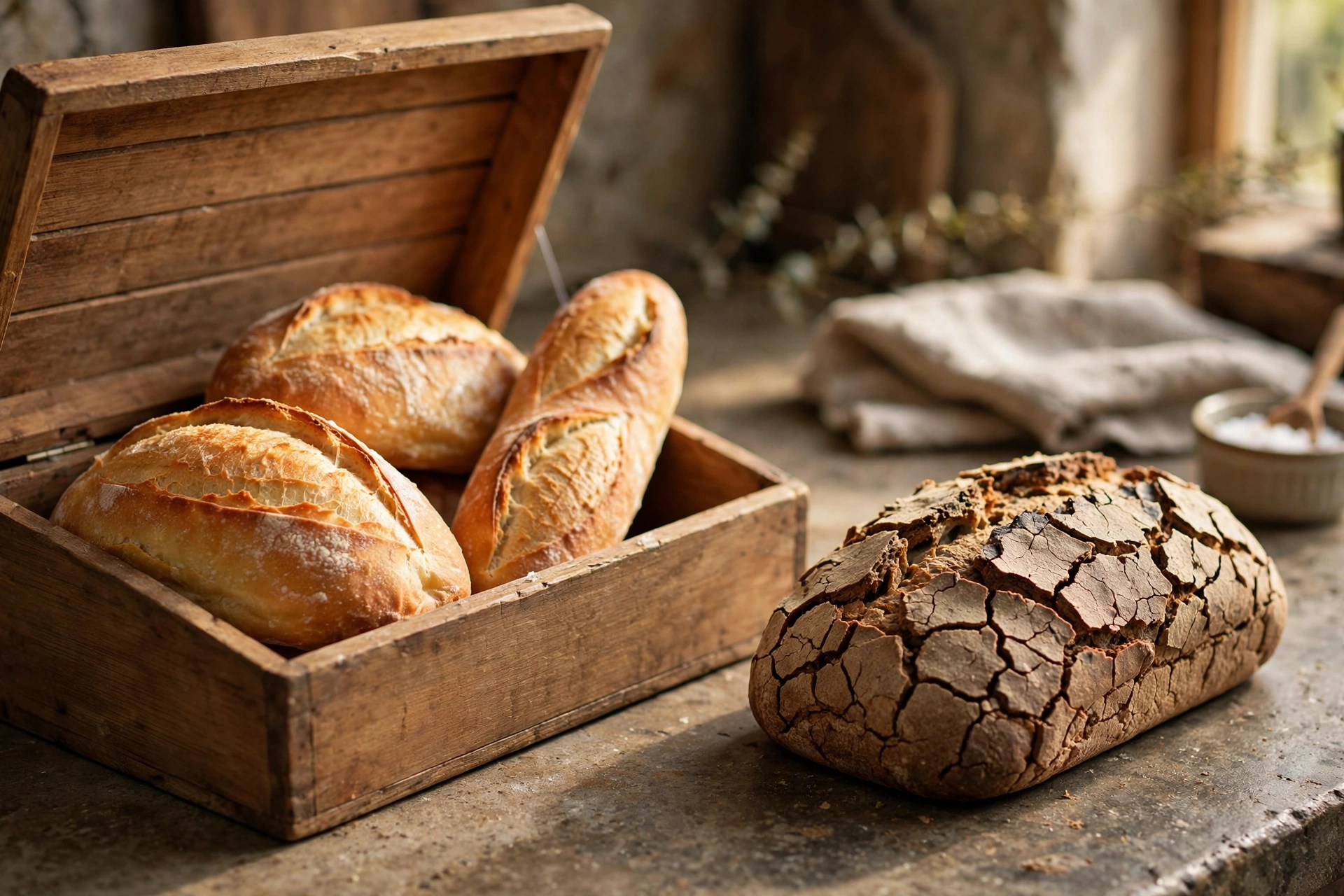
Prefer
- Room temperature storage for bread eaten within 2–3 days
- Bread boxes or paper bags for crusty loaves
- Freezing sliced bread for longer keeping
- Airtight wrapping for soft sandwich bread
- Toasting or refreshing before serving day-old bread
Avoid / check more closely
- Refrigerating bread (speeds staling)
- Leaving cut loaves exposed to air
- Plastic bags on crusty artisan loaves
- Freezing a whole unsliced loaf you will thaw repeatedly
- Keeping bread near heat or sunlight
Why the fridge is the enemy
It feels logical to refrigerate bread, but cold temperatures accelerate staling — the starch molecules recrystallize faster between roughly 35°F and 50°F, which is exactly fridge range. Refrigerated bread turns firm and dry within a day or two, while the same loaf at room temperature stays softer longer. The fridge does slow mold, but for most bread the staling happens first and ruins the texture anyway. The only common exception is bread with perishable fillings, like cream-filled pastries, which need refrigeration for safety despite the texture cost.
Match the wrap to the loaf
Crusty artisan loaves stay crispest in paper bags or a bread box, which allow just enough airflow to protect the crust. Sealing a crusty loaf in plastic traps moisture and turns the crust leathery. Soft sandwich bread is the opposite: it dries out quickly, so keep it in its plastic bag, squeezed of excess air and sealed. Sliced bread dries from every cut surface, so always reseal the bag tightly. For baguettes and rolls meant for today, a paper bag at room temperature is ideal — plan to eat them the day you buy them.
Freezing: the real long-term answer
The freezer is the best way to keep bread beyond a few days. Slice the loaf first so you can take out exactly what you need. Wrap portions tightly in plastic wrap or foil, then place in a freezer bag with the air pressed out — double-wrapping prevents freezer burn. Most bread keeps well for up to three months frozen. Toast slices straight from frozen, or thaw wrapped at room temperature for an hour. Refresh thawed crusty bread with five minutes in a hot oven to bring back the crunch.
Reviving and repurposing stale bread
Slightly stale bread is not wasted bread. Sprinkle a crusty loaf lightly with water and heat it in a 350°F (175°C) oven for five to ten minutes to refresh the crust. Day-old bread makes excellent toast, croutons, breadcrumbs, French toast, and bread pudding — in fact, slightly dry bread works better for most of these than fresh. Discard bread and baked goods with mold, including hard or dry bread; do not trim the spot and eat the rest. USDA lists bread and baked goods among foods to discard because contamination can extend beyond the visible area. Do not taste food to decide whether it is safe. Discard food with an unsafe storage history even when it looks normal.
Common questions
How long does bread last at room temperature?
Bakery bread without preservatives is best within two to three days; packaged sandwich bread often lasts five to seven days. These are quality estimates, not safety deadlines. Follow the package directions, storage conditions and any recall notice. Normal texture and smell cannot establish safety.
Can I freeze bread in its store packaging?
For short freezes it is fine, but the thin store bag lets in air over time. For more than a week or two, rewrap tightly in foil or a proper freezer bag.
Why does my frozen bread taste like freezer?
That is freezer burn from air exposure. Wrap portions tightly with minimal air, use them within three months, and avoid thawing and refreezing.
References
U.S. Food and Drug Administration — Safe Food Handling. Reference for storing foods safely at home.
Prepared October 13, 2026 with AI assistance. Cited sources do not endorse the entire article.
Correction — October 21, 2026
Removed advice suggesting that moldy hard bread could be salvaged and clarified that appearance or smell cannot establish safety. Source: USDA FSIS: mold on bread, baked goods and cheese.