
To choose good scallops, ask for “dry” scallops — cream to pale beige in color with a natural, slightly varied tone. They should smell sweet and briny like the ocean, never fishy or sharp. The flesh should look firm and feel springy, not mushy. Avoid stark white, uniformly perfect scallops sitting in milky liquid — those are “wet” scallops treated with phosphates, which affects both flavor and searing. Any strong or sour odor means they are past their prime.
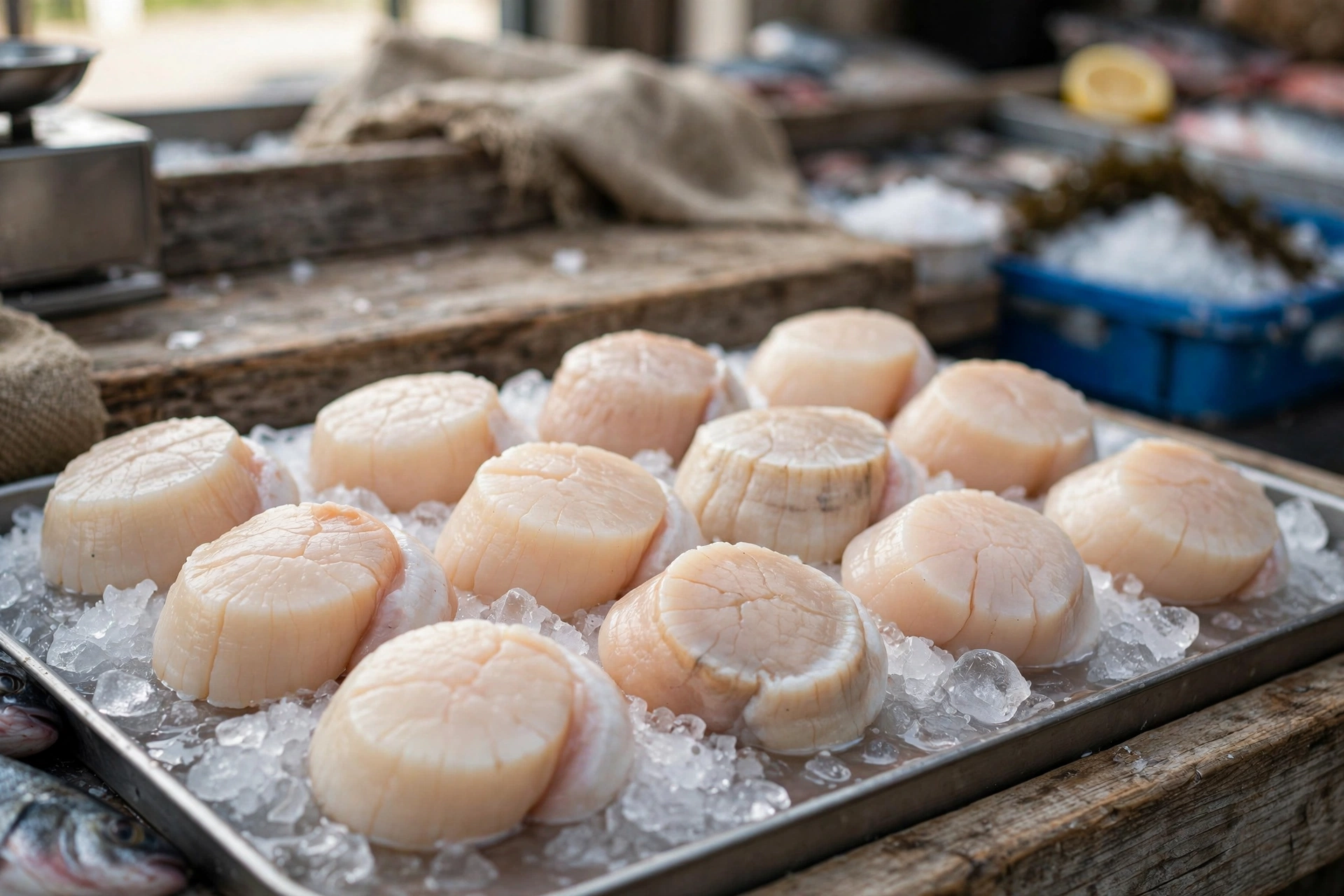
Prefer
- “Dry” or “chemical-free” labeling
- Cream to pale beige, naturally varied color
- Sweet, briny ocean smell
- Firm, springy texture
- Similar sizes for even cooking
Avoid / check more closely
- Stark white, uniform appearance
- Milky liquid pooling around them
- Fishy, sour, or ammonia smell
- Mushy or falling-apart texture
- Wildly mixed sizes in one pack
Dry vs. wet: the most important distinction
Most scallops are either “dry” (untreated) or “wet” (soaked in a phosphate solution that makes them absorb water). Wet scallops look impressively plump and snow-white, but the added water leaks out in the pan, preventing a good sear and diluting flavor — they steam instead of browning. Dry scallops look less perfect, with cream to light tan coloring that varies from piece to piece, but they sear beautifully and taste sweeter. Ask your fishmonger directly; labeling is inconsistent, so the question “are these dry-packed?” is the most reliable test. If buying frozen, look for “dry” or “no additives” on the bag.
Color, smell, and touch
Natural scallop color ranges from ivory to pale peach or light tan — variation is a good sign. An unnaturally bright, uniform white is the hallmark of phosphate treatment. Smell them: fresh scallops smell faintly sweet and of the sea. A strong fishy odor, sourness, or any hint of ammonia means they are deteriorating. Touch one if you can — it should feel firm and resilient, springing back when pressed. Mushy scallops that hold a dent are old.
Size grades and what to buy
Sea scallops (the large ones, about 1–2 inches) are best for searing; bay scallops are tiny, sweeter, and better for pastas and gentle cooking. Within sea scallops, sizes are graded by count per pound (e.g., U-10 means under 10 per pound). Larger is not automatically better — choose based on your cooking method. For a hard sear, pick large, similarly sized dry scallops so they all finish at the same time. Uniformity matters more than maximum size.
Storing scallops at home
Scallops are highly perishable — cook them the day you buy them if possible, or the next day at the latest. Keep them in the coldest part of the fridge on a plate covered loosely, not sealed airtight in liquid. Do not rinse dry scallops before cooking; pat them very dry with paper towels instead, since surface moisture is the enemy of a good sear. Frozen scallops should be thawed overnight in the refrigerator, then patted dry the same way.
Common questions
Why will my scallops not brown?
The most common cause is wet-packed scallops releasing water into the pan, or insufficient drying before cooking. Dry-packed scallops, patted thoroughly dry and seared in a hot pan without crowding, develop a deep golden crust.
Are bay scallops lower quality than sea scallops?
No — they are a different species, smaller and often sweeter. They are not suited to hard searing because they overcook in seconds, but they shine in gentle preparations like pastas, risottos, and ceviches.
What does the little side muscle do?
The small, tough rectangular muscle on the side of a sea scallop (the abductor) turns rubbery when cooked. Pinch it off before cooking — it pulls away easily.
References
U.S. Food and Drug Administration — Selecting and Serving Seafood Safely. Reference for selecting and handling seafood safely.
Prepared October 13, 2026 with AI assistance. Cited sources do not endorse the entire article.