
To choose fresh mahi-mahi, trust your nose first: it should smell mild and sweet like the ocean, never strongly fishy or sour. The flesh should look moist and slightly translucent — typically pinkish-white to light beige — with no browning or drying around the edges. Press a fillet gently; fresh flesh feels firm and springs back. Avoid fillets with a strong odor, mushy texture, or yellow and brown discoloration.
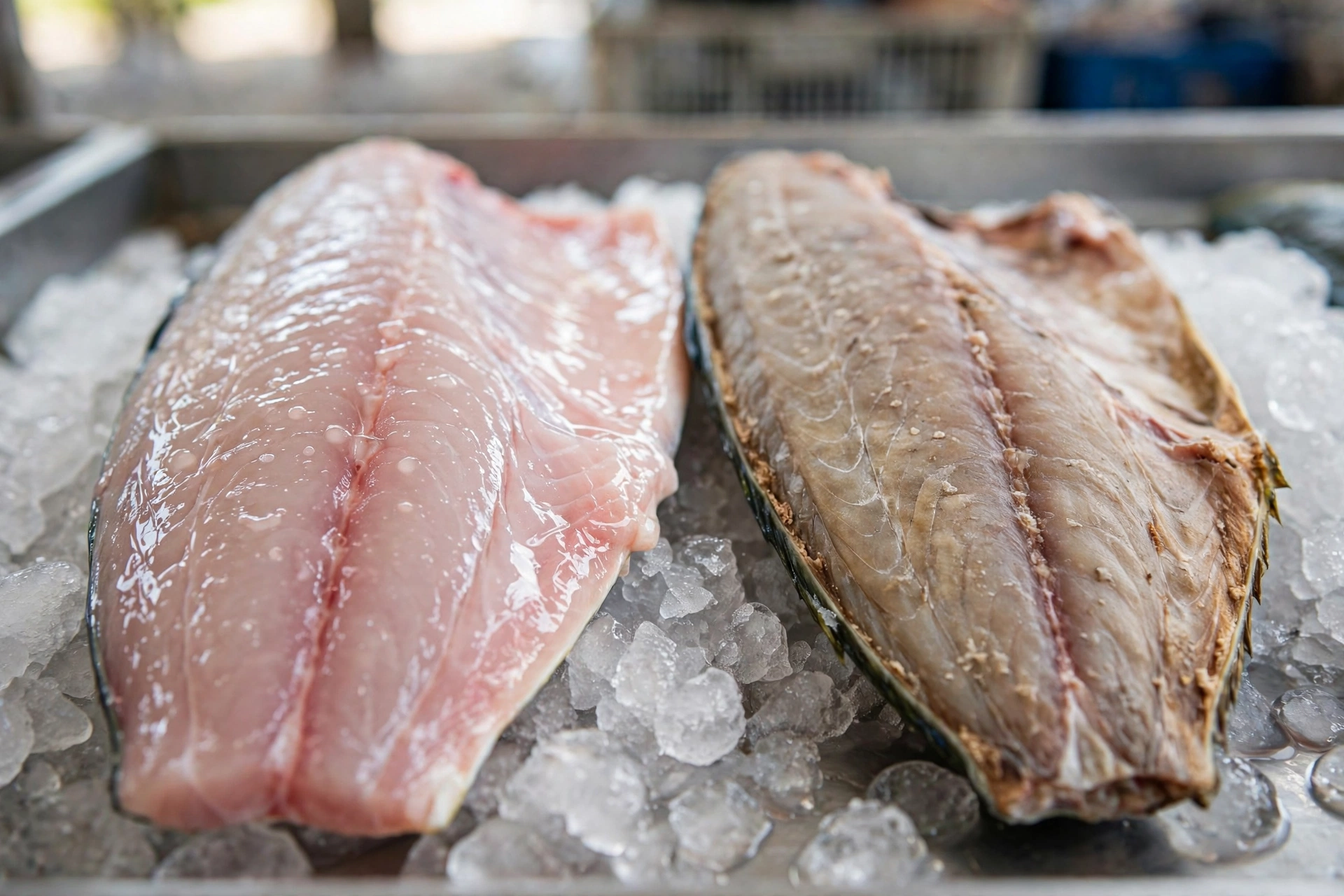
Prefer
- Mild, sweet, ocean-like smell with no fishy or sour notes
- Firm flesh that springs back when pressed gently
- Moist, slightly translucent appearance
- Even pinkish-white to light beige color
- Displayed on a thick bed of fresh ice or kept refrigerated
Avoid / check more closely
- Strong fishy, sour, or ammonia-like smells
- Soft, mushy flesh that stays dented when pressed
- Browning, yellowing, or drying around the edges
- Milky liquid pooling in the package
- Fish sitting unrefrigerated at room temperature
The smell test comes first
Smell is the most reliable freshness signal for mahi-mahi. Fresh fish should smell clean and mild — almost sweet — not “fishy.” A strong fishy, sour, or ammonia-like odor suggests the fish is past its prime, and you should pass on it. This holds for both whole fish and fillets. If you are buying pre-packaged fillets, you may not be able to smell them directly; in that case, lean harder on visual cues and buy from a counter with high turnover where the fish is kept cold on ice.
Check color, texture, and edges
Mahi-mahi flesh is naturally lean with large, moist flakes, and its color ranges from pinkish-white to light beige — it should never look gray, yellow, or brown. The surface should look moist and slightly glossy, not dry or dull. Press the flesh with a fingertip: it should feel firm and bounce back, not stay indented or feel mushy. Look closely at the edges of fillets, since drying and discoloration show there first. A fillet labeled “previously frozen” may not look quite as pristine as never-frozen fish, but it should still smell fresh and mild. Color alone can be affected by diet and handling, so treat it as one clue among several rather than the whole verdict.
Storing mahi-mahi at home
Get fish home and into the refrigerator quickly — ideally within two hours of purchase. Store mahi-mahi at 40°F or below and plan to cook it within 1 to 2 days, following FDA guidance for fresh fish. Keep it in the coldest part of the fridge, on a plate or tray to catch drips, and keep it separate from ready-to-eat foods. For longer storage, wrap fillets tightly in moisture-proof wrap or freezer bags, press out the air, and freeze at 0°F or below. Thaw frozen fillets in the refrigerator, not on the counter.
Common questions
Is mahi-mahi a lower-mercury fish?
Mahi-mahi is generally listed among the FDA’s “good choices” for fish, meaning about one serving a week is considered reasonable for most adults. People who are pregnant or feeding young children should follow current FDA and EPA advice on fish varieties and serving sizes.
What does the dark stripe in the fillet mean?
The darker strip along some fillets is the bloodline — a natural part of the fish with a stronger flavor. It is not a sign of spoilage, though some cooks trim it for a milder taste.
Can I buy frozen mahi-mahi instead of fresh?
Yes. Well-handled frozen mahi-mahi can be excellent. Choose packages that are sealed and hard-frozen with no frost or ice crystals inside, which may suggest thawing and refreezing. Thaw it in the refrigerator before cooking.
References
U.S. Food and Drug Administration — Selecting and Serving Fresh and Frozen Seafood Safely. Reference for fish selection, handling, and storage.
Prepared October 12, 2026 with AI assistance. Cited sources do not endorse the entire article.