
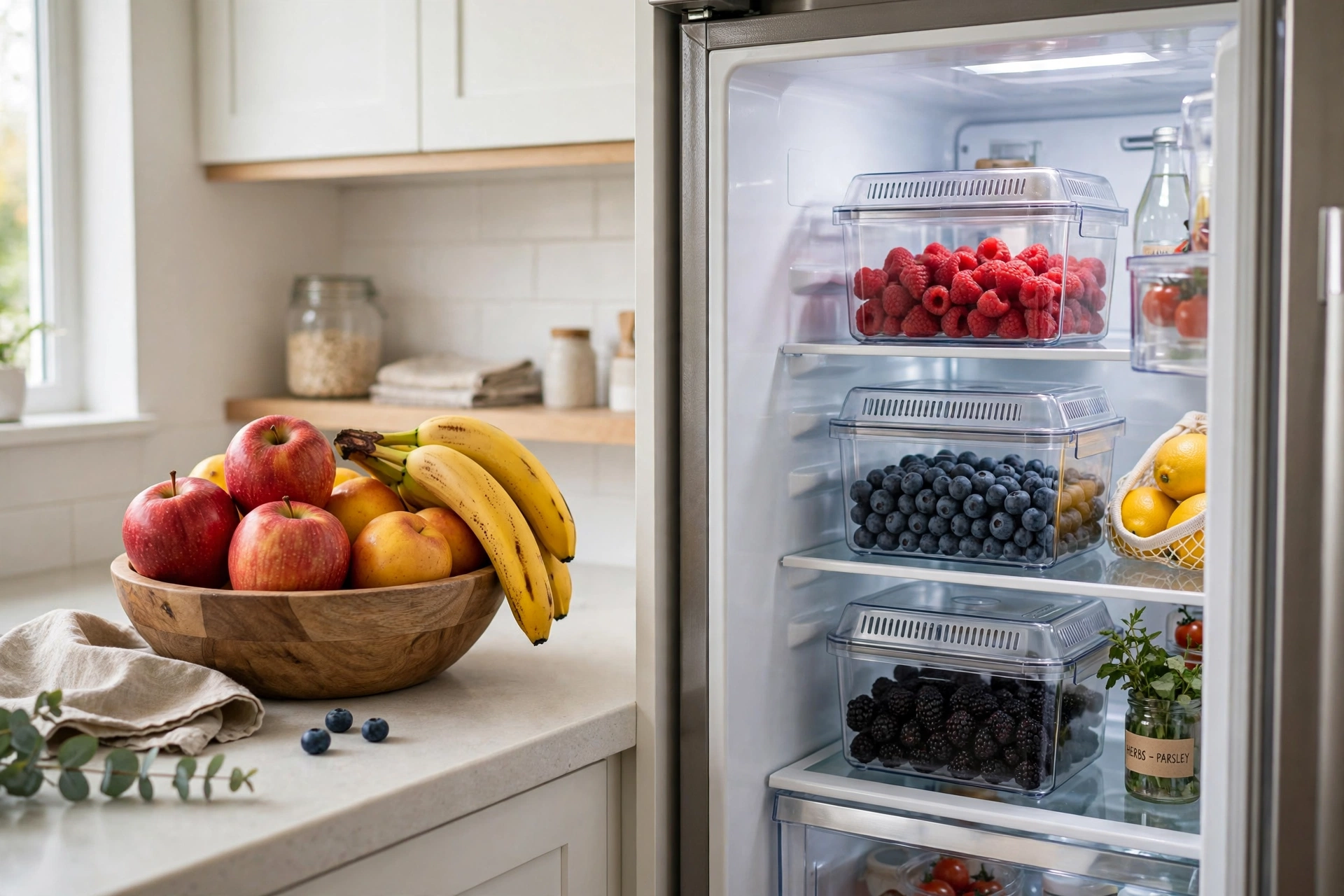
To store fruit well, know the two groups: fruits that ripen after picking (peaches, bananas, avocados, pears) belong on the counter until ripe, then move to the fridge; fruits that do not ripen further (berries, grapes, citrus, pineapples) go straight to the refrigerator. Getting this split right is the single biggest factor in fruit lasting longer and tasting better.
Prefer
- Ripening stone fruit and avocados on the counter
- Refrigerating berries, grapes, and cherries promptly
- Keeping fruit unwashed until just before eating
- Using breathable containers or bags for delicate fruit
- Separating ethylene producers from sensitive produce
Avoid / check more closely
- Refrigerating unripe peaches, pears, or avocados (they may never ripen well)
- Washing berries before storing (moisture speeds mold)
- Storing bananas in the fridge before they are ripe
- Crowding delicate fruit in sealed bags
- Leaving cut fruit at room temperature for hours
Counter vs fridge: the ripening split
Climacteric fruits — bananas, avocados, peaches, pears, plums, mangoes, tomatoes — continue ripening off the plant thanks to ethylene gas, so the counter is their ripening station. Once they reach perfect ripeness, refrigerate to pause the process for a few more days. Non-climacteric fruits — berries, citrus, grapes, pineapples, cherries, watermelon — never get riper after harvest, so refrigerate them immediately; the counter only ages them.
Ethylene: friend and troublemaker
Ethylene gas from ripening bananas, avocados, and apples speeds ripening in neighbors — useful when you want peaches ready tomorrow, harmful when it turns your greens yellow or softens berries prematurely. To ripen faster, bag the fruit with a banana; to keep fruit fresh longer, store ethylene producers apart from sensitive items. A paper bag traps ethylene; the fridge slows its effects.
Storing fruit at home
Refrigerate berries unwashed in breathable containers lined with a paper towel; wash just before eating. Keep citrus in the fridge for weeks of life, or a week on the counter. Store cut fruit in airtight containers in the fridge and eat within a few days. Freeze overripe fruit — berries, bananas, mango chunks — for smoothies and baking instead of wasting it.
Common questions
Should bananas go in the fridge?
Only once ripe — cold stops ripening and darkens the peel (the inside stays fine). Never refrigerate green bananas.
How long do berries last?
A few days to a week refrigerated unwashed, depending on the berry. Freeze extras before they soften.
Can I freeze fresh fruit?
Yes — most fruits freeze well for smoothies and cooking. Spread on a tray to freeze individually, then bag.
References
FoodSafety.gov — Cold Food Storage Charts. Reference for refrigeration and freezer storage times for fruit.
Prepared October 11, 2026 with AI assistance. Cited sources do not endorse the entire article.