
For tilapia fillets, check refrigeration, the package, and the product’s handling instructions before judging color. Look for intact fillets without dried edges, but do not treat a pearly color or mild smell as proof of safety. FDA explicitly warns that fish color alone does not establish freshness.
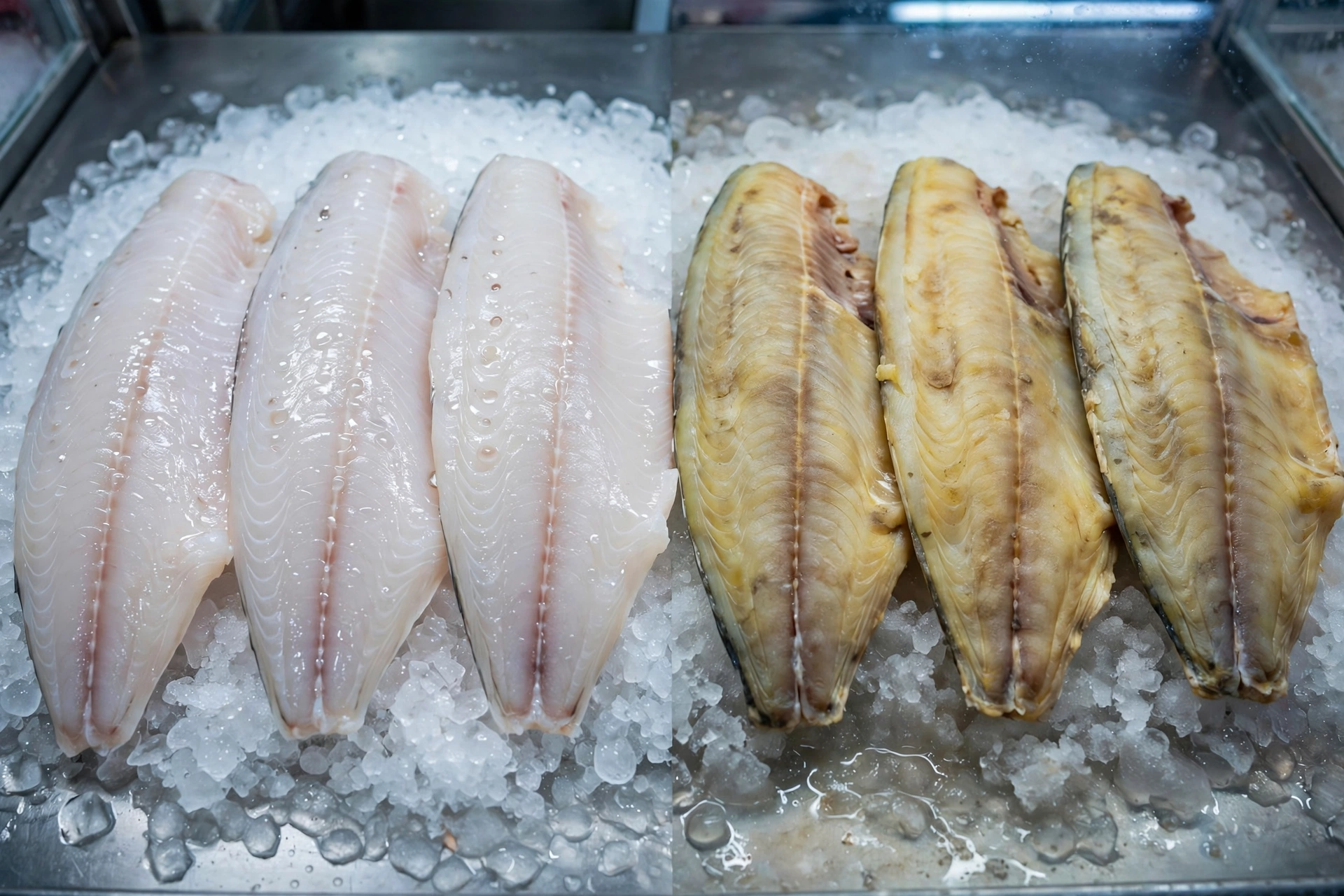
What color can actually tell you
Our earlier text said yellowing or graying meant that a fillet was old or had been stored warm. That was too definite. FDA notes that diet, environment, treatments, and packaging can affect fish color. Discoloration or drying can be a reason to question quality, but a shopper cannot reconstruct a fillet’s temperature history from its shade.
For example, two packs photographed under different display lights are not a controlled comparison. Read whether each is fresh or previously frozen, check the package condition, and ask the seller about storage. A clean-looking fillet with an uncertain history is not rescued by its appearance.
Compare equivalent products
Start by comparing plain raw fillets with plain raw fillets. A breaded, seasoned, or cooked product involves a different preparation and may have different instructions. Check the ingredient list if you want an unseasoned product, and note whether the weight includes other ingredients. We have not tested individual brands.
For a meal needing evenly sized portions, choose a pack whose fillets suit your recipe and pan. Consider the amount you can use, rather than choosing the largest pack only because the price per pack looks attractive. Ask whether the seller can supply a smaller quantity.
At the display: a practical checklist
- Buy from a refrigerated display or fish properly held on ice.
- Check that the package is intact and follow any temperature indicator provided.
- Ask whether the fillets were previously frozen.
- Question drying edges, damaged packaging, or disagreeable odors.
- Plan the trip home so raw fish stays cold and separate from ready-to-eat food.
North Carolina Sea Grant describes firm flesh, a mild odor, and no drying or browning around fillet edges as quality cues. Use those alongside handling information. Do not taste a raw piece to decide whether it is acceptable, and do not open or press retail packs without permission.
At home: storage and cooking
FDA advises keeping seafood at 40°F (4°C) or below and using it within two days after purchase, or freezing it. Follow any shorter product instruction. This guidance assumes proper handling; refrigeration does not undo a period of unsafe warm storage. Thaw in the refrigerator and keep raw juices away from foods that will not be cooked.
For most seafood, FDA recommends a cooking temperature of 145°F (63°C). Use a food thermometer to measure the thickest portion rather than treating whiteness, flaking, or a fixed number of minutes as a guarantee. This page is a buying guide, not a complete recipe.
References and related guides
- FDA: fish color limitations, cold handling, storage, and cooking.
- North Carolina Sea Grant: fillet quality cues and purchasing.
Read more seafood shopping guides or report a passage that needs correction. Sources support the specific guidance cited, not every statement or illustration on this website.
Corrected October 26, 2026: removed the claim that a fillet’s shade establishes age or warm storage; clarified the limits of visual checks and added specific references. Prepared with AI assistance; no product testing or expert review is claimed.