
To choose fresh salmon, look for vibrant, even color — rich orange-red for most varieties — with visible white marbling lines and a moist, almost glossy surface. It should smell clean like the ocean, never fishy or sour. Press the flesh gently: it should feel firm and spring back, not stay dented. For whole fish, the eyes should be clear and the gills bright red.
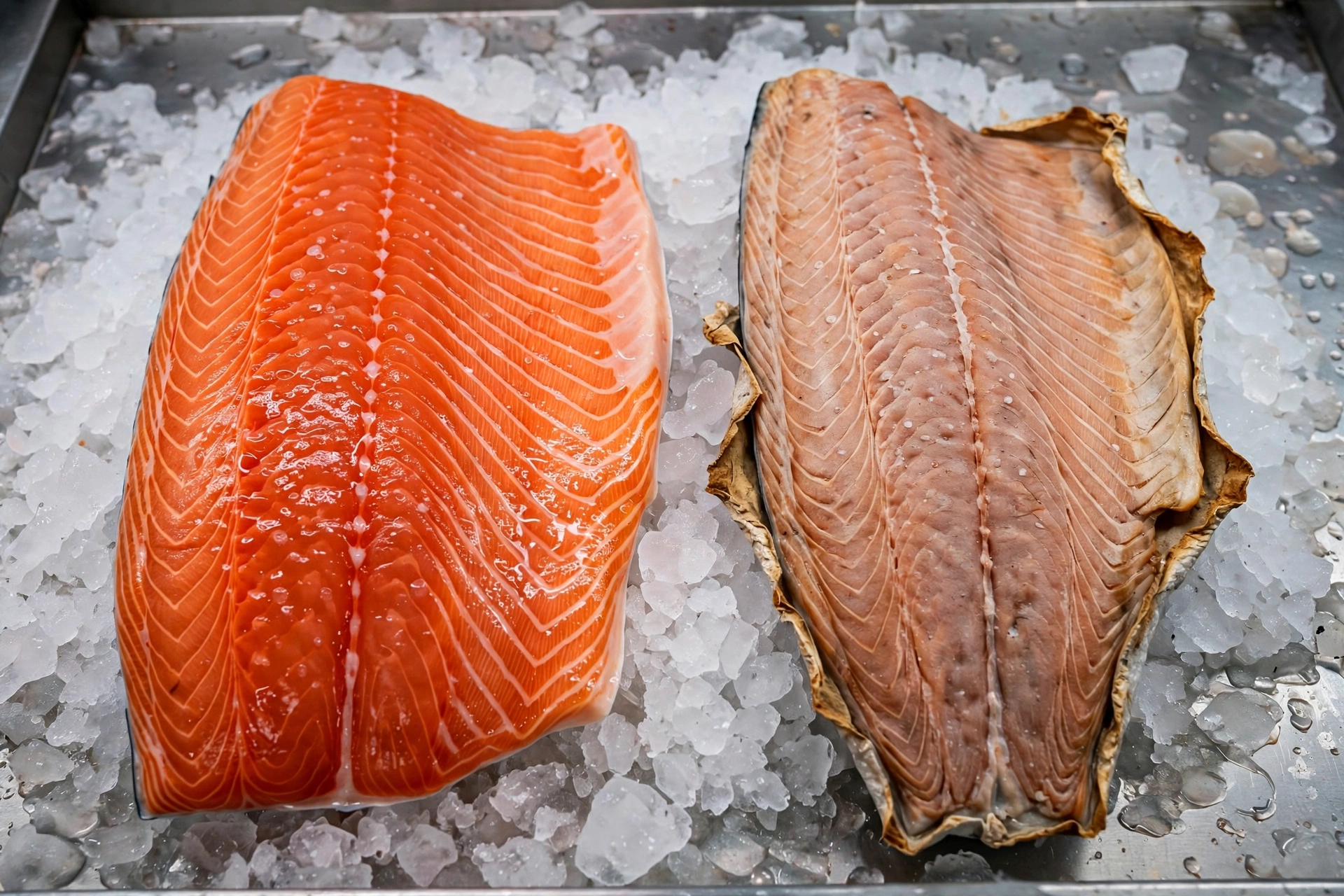
Prefer
- Vibrant, even color with white marbling
- Clean, mild ocean smell
- Firm flesh that springs back when pressed
- Moist, glossy surface with no drying
- Clear eyes and red gills on whole fish
Avoid / check more closely
- Dull, faded, or blotchy color
- Fishy, sour, or ammonia-like smells
- Flesh that stays dented when pressed
- Dry edges or gaping between flakes
- Excess liquid pooling in the package
Color and marbling: reading the fillet
Color varies by species — sockeye runs deep red, king is rich orange, Atlantic is paler pink — so judge vibrancy and evenness, not a specific shade. Dull, faded, or brownish edges signal age. The white fat lines (marbling) should look crisp and defined; as salmon ages, they blur and the flesh looks washed out. Dry, curling edges mean the fillet has been sitting uncovered.
The press test and smell check
Press the thickest part of the fillet: fresh flesh is firm and bounces back immediately, while a lingering dent means the texture is breaking down. Smell it — fresh salmon smells of clean seawater, mildly sweet. Any strong fishiness, sourness, or ammonia is a clear reject. If buying whole, check that the eyes are clear and bulging, not sunken or cloudy, and the gills are bright red, not brown.
Storing salmon at home
Cook salmon the day you buy it if possible — otherwise refrigerate immediately on ice or in the coldest part of the fridge and use within one to two days. For longer storage, wrap tightly (vacuum-seal if you can) and freeze for up to a few months. Thaw in the refrigerator overnight. For raw preparations like sushi, buy fish specifically labeled sushi- or sashimi-grade from a trusted source.
Common questions
Wild vs farmed salmon — which should I buy?
Both can be excellent. Wild is leaner with deeper color and seasonal availability; farmed is fattier, milder, and available year-round. Freshness matters more than the label.
How long does fresh salmon last?
One to two days refrigerated. Buy it last, keep it cold, and cook it soon.
Why does my salmon smell fishy?
Fresh salmon barely smells at all. Strong fishiness means age — choose another fillet.
References
U.S. Food and Drug Administration — Selecting and Serving Fresh and Frozen Seafood Safely. Reference for seafood selection, handling, and storage.
Prepared October 11, 2026 with AI assistance. Cited sources do not endorse the entire article.