
When buying squid, establish how it has been kept cold and what form you are buying: whole, cleaned tubes, tentacles, or frozen pieces. Skin pigment is not a freshness certificate. A mild smell and an attractive appearance cannot prove that squid has been handled safely.
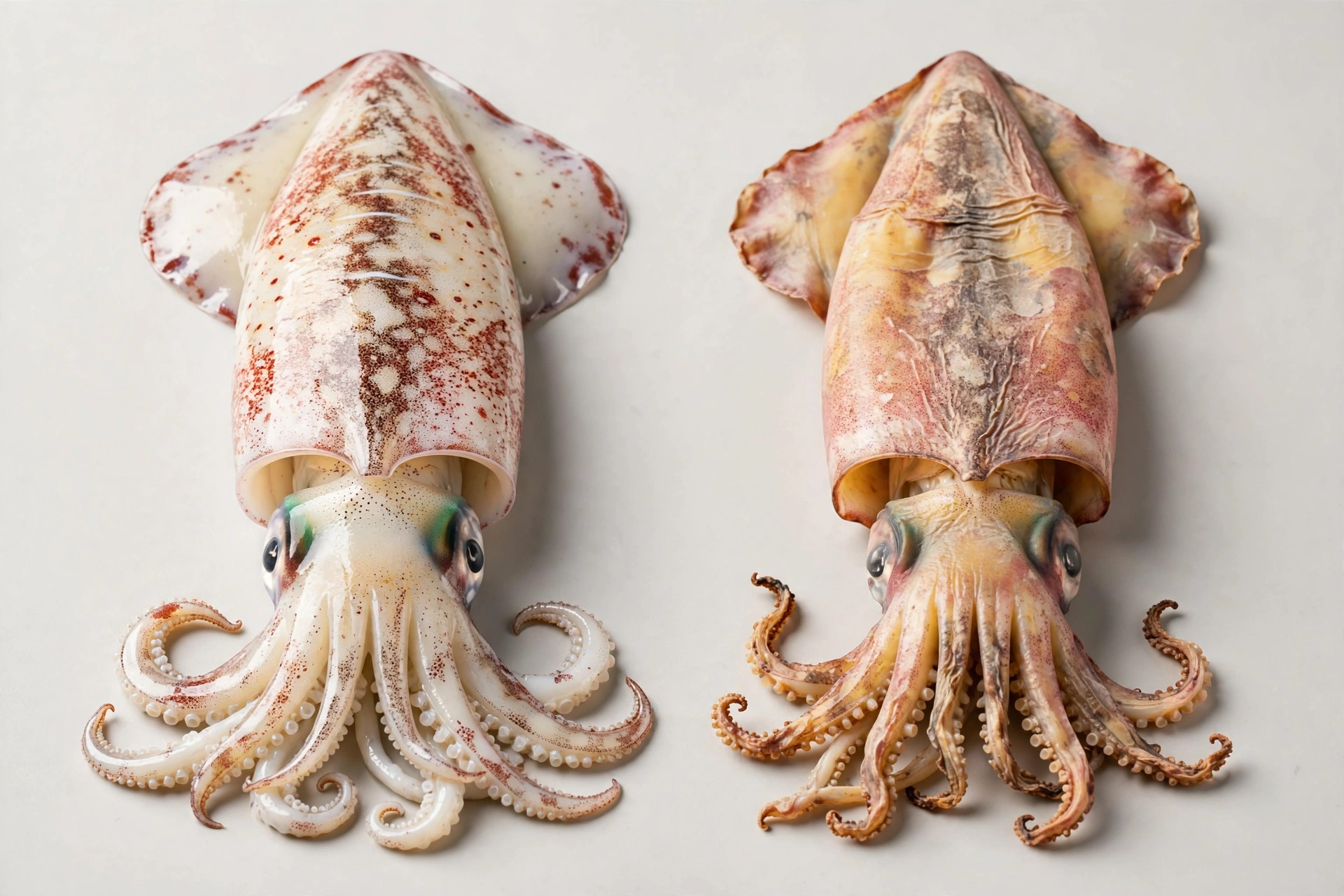
Why a color chart is not enough
Squid have pigment structures called chromatophores. Oregon Sea Grant explains that these allow rapid color changes. That biology does not support our earlier claim that a specific sequence from white to pink to purple reliably dates squid. We have removed that sequence and the claim that visible speckles prove freshness.
A cleaned tube and a skin-on whole squid do not provide the same visual comparison. Ask whether skin was removed and whether the product was previously frozen. If you cannot explain a difference in appearance, ask the seller rather than assigning a safe/unsafe label from a picture.
Questions that help at the counter
- Is this whole squid, cleaned squid, or a thawed frozen product?
- What storage and preparation instructions come with this batch?
- Can I buy only the amount needed, or keep the rest frozen according to its instructions?
- Is the package intact, and is the product properly chilled or firmly frozen?
FDA guidance emphasizes cold storage and intact frozen-seafood packaging. Do not buy a frozen pack that has softened or has damaged packaging. An unpleasant sour or ammonia-like odor is a reason to reject seafood; the absence of an odor is not a safety test. Keep raw seafood away from ready-to-eat groceries.
Choose the form that fits your meal
For example, a recipe calling for cleaned rings is easier to plan around a clearly labeled pack of cleaned squid than an unspecified weight of whole animals. Ask what preparation is included before comparing prices. This is a shopping comparison, not a claim that a particular brand or preparation has been tested by us.
For a meal several days away, compare frozen options rather than buying a chilled pack with no plan to use it. Note any thawing instructions before opening the package. The label and the product’s history matter more than matching our illustration.
Cold storage and cooking limits
FoodSafety.gov lists raw squid for 1–3 days in a refrigerator at 40°F (4°C) or below. This is general guidance for properly handled food, not extra time that starts regardless of the seller’s history. Follow a shorter label instruction and freeze promptly when appropriate. Use refrigerator thawing rather than leaving squid on the counter.
We removed fixed “2–3 minutes or 30+ minutes” cooking advice: thickness, equipment, and the actual recipe affect results, and a timer alone does not establish safety. Follow suitable cooking guidance and the package instructions instead of using this selection article as a universal recipe.
References and related reading
- Oregon Sea Grant: squid pigment biology, not a retail freshness test.
- FDA: seafood purchasing and handling.
- FoodSafety.gov: squid cold-storage limits.
See more fish and seafood guides and our editorial standards.
Corrected October 26, 2026: removed the color-to-age sequence and universal cooking times; clarified the limits of visual checks and added specific references. Prepared with AI assistance; no product testing or expert review is claimed.