
To choose fresh crab, buy live crabs that move actively with legs tucked in, or cooked crabs that feel heavy for their size with intact shells. Fresh crab smells clean and briny like the ocean — never fishy or ammonia-like. Whether live or cooked, avoid cracked shells leaking fluid, and always buy from refrigerated displays or tanks with clean water.
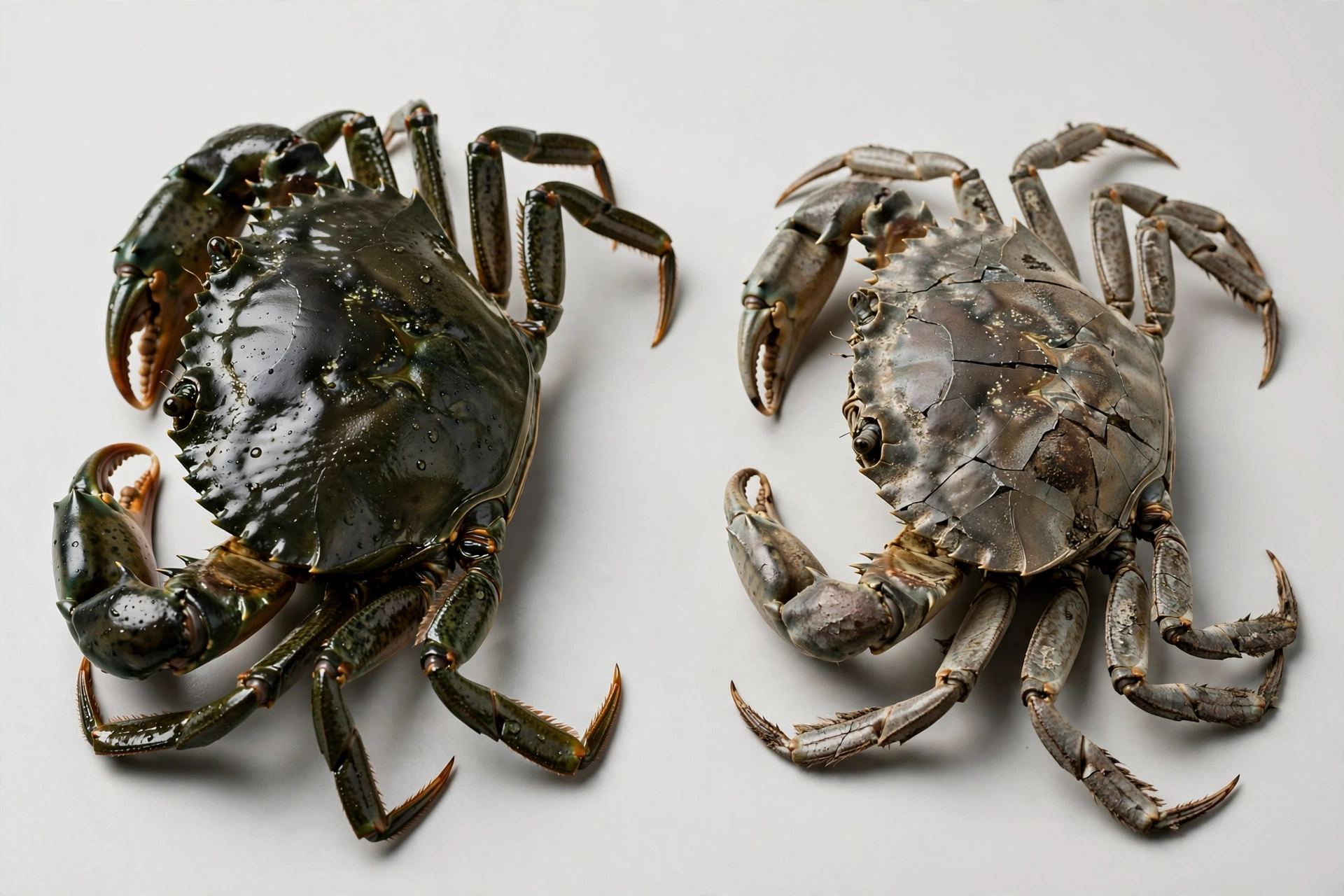
Prefer
- Live crabs that move legs and claws when handled
- Heavy feel for the size — weight means full meat
- Intact, hard shells with no cracks or leaks
- Clean, briny ocean smell
- Cooked crab stored cold on ice or refrigerated
Avoid / check more closely
- Motionless live crabs or ones with dangling, limp legs
- Light-feeling crabs, which are often low on meat
- Cracked shells or leaking fluid
- Fishy, sour, or ammonia-like smells
- Crab sitting unrefrigerated at room temperature
Live crab: movement and shell check
A healthy live crab reacts when picked up — legs and claws move, and the crab holds its limbs tucked rather than letting them dangle lifelessly. Completely still crabs may already be dead, and dead uncooked crab deteriorates very fast, so most sellers will not sell them. Check the shell: it should be hard and intact, without cracks or soft spots. A quick heft test helps too — of two similar-sized crabs, the heavier one almost always contains more meat, since a light crab may have recently molted and not yet filled out.
Smell and the cooked-crab case
Your nose is a reliable judge. Fresh crab — live or cooked — smells of clean seawater, mildly briny and sweet. Any strong fishy odor, sourness, or hint of ammonia means the crab is past its prime; pass on it regardless of how good it looks. For pre-cooked crab (whole cooked crabs, clusters, or picked meat), buy only from refrigerated displays kept on ice, and check date labels on packaged meat. The shell or leg meat should look moist and intact, not dried out or discolored, and packaging should be sealed with no excess liquid.
Storing crab at home
Cook live crab the same day you buy it — it does not keep. Keep live crabs cool and damp (not submerged in fresh water, which kills them) until cooking. Cooked crab meat should be refrigerated immediately and eaten within two to three days; whole cooked crabs keep similarly when kept cold. For longer storage, picked crab meat freezes reasonably well in airtight packaging, though texture is best fresh. As with all seafood, when in doubt about freshness, throw it out — shellfish is not worth the risk.
A simple crab-shopping checklist
Before you buy, check four things: liveliness (moving, legs tucked?), weight (heavy for its size?), shell (hard and intact?), and smell (clean ocean brine?). Buy crab last on your shopping trip and keep it cold on the way home. These checks point you to the best specimens, but proper cooking and prompt refrigeration do the real safety work.
Common questions
Should crab feel heavy?
Yes — weight is one of the best quality clues. A heavy crab is full of meat; a light one of the same size likely molted recently and has less meat inside.
How do I store live crab before cooking?
Keep them cool and damp in the refrigerator, covered with a damp cloth — never in airtight plastic or submerged in tap water. Cook them the same day for the best quality and safety.
How long does cooked crab last?
Refrigerated promptly, cooked crab meat and whole cooked crabs keep about two to three days. Freeze picked meat for longer storage, and discard anything that smells off.
References
U.S. Food and Drug Administration — Selecting and Serving Fresh and Frozen Seafood Safely. Reference for seafood selection, handling, and storage. Shopping tips are practical guidance.
Prepared October 9, 2026 with AI assistance. Cited sources do not endorse the entire article.