To choose a ripe avocado for eating today, cradle it gently in your palm and give it a light, even squeeze — it should yield slightly without feeling mushy or hollow. For Hass avocados, skin that has darkened from green to purplish-black is a helpful clue, but feel matters more than color. If you plan to use the fruit later in the week, pick firm, unblemished avocados and let them ripen at home.
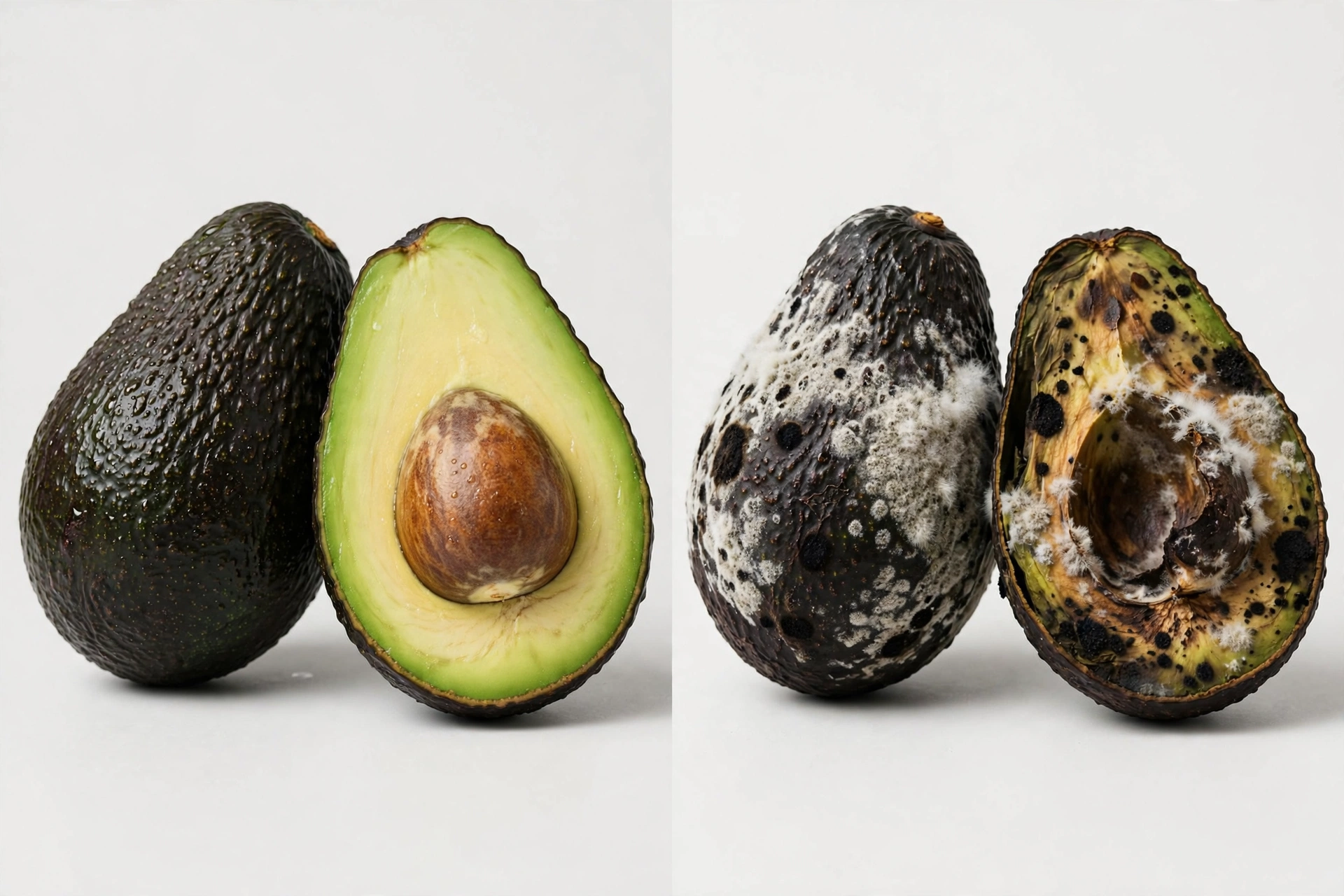
Prefer
- Yields slightly to gentle pressure from the whole palm
- Skin intact, with no deep cracks or large soft spots
- Stem cap that flicks off easily to reveal green underneath, for fruit you plan to eat soon
- Color that matches the variety at ripeness — dark and pebbly for Hass
- Firm, heavy-feeling fruit with unbroken skin when buying a few days ahead
Avoid / check more closely
- Mushy, deflated, or hollow-feeling patches under the skin
- Sunken areas, deep cracks, or visible mold near the stem
- Brown or gray coloring under the stem cap, which often means overripe flesh
- Fruit that feels rock-hard if you need a ripe avocado today
- A sour or fermented smell at the stem end
The palm test: squeeze gently, not with fingertips
Pick the avocado up and hold it in your palm, then press very lightly with the flat of your hand rather than your fingertips. Fingertips can bruise the flesh and create dark spots that show up later. A ripe avocado gives just a little, like the fleshy part of your palm below the thumb. If it feels as firm as an apple, it needs more time at room temperature. If your fingers sink in easily or the skin feels loose, the fruit is likely past its best. This quick test works for most varieties and is the single most useful thing you can do at the store.
Try the stem test
Many shoppers flick off the small stem nub at the narrow end of the avocado and peek underneath. Green coloring under the cap usually points to flesh that is ready to eat, while brown coloring often means the fruit is overripe inside. If the stem will not budge at all, the avocado is probably still unripe. Treat this as one clue among several rather than a verdict — a green stem with otherwise mushy skin is still a pass. Be gentle when you try it; you are only lifting a tiny cap, not digging into the fruit.
Why color alone can mislead
Hass avocados, the bumpy-skinned variety most common in stores, shift from bright green to dark purplish-black as they ripen, which makes color a genuinely useful signal for them. But many other varieties — including Fuerte, Zutano, and Bacon — stay green even when fully ripe. A dark Hass is not automatically good either; overripe ones can look perfectly dark on the outside. Let color support what your hands tell you, and when you are unsure of the variety, ask the produce staff what ripe looks like for that type.
Ripening avocados at home
Buy firm avocados when you want them later in the week and leave them on the counter at room temperature. To speed things along, place them in a loosely closed paper bag, optionally with a banana or apple, which give off natural ethylene gas that encourages ripening. Check daily, since the change from firm to overripe can happen quickly. Once an avocado feels ready, move it to the refrigerator to slow further softening for a few more days. Avoid trying to ripen avocados with direct heat — it ruins the texture.
A simple avocado-shopping checklist
Before you buy, answer three questions: When will I use it? What does it feel like? Is the skin intact? For guacamole tonight, choose fruit that yields gently to palm pressure. For salads later in the week, choose firm fruit with smooth, unbroken skin. Match the ripeness to your plan, handle the fruit gently in your bag, and remember that these checks guide your choice — they cannot reveal everything about what is inside.
Common questions
Can I speed up ripening?
Yes. Keep firm avocados at room temperature in a loosely closed paper bag; adding a banana or apple often shortens the wait to a day or two. Check them daily and refrigerate once they yield gently to pressure.
Should a ripe avocado go in the refrigerator?
Refrigeration slows further ripening, so it is a good way to hold a ripe avocado for a few extra days. Keep unripe avocados on the counter instead, since cold can stall the ripening process.
What if the flesh has brown streaks?
Some browning is simply oxidation where air reached the flesh, especially around the pit or a bruise. If the avocado still smells fresh and the texture is creamy rather than slimy, many people trim the browned part and use the rest. When in doubt — slimy texture or an off smell — throw it out.
References
U.S. Food and Drug Administration — Selecting and Serving Produce Safely. Reference for produce selection, handling, and visible damage. Ripening suggestions are kitchen practice, not laboratory findings.
Prepared October 8, 2026 with AI assistance. Cited sources do not endorse the entire article.